

Looking for an alternative?
Tradervue Alternative
Try a trading journal built around discipline, execution and your actual trading behaviour.
Tradervue gives traders detailed reports, charts and performance analytics.
RizeTrade does that too, but puts more emphasis on why you took the trade, whether you followed your rules and what keeps affecting your execution.
Import your trades. Review them on charts. Track emotions and discipline. Analyse your strategies. Then ask Trading Mentor AI questions about your own trading history.
No spreadsheet required. Import your trades and start reviewing.
100% FreeNo CC Required
4.8/5 1,794 Reviews
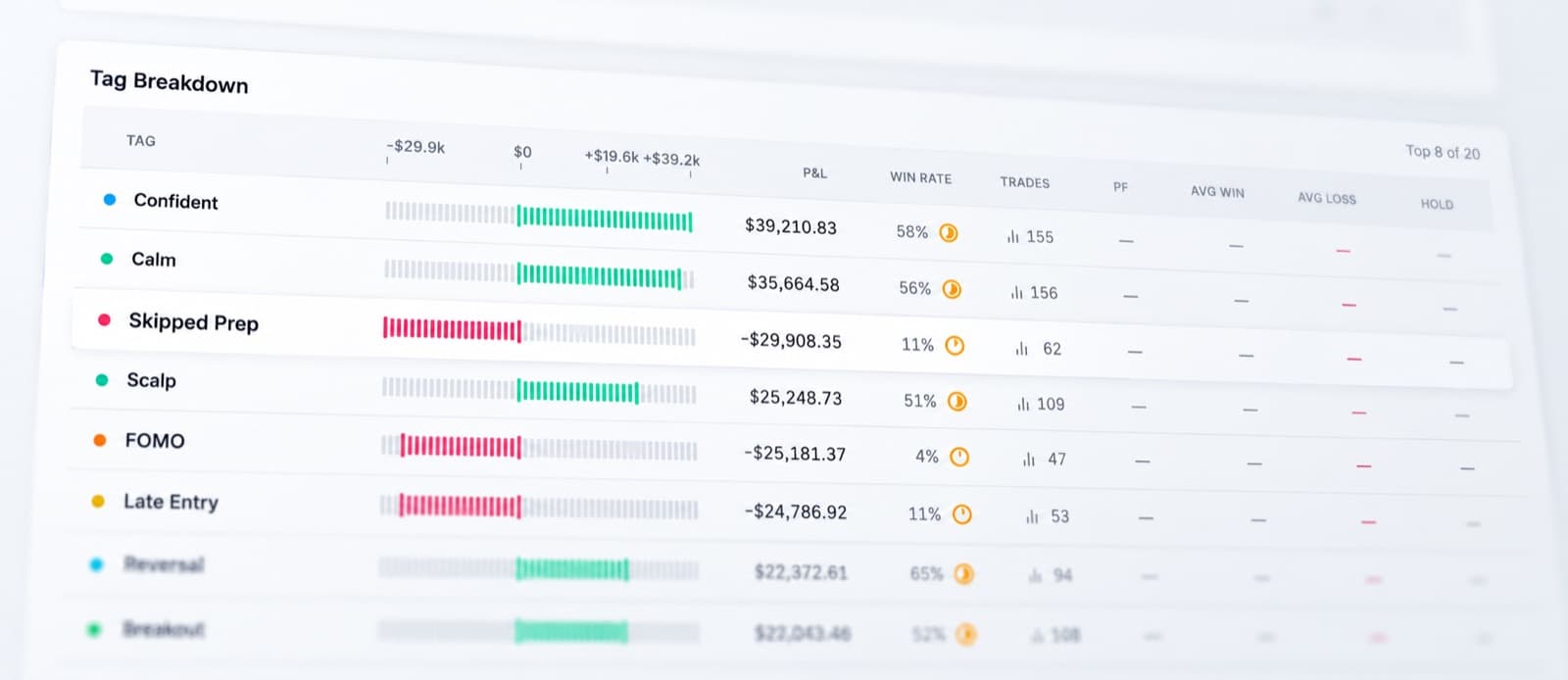


RizeTrade vs Tradervue
Both platforms let you import trades, review executions on charts and analyse your trading performance.
The difference is what happens after the trades are imported.
| Feature | RizeTrade | Tradervue |
|---|---|---|
| Broker Sync | Yes | Yes |
| File Import | Yes | Yes |
| Manual Trade Entry | Yes | Yes |
| Entries & Exits on Charts | Yes | Yes |
| P&L Calendar | Yes | Yes |
| Advanced Reports | 50+ | 100+ |
| MAE & MFE Statistics | Yes | Yes |
| Trade Exit Analysis | Yes | Gold |
| Emotion Tracking | Yes | No |
| Discipline Tracker | Yes | No |
| Trading Playbooks | Yes | No |
| Rule Compliance Scoring | Yes | No |
| Trading Mentor AI | Yes | No |
| Community Trade Sharing | No | Yes |
| Mentoring Features | No | Yes |
| Starting Paid Plan | Free | $29.95/month |
| Higher Tier | Free | $49.95/month |
Tradervue publicly lists more than 100 advanced reports and includes community and mentoring functionality. RizeTrade includes 50+ reports but adds dedicated tools for playbook compliance, discipline, emotional tracking and behavioural review.
Try RizeTrade FreeWhy Choose RizeTrade Instead of Tradervue?
Track More Than Your P&L
Knowing your win rate does not tell you whether you traded well.
RizeTrade lets you record the behaviour behind each trade alongside the financial result.
Track:
- The strategy you traded
- Whether you followed your rules
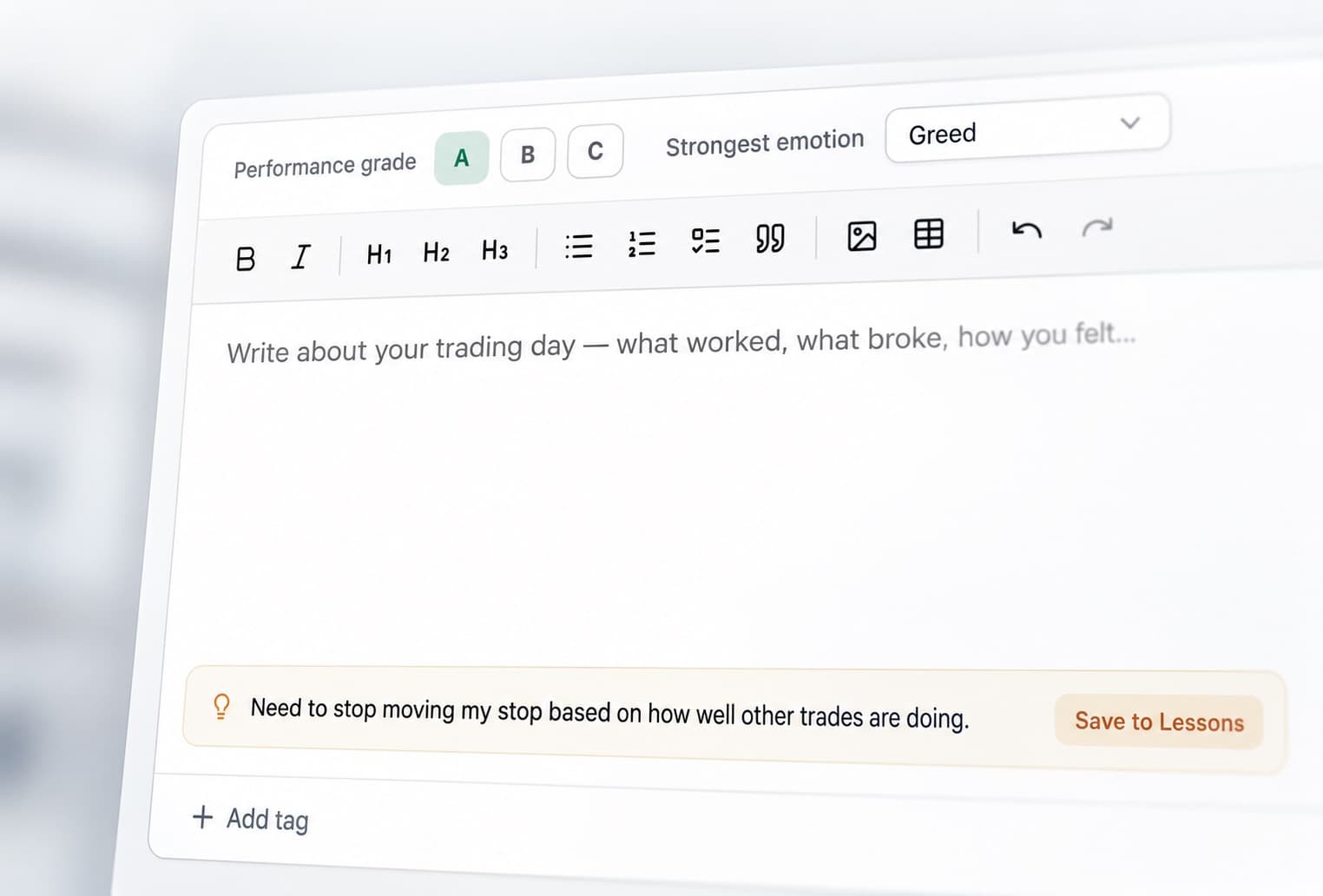
- Your emotional state
- Stops and profit targets
- Trade grade
- Entry and exit efficiency
- MAE and MFE
- Notes and screenshots
- Custom tags and categories
That gives you another layer to analyse.
Instead of only asking “Which trades made money?”, you can ask “What was different when I traded properly?”
Built-In Discipline Tracking
Measure whether you actually follow your trading plan
Most traders already know what they are supposed to do.
The difficult part is knowing how consistently they actually do it.
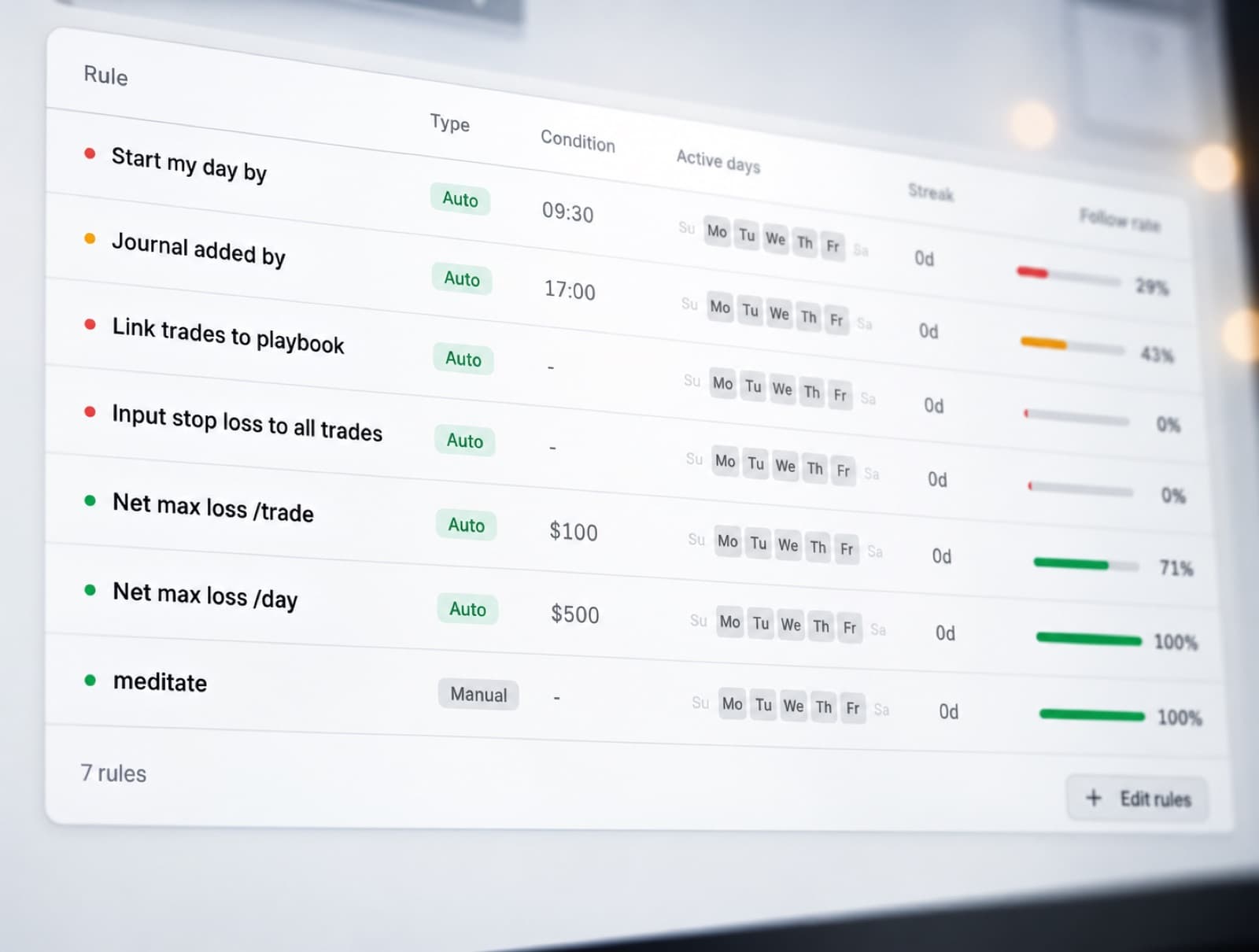
RizeTrade's Discipline Tracker lets you record whether you followed your trading rules and review that behaviour across your trade history.
Compare trades where you followed your process with trades where you didn't.
See whether breaking a particular rule repeatedly affects your results.
Turn vague goals such as “be more disciplined” into something you can actually measure.
Trading Playbooks
Build your strategy rules into your journal
Create playbooks for the strategies you trade.
Define the rules and criteria that should be present, then score how closely individual trades followed that process.
You can use your playbooks to review:
- Entry criteria
- Exit criteria
- Risk rules
- Setup requirements
- Trade management
- Rule compliance
Over time, your journal can show whether a strategy works, and whether you actually traded the strategy as intended.
Track Trading Emotions
Record what was happening mentally when you made the trade
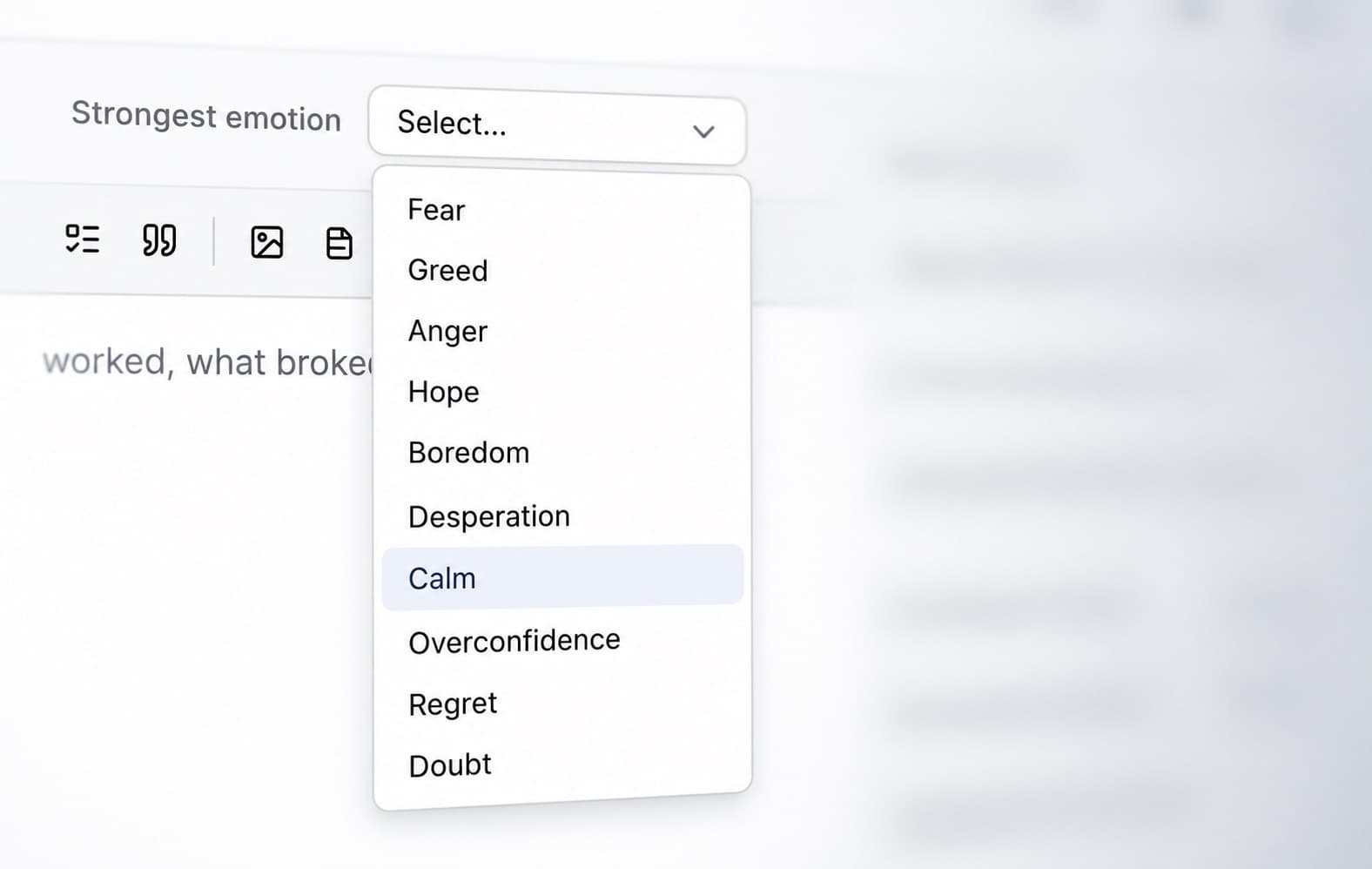
RizeTrade includes dedicated emotion tracking so you can record the emotional state connected with a trade.
Track behaviours and emotions such as:
- FOMO
- Revenge trading
- Fear
- Frustration
- Overconfidence
- Boredom
- Hesitation
Then compare those trades against your results.
You might find that a strategy is profitable normally but performs badly when you trade it after a loss.
Or that your biggest issue isn't finding entries at all. It is changing your behaviour once you're already in the position.
Review Every Trade on the Chart
See exactly where you entered, added, reduced and exited
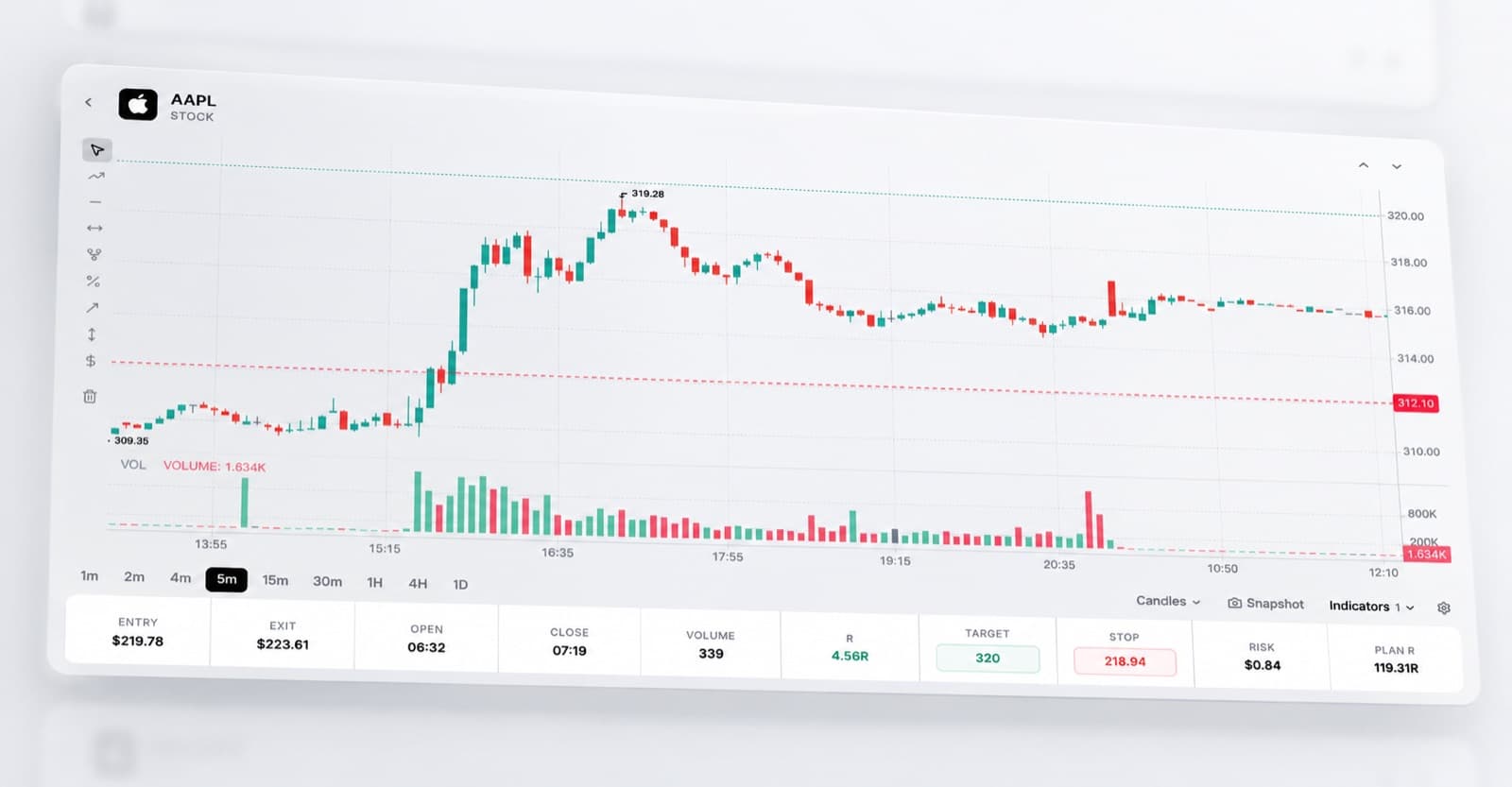
Import a completed trade and RizeTrade automatically plots your executions against the historical price chart.
Review where you:
- Entered
- Added size
- Reduced size
- Exited
- Placed stops
- Took profit
Instead of reviewing a row of execution prices, you can see what those decisions looked like in the context of the actual market.
That makes it much easier to review trade management after the session.
Analyse Your Exit Efficiency
Being right about direction doesn't mean you traded the move well
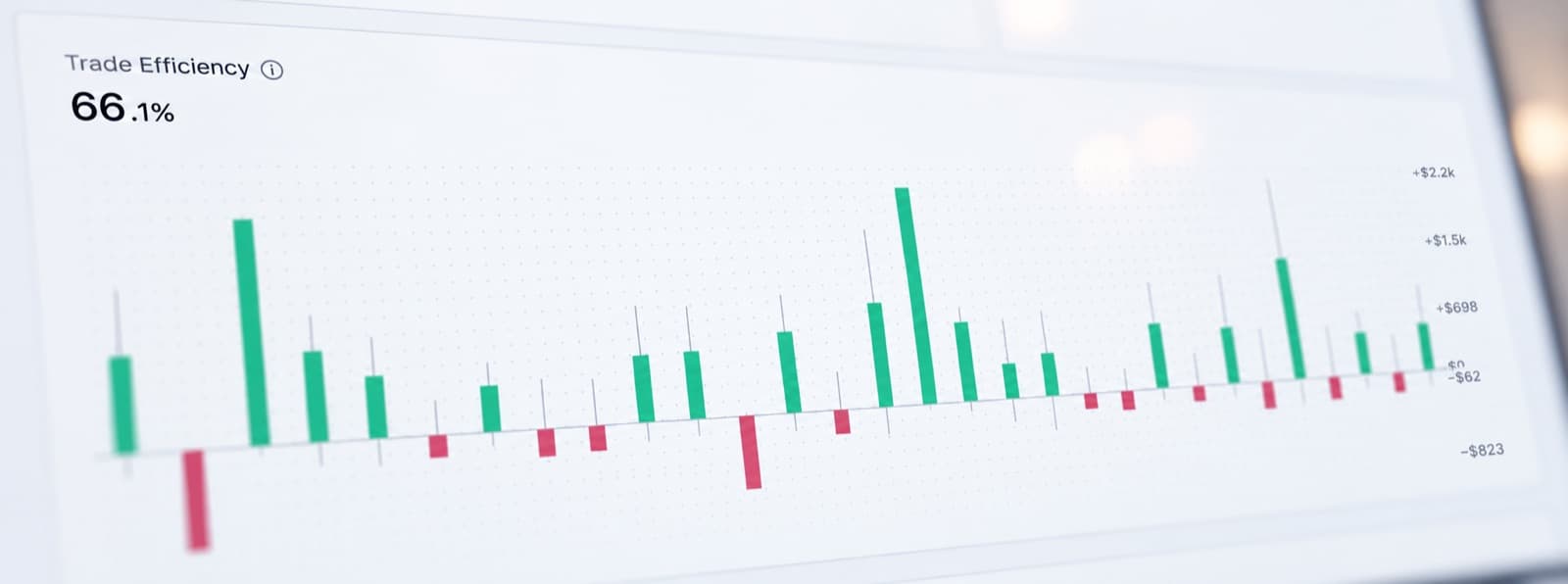
RizeTrade includes execution and exit analysis designed to show how efficiently you managed a trade.
Review metrics including:
- MAE
- MFE
- Exit efficiency
- Best exit analysis
- R-multiples
- Running P&L
- Stops
- Profit targets
See whether you regularly exit winners too early, allow trades to move too far against you or give back too much open profit before closing.
That helps separate strategy problems from execution problems.
50+ Trading Reports
Break your trading history down from different angles
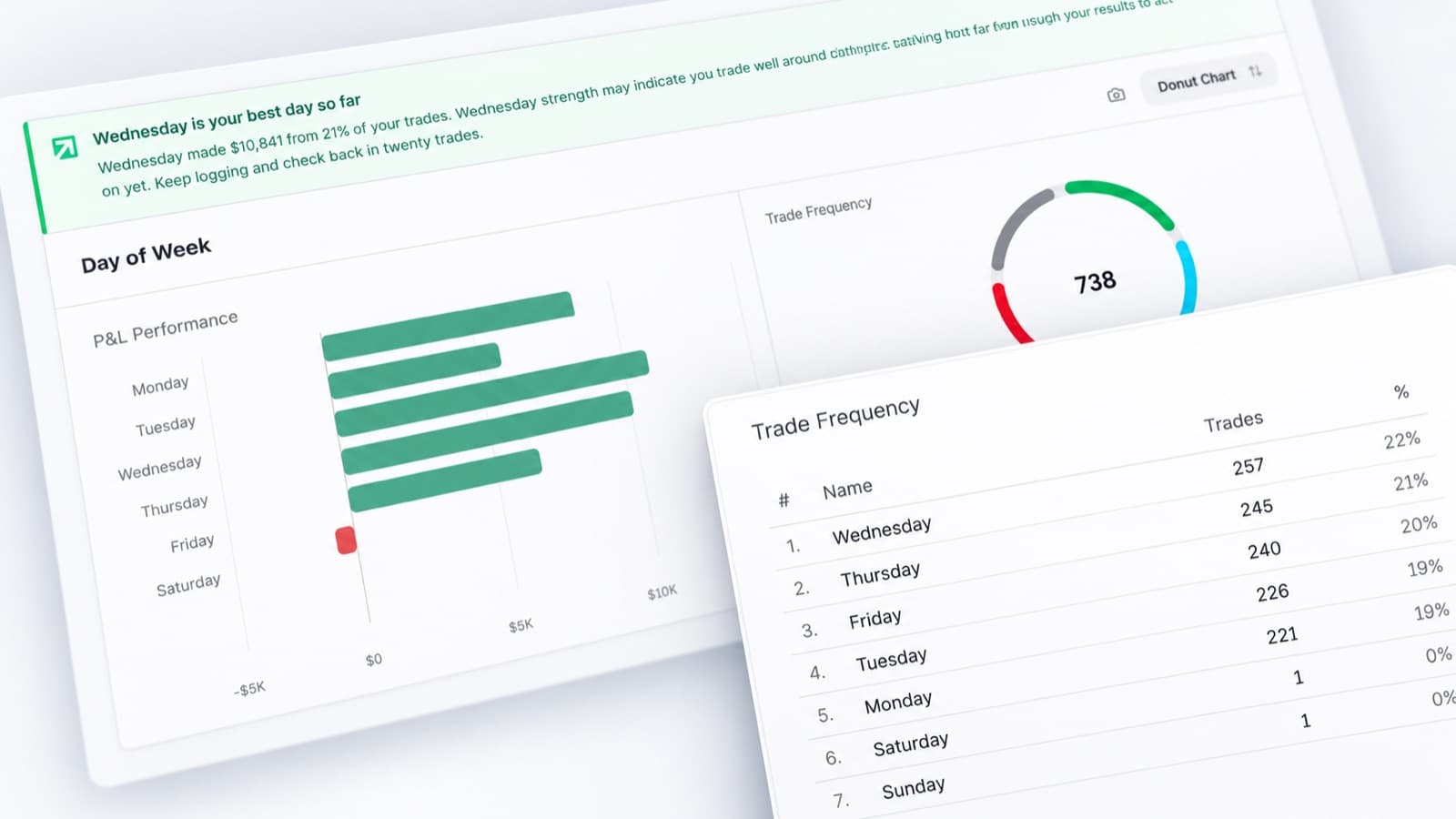
RizeTrade automatically generates reports from your imported trades.
Analyse performance by:
- Date
- Time
- Symbol
- Instrument
- Strategy
- Playbook
- Tags
- Trade duration
- Risk
- Position size
- Price
- Quantity
- Options expiration
- Wins vs losses
Stack filters together when you want to investigate something more specific.
For example:
- How does my breakout setup perform before 10:00 AM when I follow every playbook rule?
- What happens to my results after two consecutive losing trades?
The point isn't to have the largest possible number of reports.
It's to get an answer from your trading data.
Ask Trading Mentor AI
Analyse your journal by asking questions
Instead of manually filtering your trade history every time you want to investigate something, use Trading Mentor AI.
Ask questions about your own trading data, such as:
- “When do I exit winning trades too early?”
- “Which emotions appear most often on my losing trades?”
- “What rules do I break most frequently?”
- “Which setup performs best when I follow every rule?”
- “What happens to my trading after a large loss?”
Trading Mentor AI helps you explore the information already inside your journal and identify patterns you may otherwise miss.
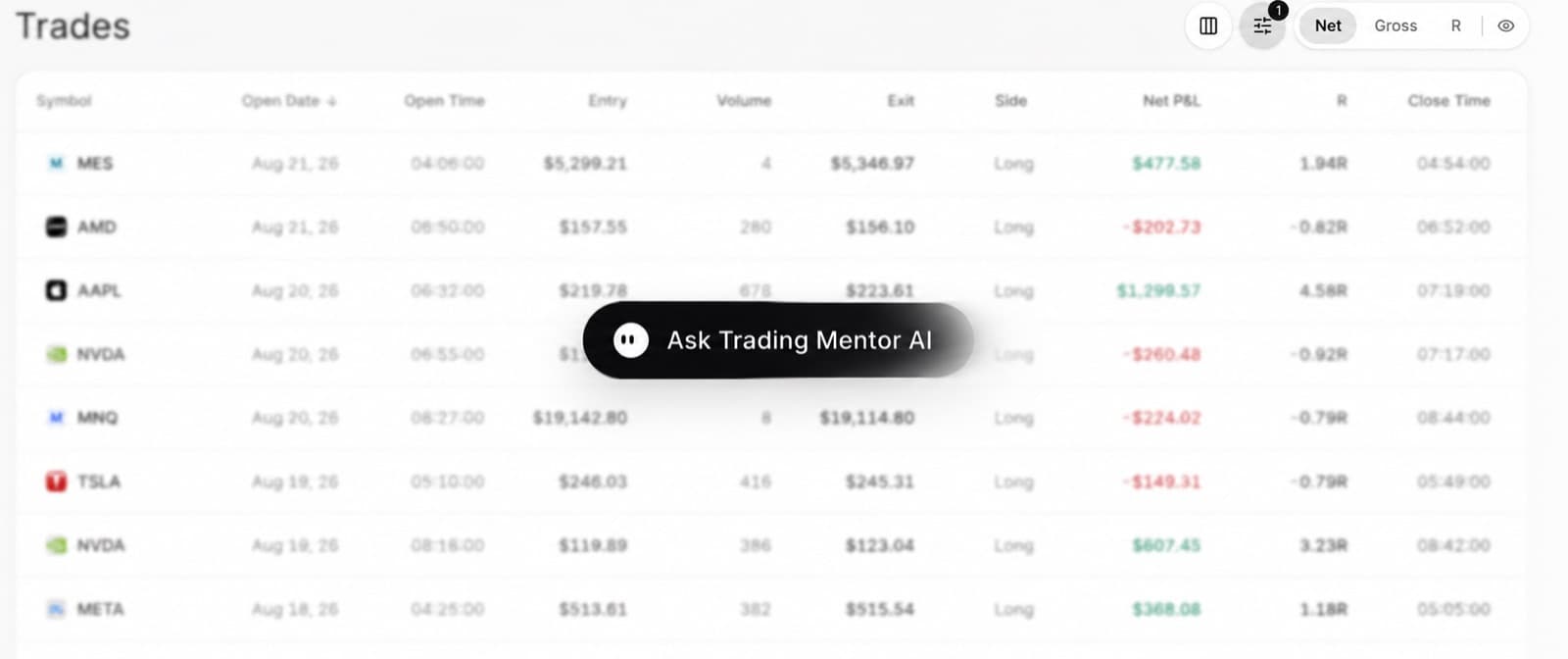
Import Your Existing Trading History
You don't need to start your journal from zero
Connect a supported broker for automatic syncing or upload your existing trading history using a file import.
RizeTrade can then use those historical trades across your:
- Charts
- Calendar
- Journal
- Statistics
- Reports
- Playbooks
- Discipline tracking
- Execution analysis
You can also enter individual trades manually when required.
Try RizeTrade Free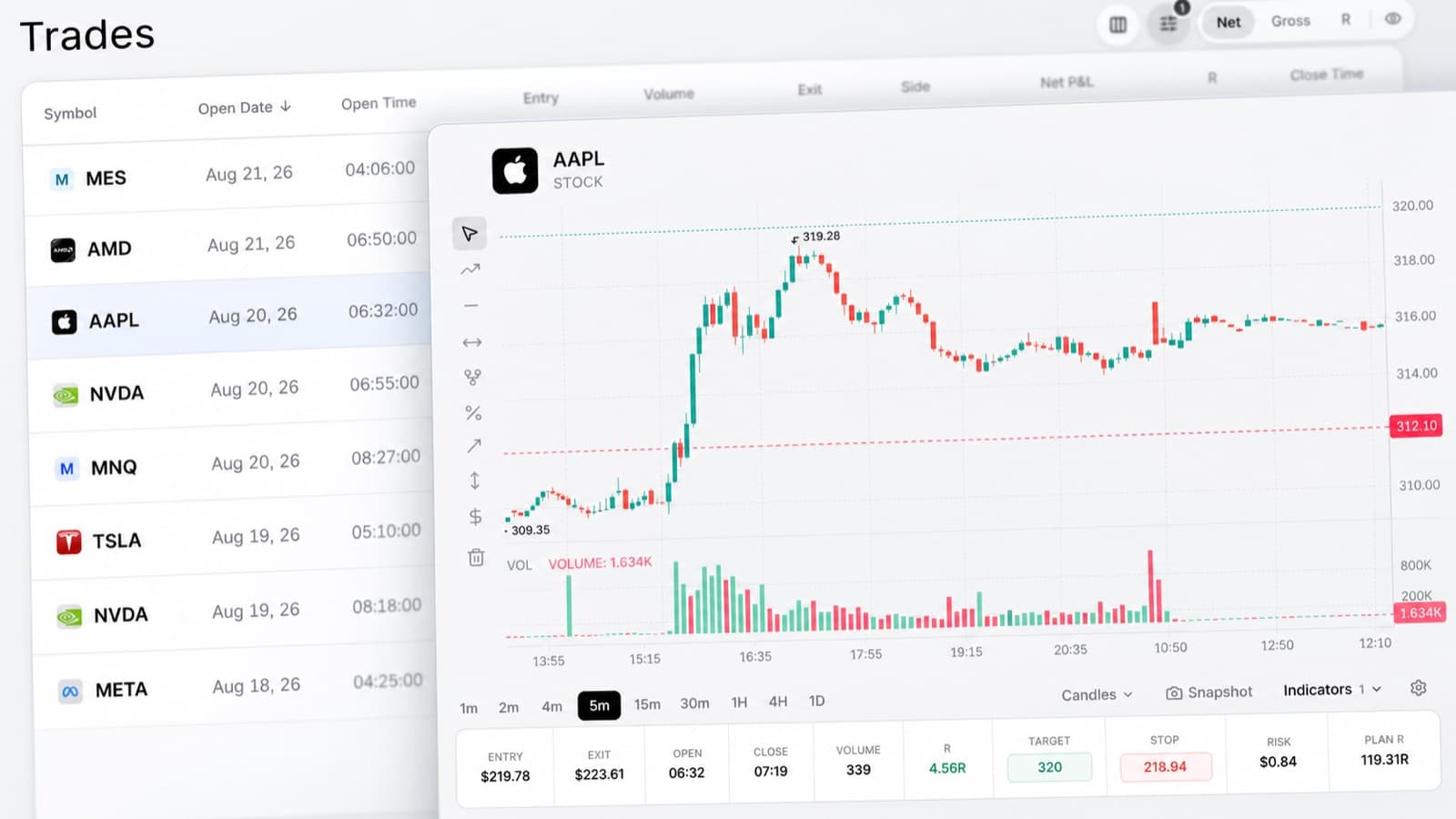
P&L Calendar
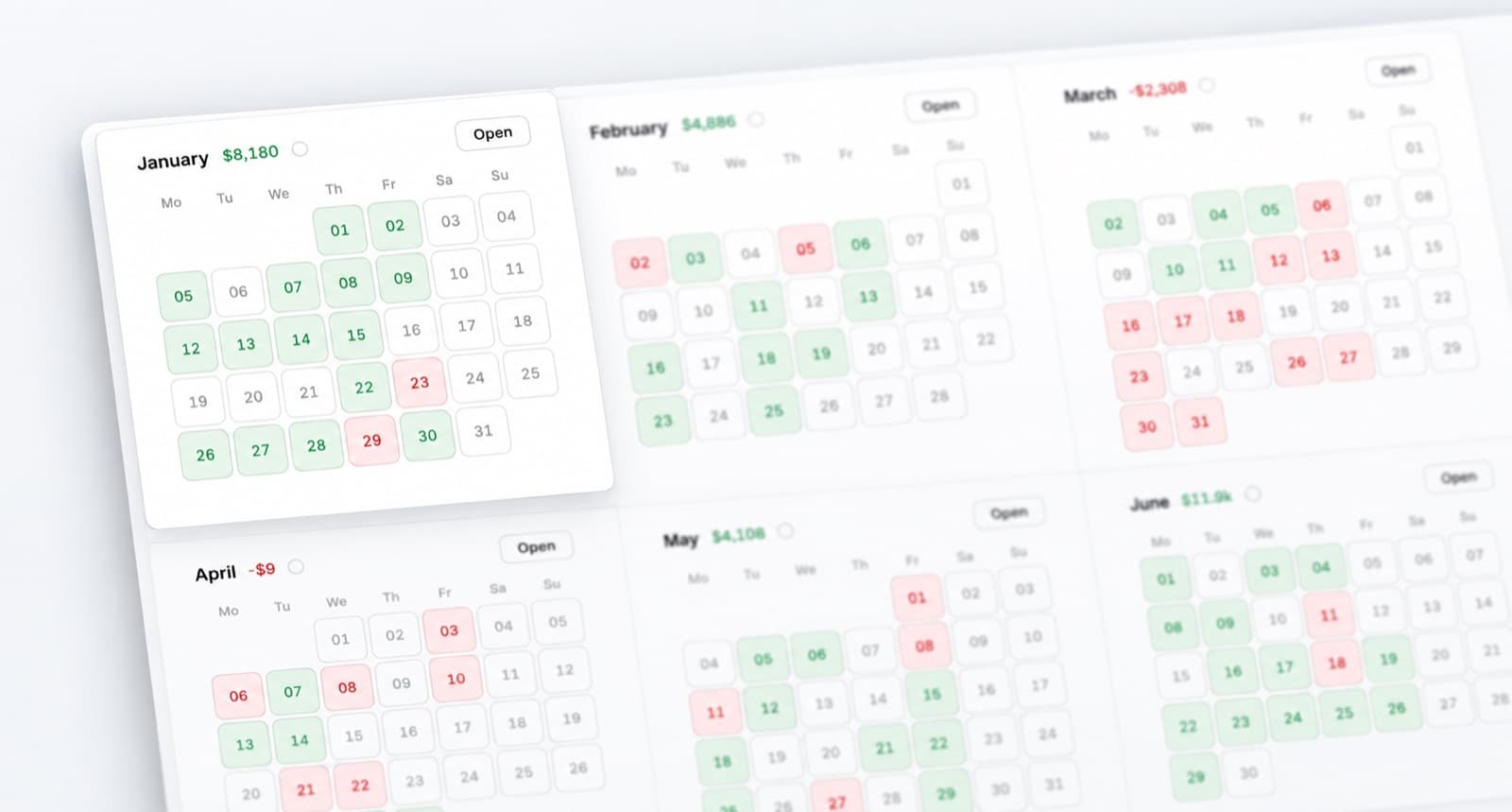
See your trading results day by day
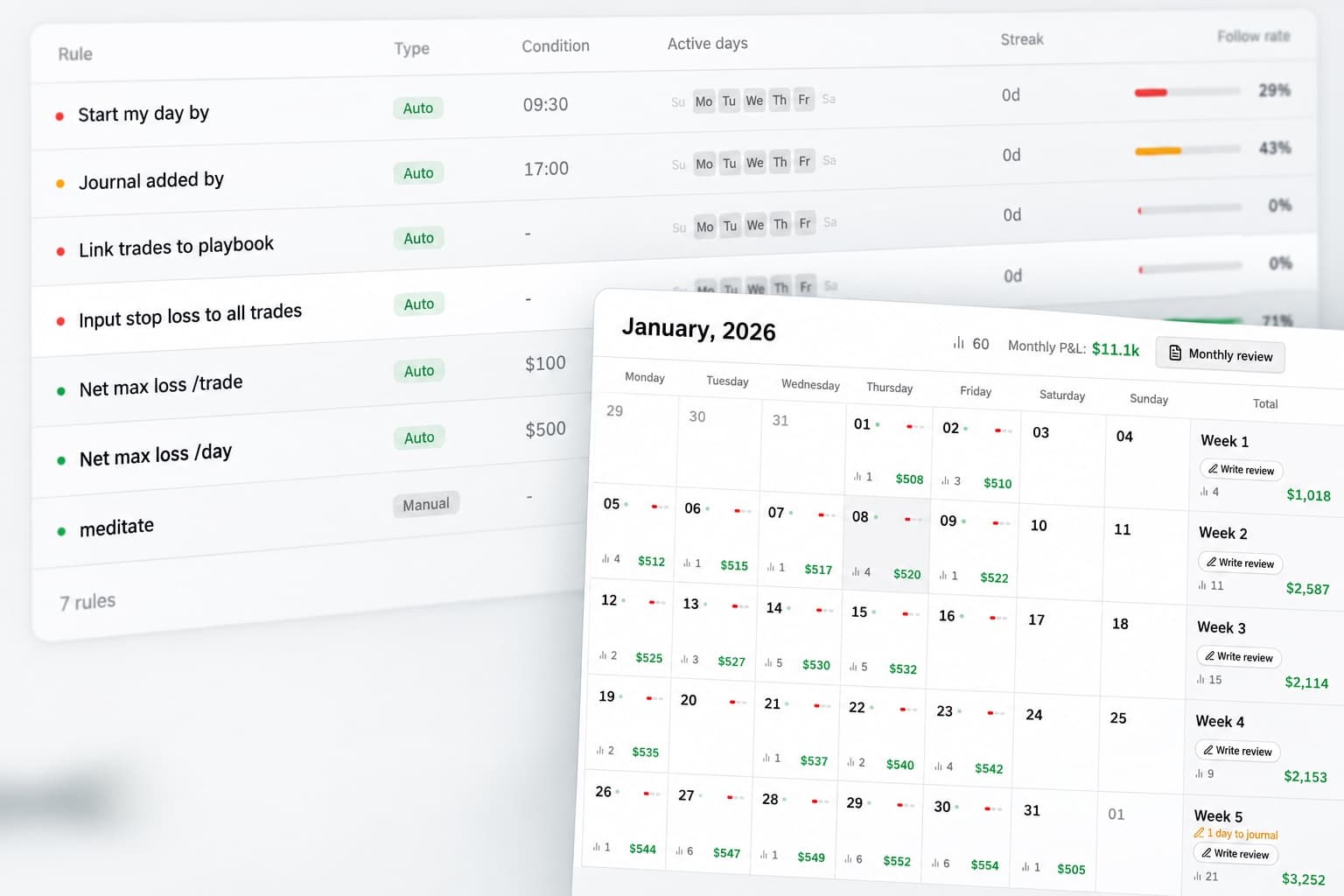
View your daily trading performance across a calendar instead of another spreadsheet.
Use the P&L Calendar to quickly identify:
- Profitable days
- Losing days
- Winning and losing streaks
- Periods of higher activity
- Changes in consistency
- Patterns across the trading month
Click back into the underlying trades when a particular day needs a closer review.
Tradervue Is Better If You Want Community and Mentoring Features
Tradervue is still a strong option.
It includes trade sharing, community features and dedicated mentor/mentee functionality alongside its trading journal.
It also currently advertises more than 100 advanced reports.
If those are the main reasons you're choosing a trading journal, Tradervue may be the better fit.
RizeTrade is built for a slightly different trader.
RizeTrade Is Better Suited to Traders Who Want to Analyse Their Process
Choose RizeTrade if you want your journal to help answer questions such as:
- Did I follow my rules?
- Which emotions affect my results?
- Which trading behaviours keep costing me money?
- How well am I executing my playbook?
- Am I managing winners efficiently?
- What patterns exist across my own trading history?
Tradervue gives you extensive trading analytics.
RizeTrade combines analytics with discipline, psychology, playbooks and execution review.
Free Tradervue Alternative
RizeTrade
RizeTrade
Free
Includes
- Broker sync
- File imports
- Manual trade entry
- Discipline Tracker
- P&L Calendar
- Emotion tracking
- Strategy performance tracking
- Trading playbooks
- Rule-follow scoring
- Historical trade charts
- Stops and profit targets
- 50+ reports
- Unlimited trading accounts
Trading Mentor AI
$29/month
Adds an AI mentor that reads your trades. Everything else is free.
Start freeTradervue
Tradervue Silver
$29.95/month
Tradervue's Silver plan includes unlimited trades and accounts, broker sync and advanced reporting.
Tradervue Gold
$49.95/month
Gold adds features including trade exit performance analysis and maximum potential P&L analysis.
Pricing can change, so check each platform's current pricing before choosing a plan.
Tradervue Alternative FAQs
- Is RizeTrade a Tradervue alternative?
Yes. RizeTrade and Tradervue are both trading journals that let traders import trades, review charts and analyse trading performance.
RizeTrade places additional emphasis on discipline tracking, emotions, playbook compliance and AI-assisted analysis.
- Does RizeTrade import trades automatically?
Yes. RizeTrade supports broker syncing for automatic imports. You can also upload trades using CSV files or enter trades manually.
- Can I import my old trades into RizeTrade?
Yes. Existing trading history can be imported so you can analyse previous trades rather than only trades made after creating your RizeTrade account.
- Does RizeTrade show trades on charts?
Yes. Imported executions can be plotted on historical charts so you can review entries, adds, reductions and exits.
- Does RizeTrade track trading psychology?
Yes. You can track emotions associated with trades and analyse those trades against your performance.
- Can RizeTrade track whether I followed my rules?
Yes. RizeTrade includes playbooks and rule-compliance tracking designed to measure whether individual trades followed your defined trading process.
- Does RizeTrade have AI features?
Yes. Trading Mentor AI lets you ask questions about your own trading history and journal data.
- Is RizeTrade cheaper than Tradervue?
RizeTrade is free. Tradervue Silver is $29.95/month.
Tradervue Gold is $49.95/month.
Try RizeTrade as Your Tradervue Alternative
Your trading journal should tell you more than whether you won or lost.
RizeTrade helps you review what you traded, how you traded it and whether you followed the process you intended to follow.
Import your history and see what your trading data says.