

Looking for an alternative?
StonkJournal Alternative
Automatically import your trades and get more from your trading journal.
StonkJournal is a straightforward trading journal with manual trade logging, performance statistics, risk rules and AI analysis.
RizeTrade is built for traders who want a more automated and structured review process.
Sync your broker automatically. Review every trade. Track your rules and emotions. Analyse your execution. See exactly where your trading needs work.
Try RizeTrade Free100% FreeNo CC Required
4.8/5 1,794 Reviews
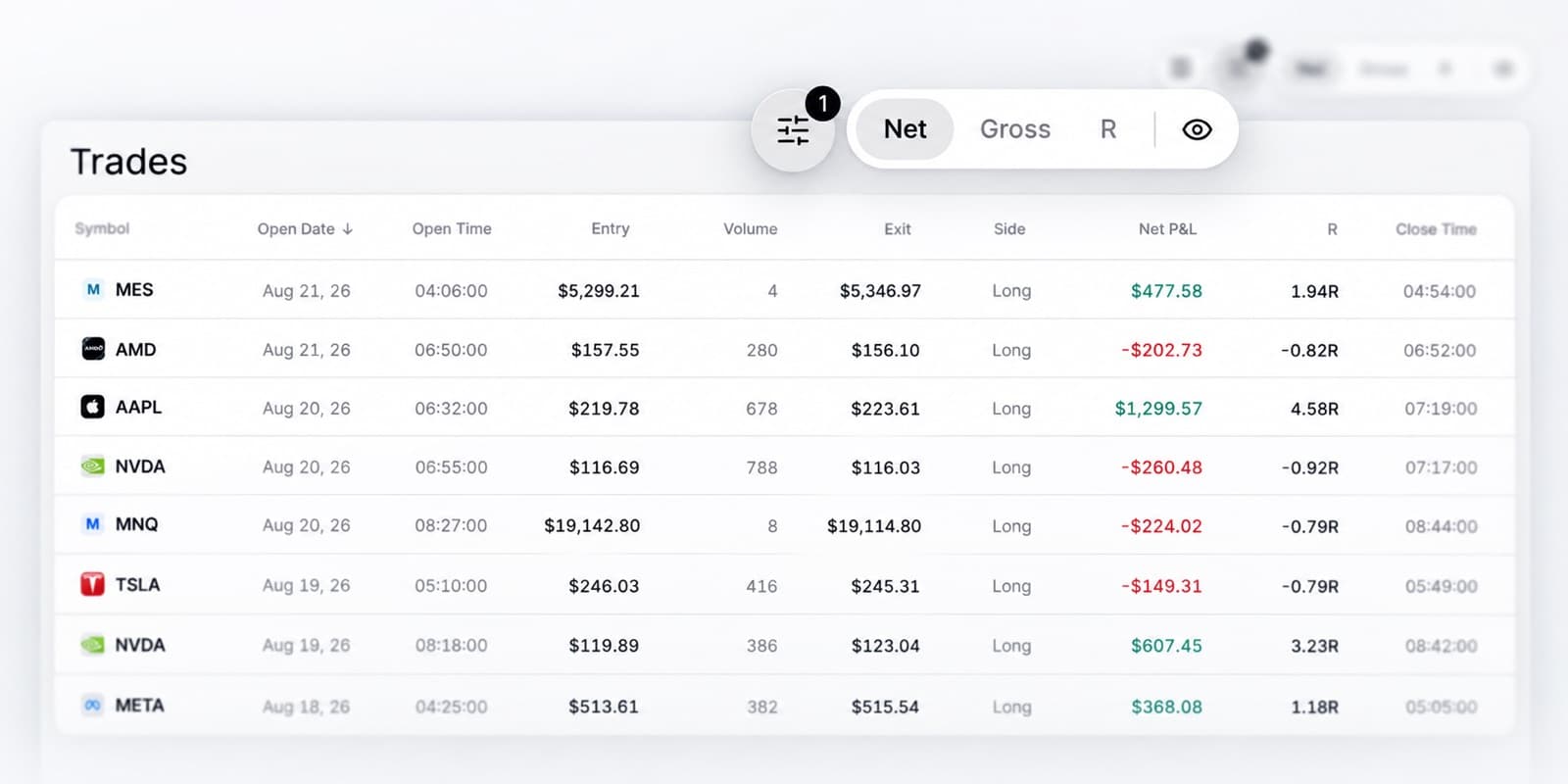


RizeTrade vs StonkJournal
Both RizeTrade and StonkJournal help traders record trades, review performance and identify patterns in their trading.
The biggest difference starts before the analysis even begins.
StonkJournal currently relies on manual trade entry or CSV imports.
RizeTrade can automatically sync trades from supported brokers, prop firms and trading platforms.
That means your trading journal can stay updated without manually entering trades or exporting another CSV after every session.
| Feature | RizeTrade | StonkJournal |
|---|---|---|
| Automatic Broker Sync | Yes | No |
| CSV Import | Yes | Pro |
| Manual Trade Entry | Yes | Yes |
| Unlimited Trade Imports | Yes | Manual trades unlimited |
| Trading Journal | Yes | Yes |
| P&L Calendar | Yes | Yes |
| Performance Statistics | Yes | Yes |
| Strategy Tracking | Yes | Yes |
| Risk / Rule Tracking | Yes | Yes |
| Playbook Compliance Score | Yes | Rule compliance |
| Emotion Tracking | Yes | AI / journal analysis |
| Consistency Heat Map | Yes | No |
| Trade Grade | Yes | No |
| Historical Trade Charts | Yes | Yes |
| MAE & MFE | Yes | Performance analytics |
| Best Exit Analysis | Yes | No |
| Exit Efficiency Score | Yes | No |
| 50+ Auto-Generated Reports | Yes | Performance analytics |
| AI Trading Analysis | Trading Mentor AI | AI Coach + Chat |
| Multi-Account Tracking | Yes | Yes |
| Free Plan | Yes | Yes |
| Starting Paid Plan | Free | $10/month |
Choose StonkJournal if you want a capable free journal and don't mind entering or importing your trades yourself.
Choose RizeTrade if you want your trades automatically synced and a more structured workflow for analysing discipline and execution.
Stop Manually Updating Your Trading Journal
Let your broker keep RizeTrade updated
A trading journal only works if your trades actually make it into it.
With StonkJournal, trades currently need to be entered manually or uploaded from a broker export.
RizeTrade supports automatic broker syncing.
Connect a supported broker or trading platform and let RizeTrade import your executions automatically.
You can still:
- Upload CSV files
- Enter trades manually
- Import historical trades
- Separate multiple trading accounts
- Track commissions and fees
- Use multiple currencies
But you don't need to make importing trades part of your daily routine.
- Trade first. Review afterwards.
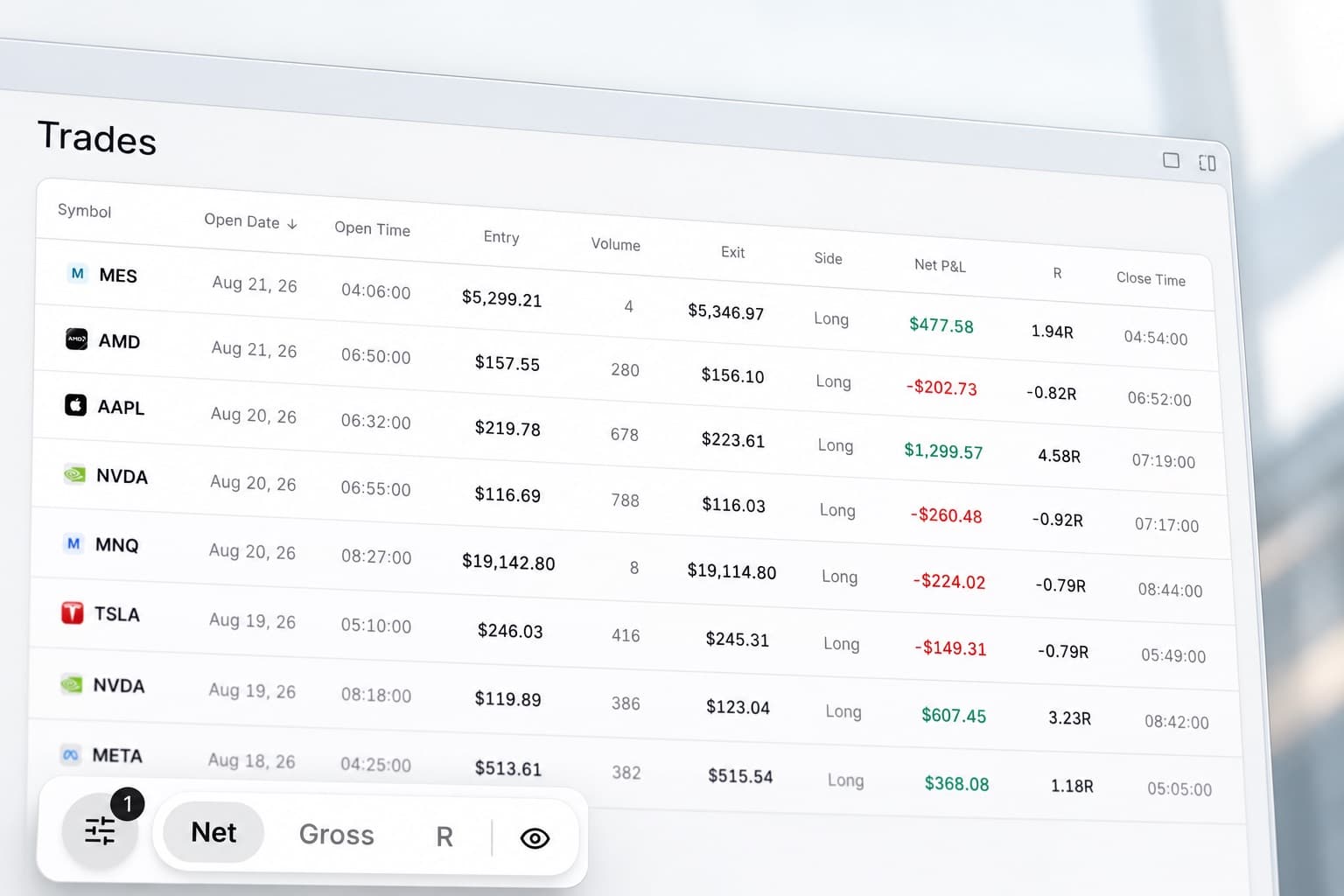
Built for Daily Trade Review
Go from imported trade to useful answer quickly
Once your trades are inside RizeTrade, they automatically feed into the rest of your journal.
Review them through:
- Historical charts
- Daily journal
- P&L calendar
- Strategy reports
- Trading playbooks
- Discipline Tracker
- Emotion tracking
- Execution statistics
- 50+ reports
You don't need to recreate the same information in several places.
The trade becomes the starting point for the entire review.
Strategy Playbooks
Define exactly what your strategy is supposed to look like
Create a playbook for every strategy you trade.
Add the rules that define a valid setup, including:
- Market conditions
- Entry criteria
- Confirmation
- Risk
- Stop placement
- Trade management
- Exit criteria
Then compare each completed trade against that playbook.
RizeTrade calculates your Playbook Compliance Score so you can see whether you actually followed your strategy.
That separates two completely different problems:
- The strategy doesn't work.
- and You didn't follow the strategy.
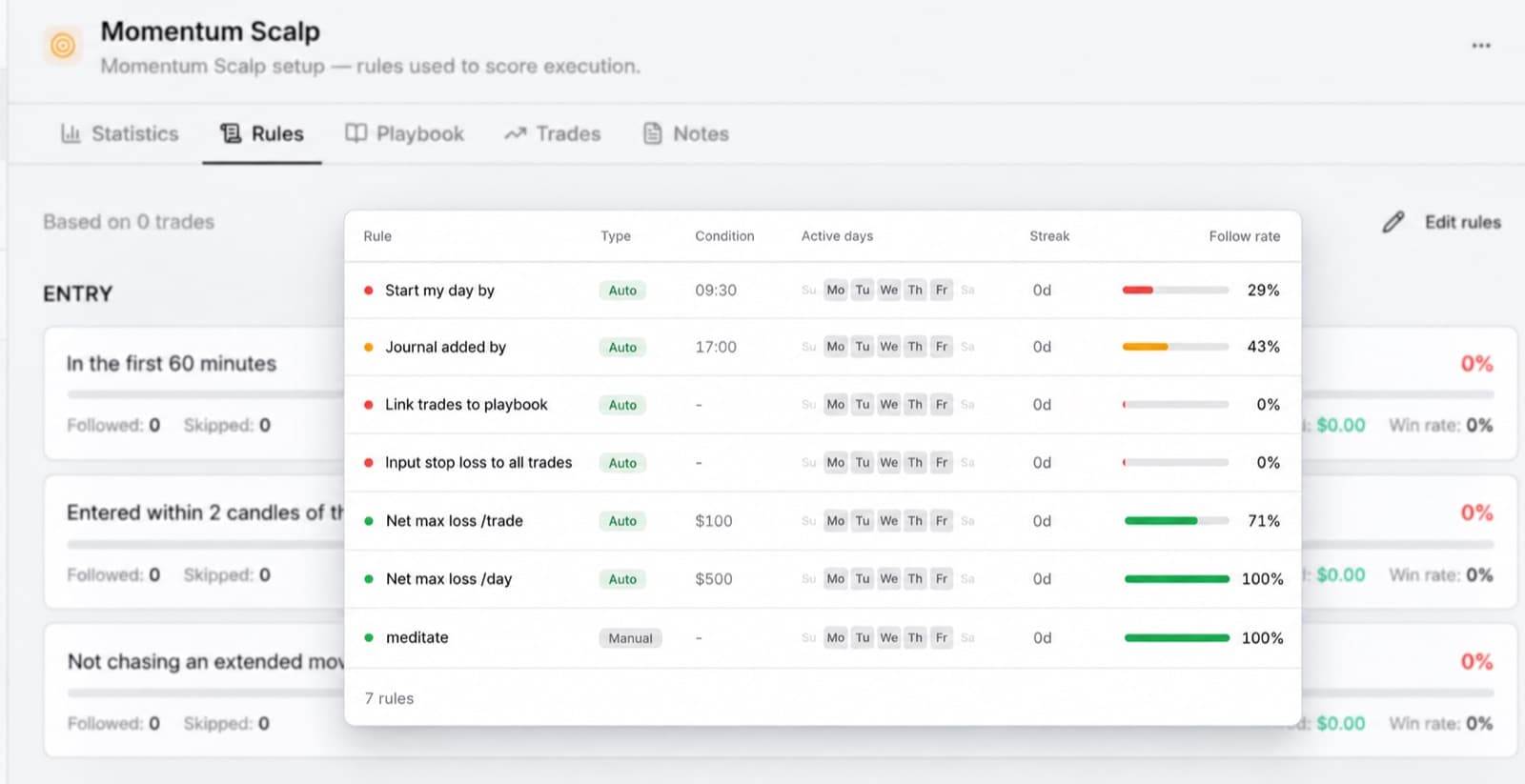
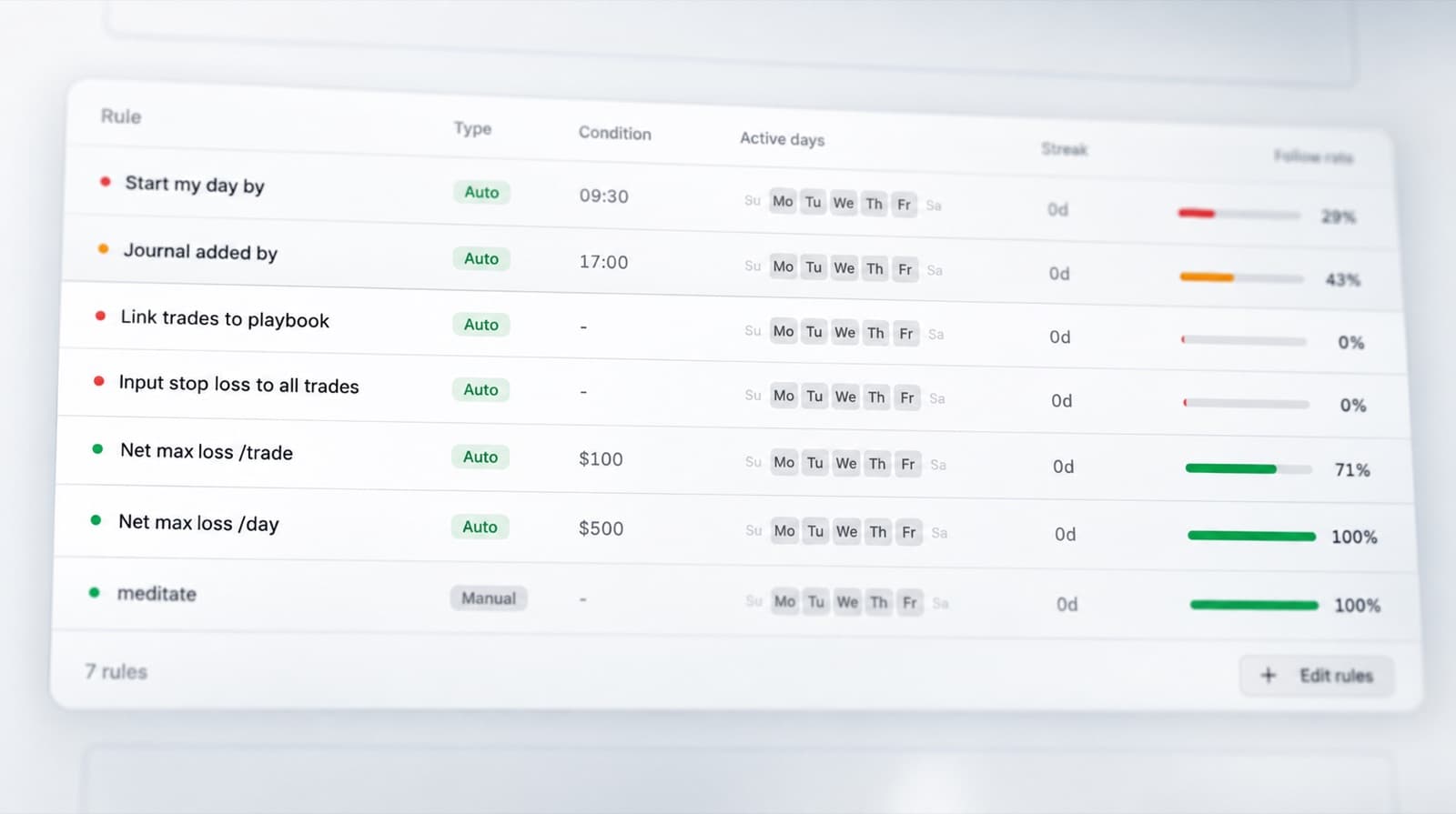
Track Your Discipline
See which rules you keep breaking
RizeTrade gives discipline its own place in your journal.
Track rules around:
- Daily loss limits
- Maximum number of trades
- Trading times
- Position risk
- Setup requirements
- Stops
- Trade management
- Pre-market preparation
- Daily review
Then monitor whether you're actually following them.
Instead of writing “I need to be more disciplined”, you can see where your discipline broke down and which rules are causing the most problems.
See Your Consistency Over Time
One good day doesn't mean the problem is fixed
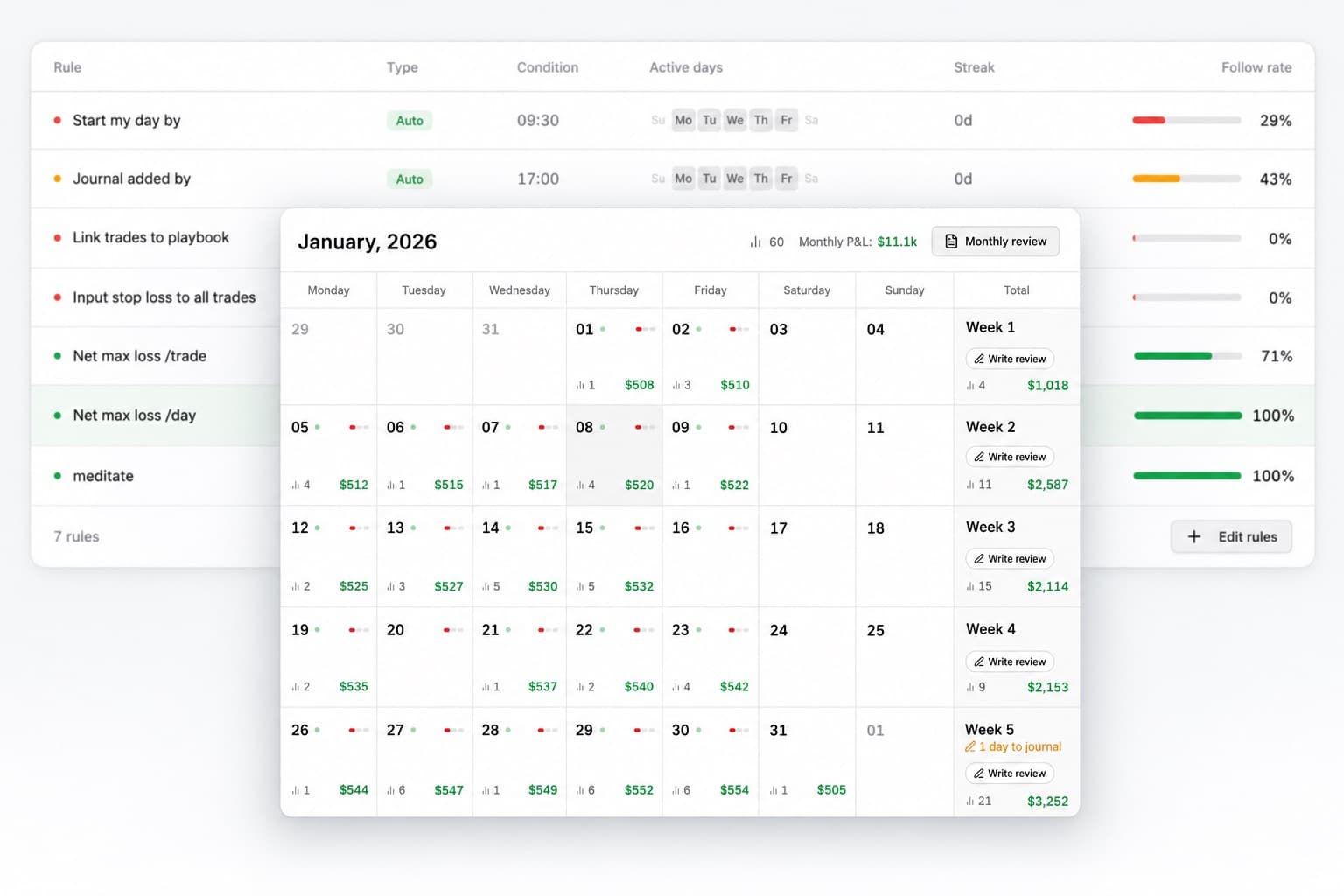
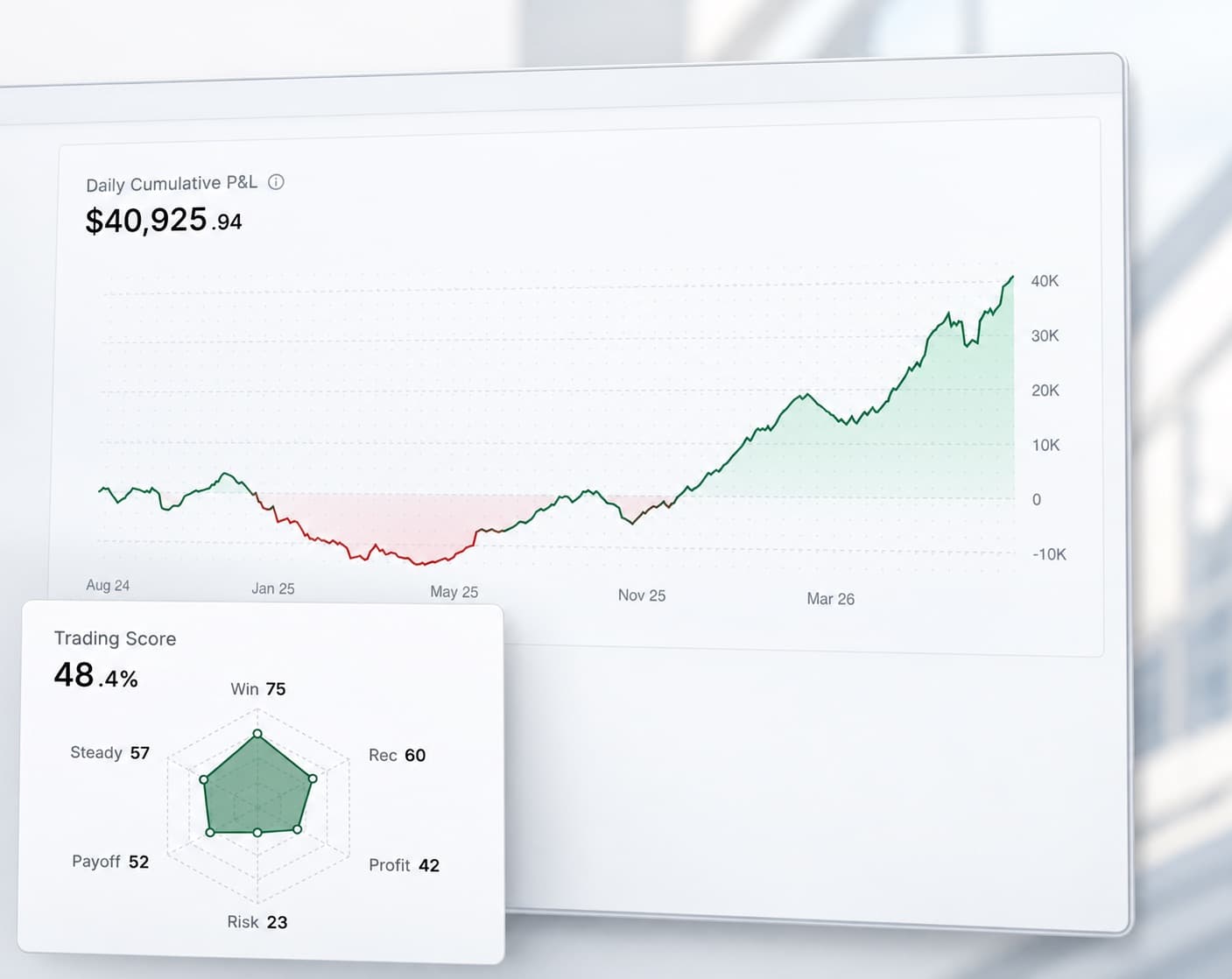
Use RizeTrade's Progress Tracker and consistency heat map to review your process across multiple trading days.
See when you consistently followed your rules.
See when your behaviour started slipping.
And compare those periods against your actual trading results.
P&L tells you whether you made money.
Consistency tells you whether you're building a process you can repeat.
Track Trading Emotions
Connect how you felt with how you traded
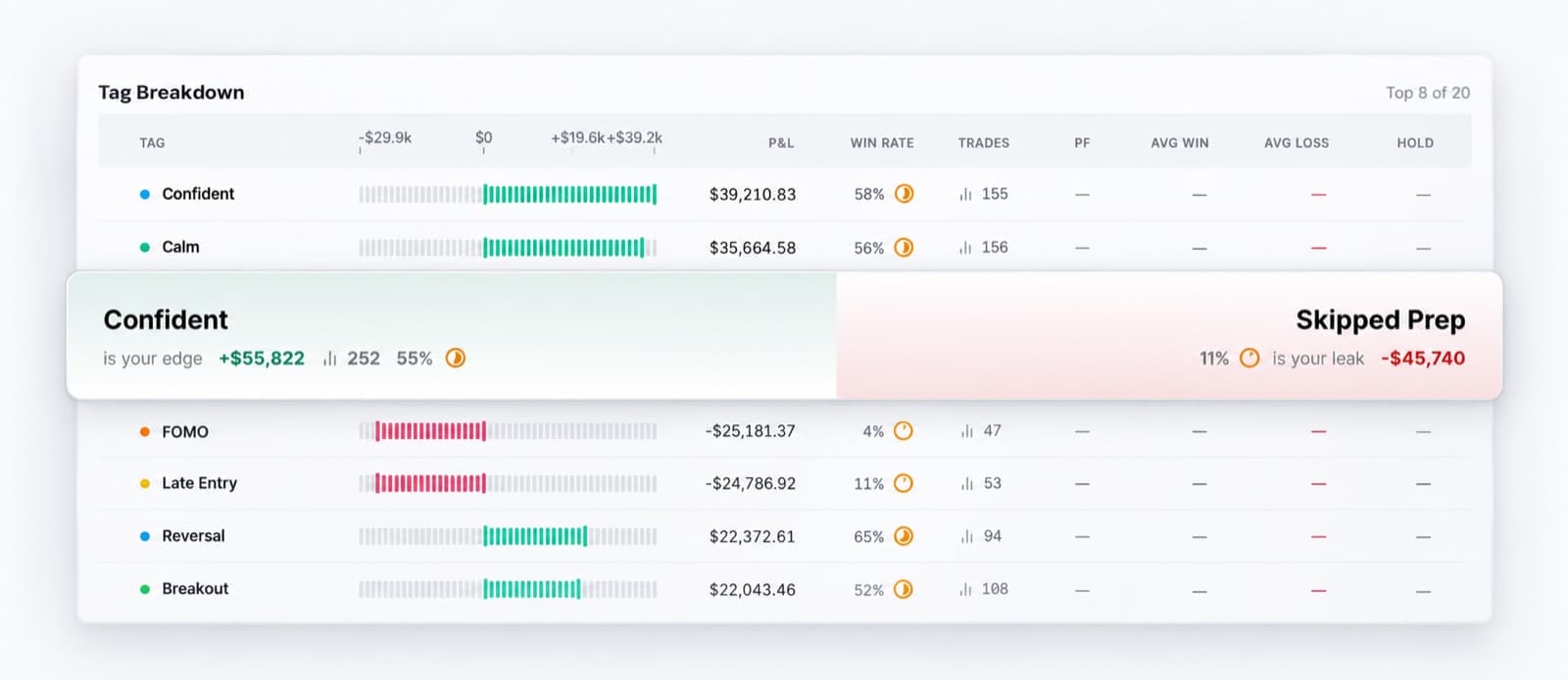
Record emotions and behaviours alongside individual trades.
Track things such as:
- FOMO
- Fear
- Revenge trading
- Frustration
- Boredom
- Hesitation
- Overconfidence
Then analyse those trades separately.
You may discover that FOMO trades have worse entries.
Or that revenge trading appears after specific types of losses.
Or that your exit efficiency collapses when you're trading scared.
RizeTrade lets you connect those behaviours with the actual performance of the trade.
Grade Your Trades
Don't let P&L decide whether you traded well
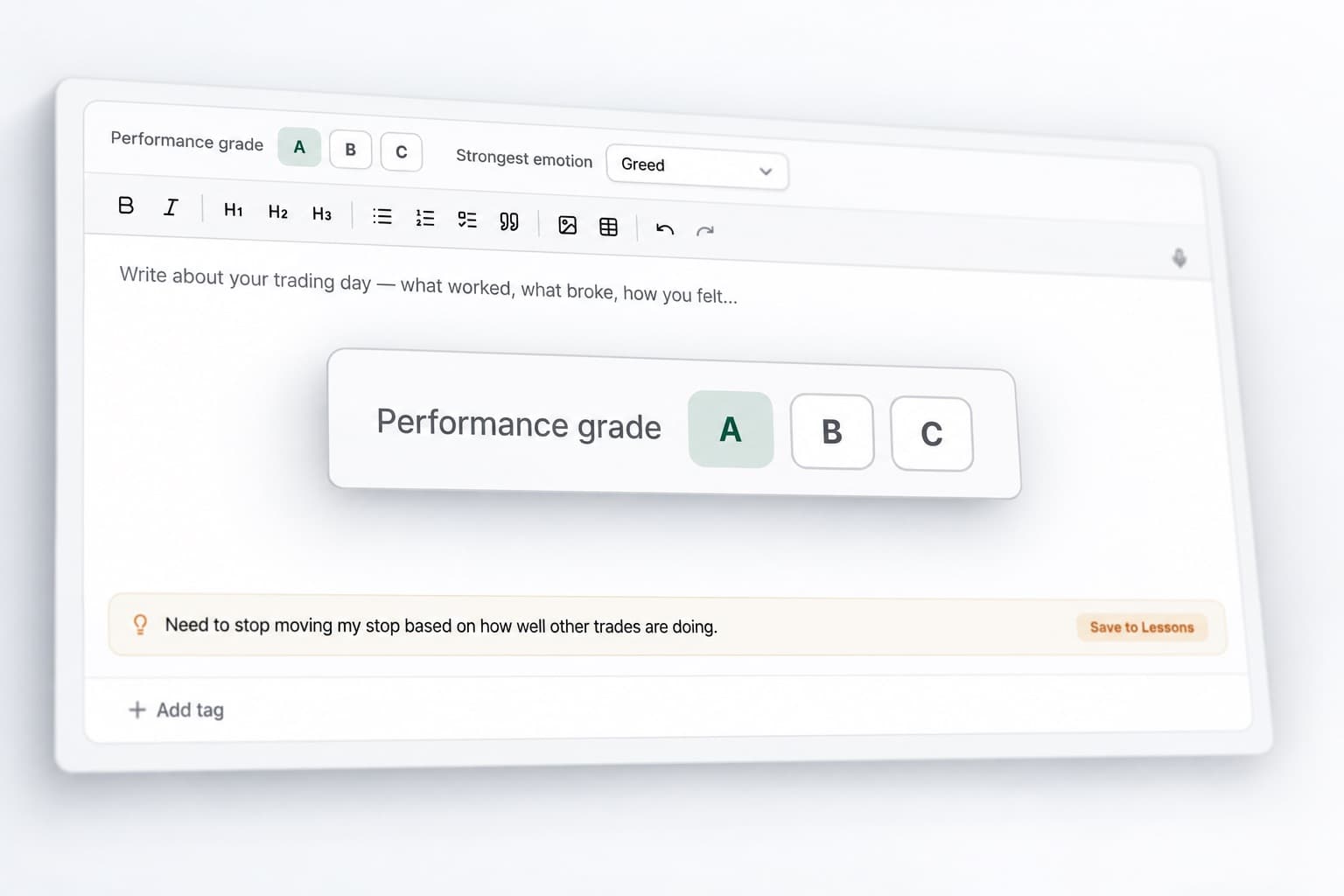
A winning trade can still be poorly executed.
A losing trade can follow your strategy perfectly.
Trade Grade lets you score the quality of the trade independently from its financial result.
That helps you identify which decisions are actually worth repeating rather than rewarding bad behaviour just because one trade happened to make money.
Review Your Trades on the Chart
See every execution in context
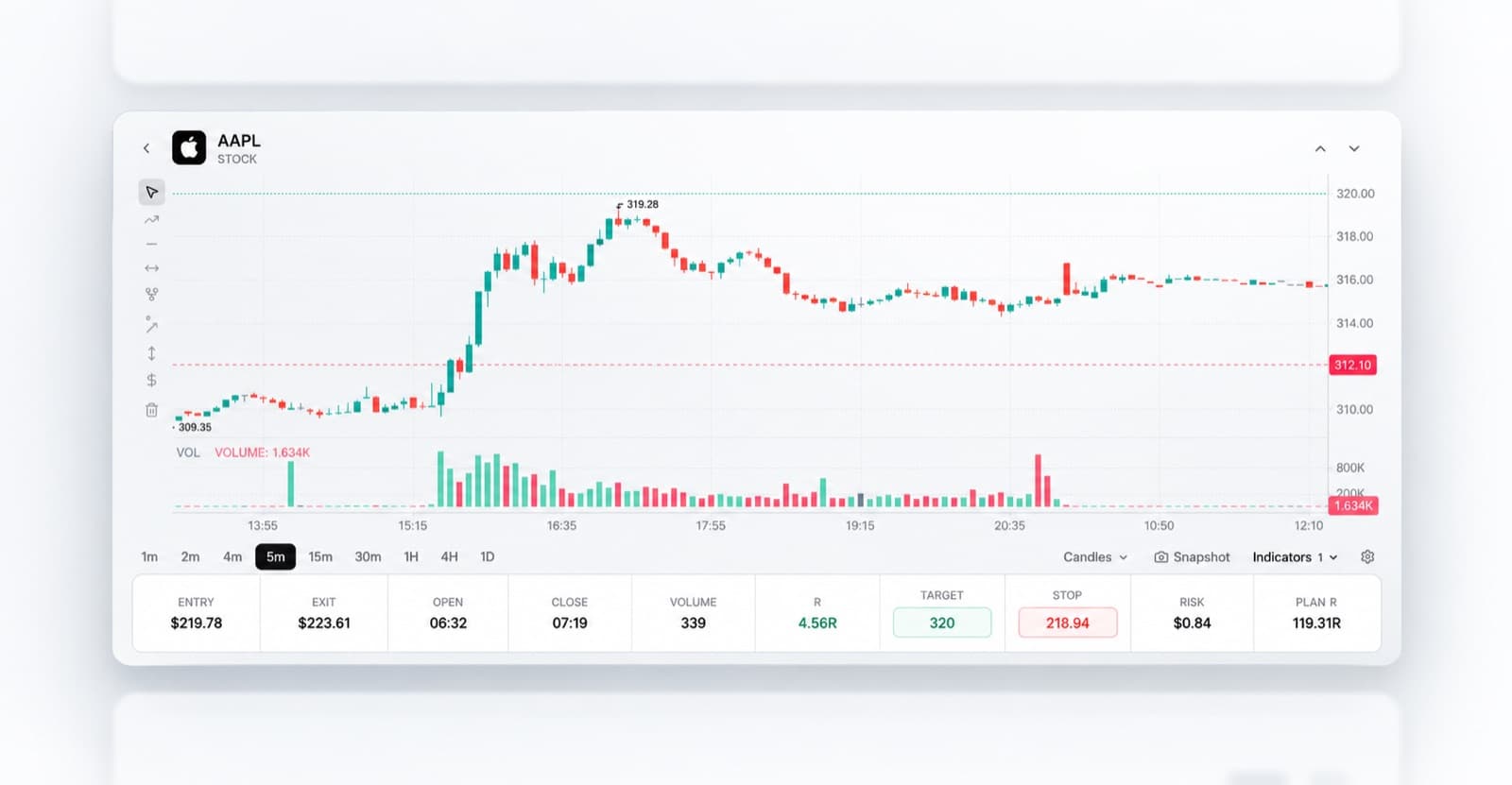
Open a completed trade and view it against the historical price chart.
See where you:
- Entered
- Added
- Reduced
- Exited
- Set your stop
- Set your profit target
Review what happened around each execution instead of looking at entry and exit prices in a table.
Combine the chart with your notes, strategy, emotions and rule compliance to understand the complete trade.
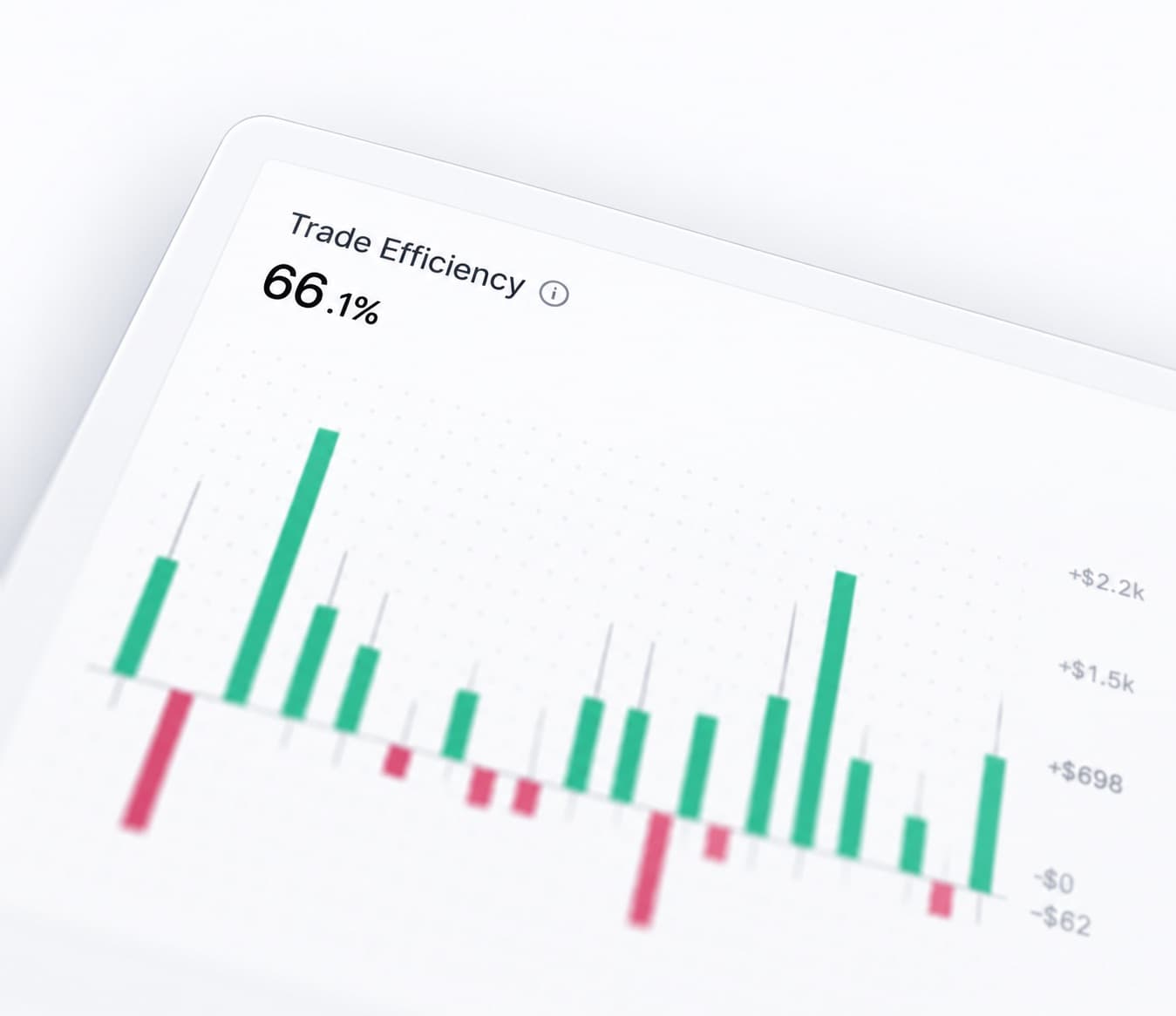
Analyse Your Exit Efficiency
Find out what happened after you entered
Good entries can still produce bad results when trade management is poor.
RizeTrade gives you dedicated execution metrics including:
- MAE
- MFE
- R-Multiple
- Best Exit Analysis
- Exit Efficiency Score
- Running P&L
- Stop loss
- Profit target
- Drawdown
Use them to identify whether you consistently:
- Exit winners too early
- Give back open profit
- Hold losers too long
- Place inefficient stops
- Manage otherwise good setups poorly
- That tells you whether the problem is finding the trade or managing it.
50+ Trading Reports
Break down your results automatically
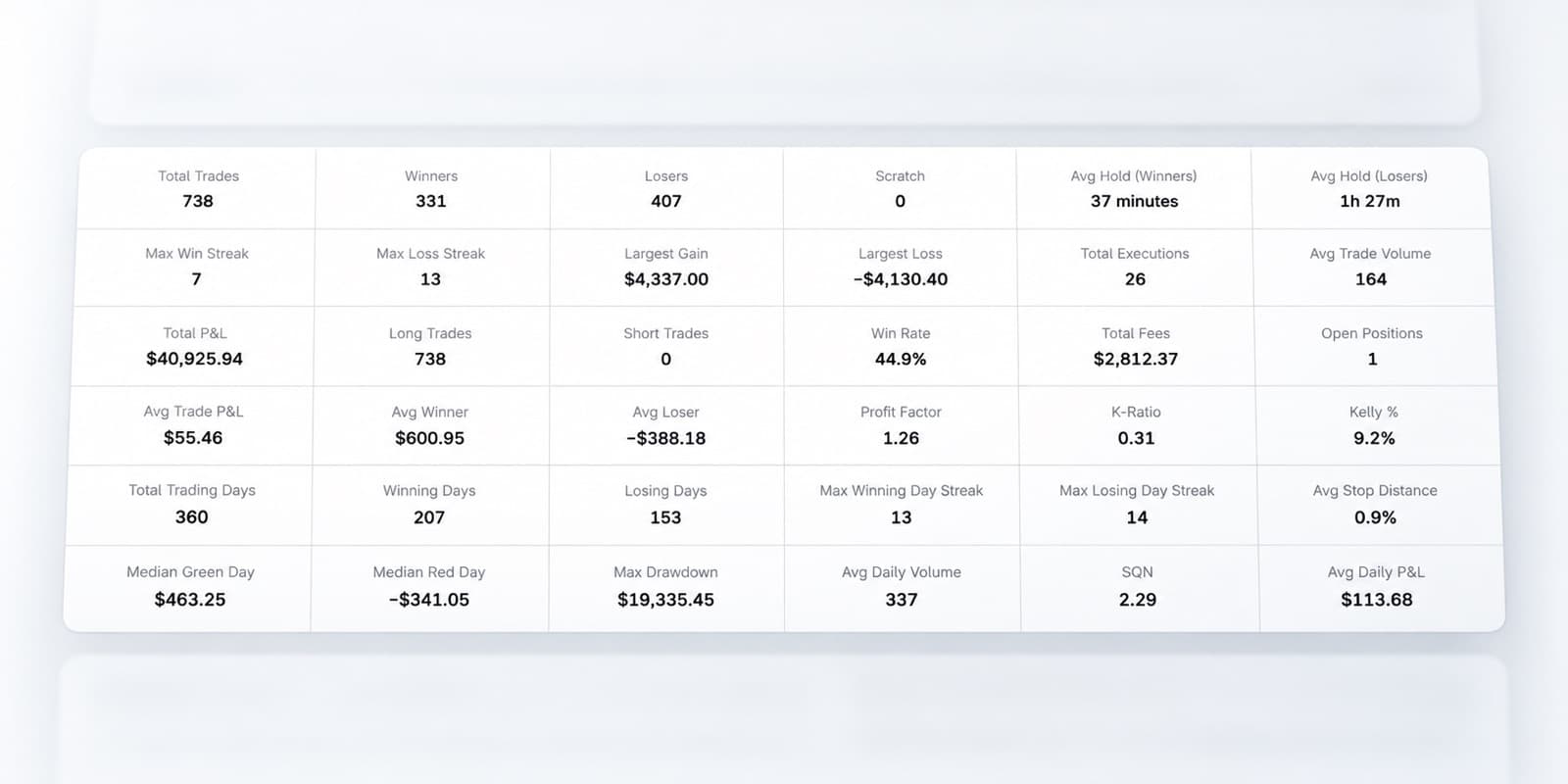
RizeTrade generates more than 50 reports from your imported trades.
Analyse performance by:
- Date
- Time
- Symbol
- Instrument
- Strategy
- Playbook
- Tags
- Risk
- Position size
- Trade duration
- Price
- Quantity
- Wins and losses
Stack filters when you want to answer a more specific question.
For example:
- How does this strategy perform before 10:00 AM?
- What is my win rate when I follow every playbook rule?
- Which setups have the highest exit efficiency?
- What happens after two consecutive losing trades?
The point isn't collecting more statistics.
It's finding the pattern that changes what you do next.
Ask Trading Mentor AI
Ask questions about your own trading history
RizeTrade's Trading Mentor AI gives you another way to analyse your journal.
Ask questions such as:
- “Which rules do I break most often?”
- “When do I exit winners too early?”
- “Which emotions appear on my worst trades?”
- “Which strategy performs best when I follow every rule?”
- “What happens to my performance later in the trading session?”
Start with the question instead of manually searching through your trading history.

Where StonkJournal Is Better
StonkJournal is a strong option if your priority is getting a capable trading journal for as little money as possible.
Its current free plan includes:
- Unlimited manual trades
- Unlimited accounts
- Major market support
- Performance statistics
- Equity curve
- Calendar
- Filtering
- Trade setups
- Risk-management rules
- Rule compliance
- Multi-leg options tracking
Its $10/month Pro plan adds CSV imports, AI Coach, AI Chat and aggregated multi-account analysis.
- If you're happy manually logging trades and want a low-cost journal, StonkJournal is difficult to argue with.
Where RizeTrade Makes More Sense
Choose RizeTrade if you want the journal to fit around your trading, not the other way around
RizeTrade makes more sense if you're asking:
- Can my trades import automatically?
- Am I following my strategy correctly?
- Which rules do I repeatedly break?
- How consistent is my discipline?
- Which emotions affect my execution?
- Am I exiting profitable trades efficiently?
- Where specifically am I giving away performance?
RizeTrade is built around turning imported trading data into a structured improvement process.
- Import
- Review
- Analyse
- Improve
StonkJournal Is Cheaper. RizeTrade Is More Automated.
There's no need to dance around the pricing.
StonkJournal
Free, or $10/month
A permanent free tier, with Pro currently at $10/month.
RizeTrade
Free
RizeTrade is free.
So if your only question is:
- “What's the cheaper trading journal?”
StonkJournal wins.
The reason to choose RizeTrade is different.
You're paying for a more automated workflow with broker syncing, deeper execution analysis, structured playbooks, compliance scoring, discipline tracking and 50+ reports.
If those features save you from manually maintaining your journal and help you identify the behaviours affecting your trading, the difference in price can make sense.
Free StonkJournal Alternative
RizeTrade
Free
Includes:
- Automatic broker sync
- Unlimited CSV imports
- Manual trade entry
- Unlimited trading accounts
- Strategy Playbooks
- Playbook Compliance Score
- Discipline Tracker
- Progress Tracker
- Consistency Heat Map
- Emotion tracking
- Daily journal
- P&L Calendar
- Historical trade charts
- 50+ reports
- MAE & MFE
- Best Exit Analysis
- Exit Efficiency Score
Trading Mentor AI
$29/month
Adds an AI mentor that reads your trades. Everything else is free.
Start freeStonkJournal Alternative FAQs
- Is RizeTrade a StonkJournal alternative?
Yes.
Both products let traders journal trades, analyse performance, track strategies and review trading behaviour.
RizeTrade adds automatic broker syncing and a more extensive structured workflow around playbooks, discipline and execution analysis.
- Is StonkJournal free?
Yes.
StonkJournal currently offers a permanent free plan with unlimited manual trades and accounts.
Its Pro plan costs $10/month.
- Is RizeTrade cheaper than StonkJournal?
RizeTrade is free.
StonkJournal has a free plan and a $10/month Pro plan.
RizeTrade's advantage is its broader automation and trade-review feature set rather than price.
- Can StonkJournal automatically sync my broker?
StonkJournal does not currently offer direct broker synchronisation.
Trades can be entered manually, while CSV import is available on its Pro plan.
RizeTrade supports automatic broker syncing across supported brokers, prop firms and trading platforms.
- Does RizeTrade support automatic trade imports?
Yes.
Connect a supported broker or trading platform and RizeTrade can automatically import your trading activity.
CSV uploads and manual entry are also available.
- Does StonkJournal track trading rules?
Yes.
StonkJournal supports risk-management rules and weighted rule-compliance scoring.
RizeTrade also tracks rules through strategy playbooks, Playbook Compliance Scores, Progress Tracker and its Discipline Tracker.
- Does StonkJournal have AI?
Yes.
StonkJournal Pro includes an AI Coach and AI Chat.
RizeTrade offers Trading Mentor AI for analysing your trading history and behaviour.
- Does RizeTrade analyse trade execution?
Yes.
RizeTrade includes MAE, MFE, R-Multiple tracking, Best Exit Analysis and an Exit Efficiency Score.
- Can I import existing trades into RizeTrade?
Yes.
You can automatically sync a supported broker, upload historical trades by CSV or enter trades manually.
Try RizeTrade as Your StonkJournal Alternative
A journal only helps when it becomes part of your trading process.
RizeTrade removes more of the manual work and gives you dedicated tools to understand your strategies, rules, discipline, emotions and execution.
- Connect your broker.
- Import your trades.
- Find out what needs fixing.