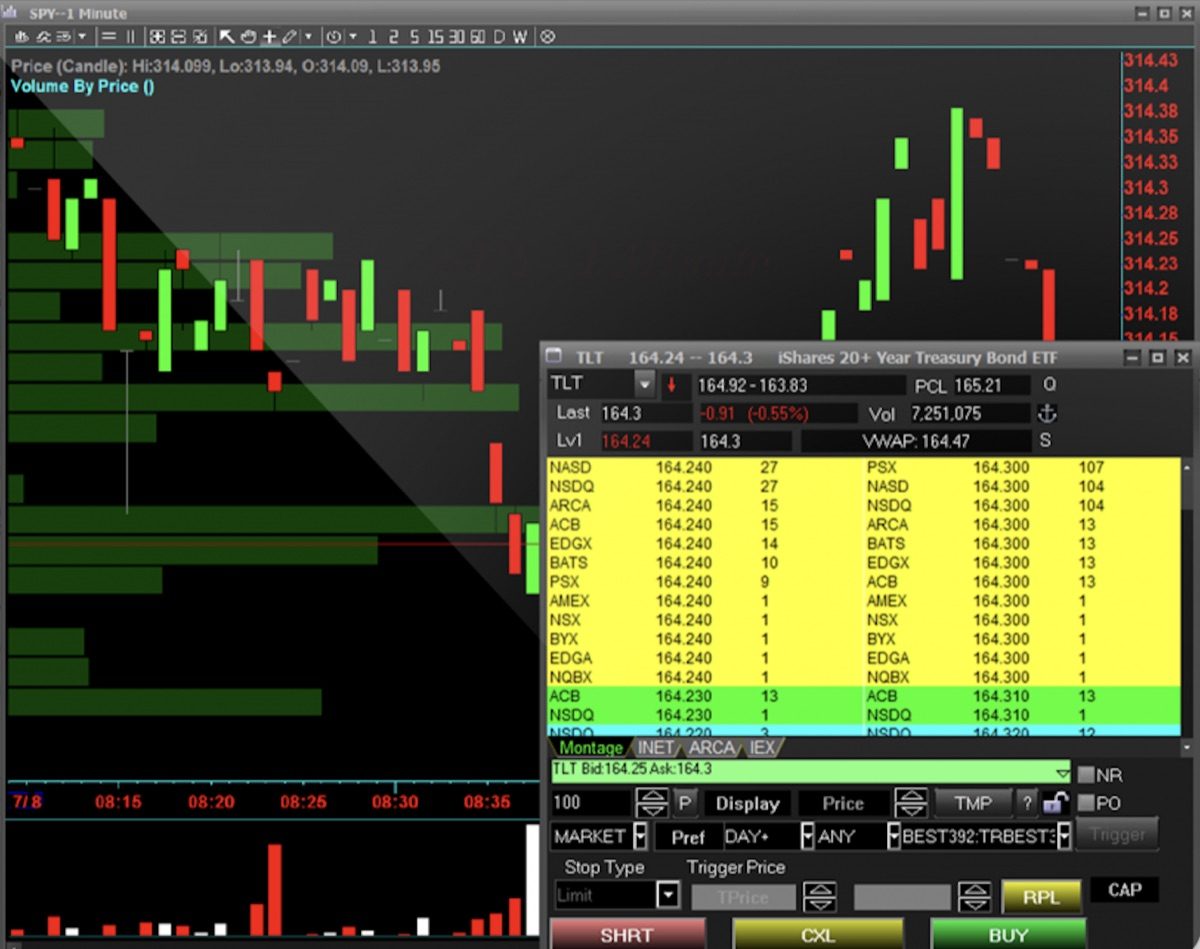
DAS Trader Pro is a direct-access trading platform for active traders, and typical retail costs in 2026 run from $100 to $200 a month.
DAS Trader Pro is widely recommended in day-trading communities. That advice fits active scalpers better than beginners, swing traders, or anyone trading small size.
What Is DAS Trader Pro?
DAS Trader Pro is a direct-access trading platform that connects to a broker's execution system. DAS Trader is not a broker. You open an account with a supported broker, such as Interactive Brokers, Lightspeed, CenterPoint, SpeedTrader, Cobra, or one of the many prop-firm and niche brokers, then pay separately for the DAS platform.
If you subscribe to DAS Trader Pro directly rather than through a broker, you get the platform, charting, Level 2 data, and market scanning. You do not get order routing or execution. You still need a broker account to place trades.
DAS offers two main products:
DAS Trader Pro: The full desktop platform is Windows-only. You can run it on a Mac through Boot Camp, Parallels, or VMware Fusion, but the software is built for Windows.
DAS ActiveWeb Trader: The browser-based HTML5 version supports customization and multiple screens. It is aimed at traders who want a simpler setup than the full desktop platform.
How Much Does DAS Trader Pro Cost?
DAS Trader Pro typically costs retail traders $100 to $200 a month, depending on the subscription tier, broker, and data package.
Broker pricing varies:
Interactive Brokers: $100 a month for the platform, plus data charges. Interactive Brokers does not waive the fee for high-volume traders, so the $100 charge applies regardless of share volume.
Lightspeed: $130 a month for the platform, offset by commissions. Reg T accounts require a $50,000 minimum balance, with per-share commissions ranging from $0.001 to $0.0035.
SpeedTrader: $25 for web-only access and up to $104 for advanced packages. The fee is waived when you generate $499 in commissions.
CenterPoint Securities: The platform fee is waived above 200,000 shares per month.
Direct from DAS: Around $100 to $150 a month, depending on the data package. This sits on top of a separate brokerage account, such as Schwab.
Data is the other cost to budget for. A standard package runs around $18 a month, while a premium package costs around $68. Adding the platform fee and premium data puts many active retail traders near the $150 to $200 monthly range.
Professional-status pricing follows a different schedule. Traders who meet the SEC or CFTC definition of a professional trader pay $63 and $148 a month for the professional versions of those packages. A trader using OTC Level 2, ARCA, and E-Mini data at the same time can pay more than $750 a month for data alone.
That $750 figure does not represent the normal DAS Trader cost. It applies to professional-status traders using several data feeds at once.
For a full-time day trader averaging 300 or more trades a week, commission or share-volume waivers can offset the platform fee. For a smaller trader, the monthly cost can be harder to justify because you may be paying for capacity you do not use.
What Are You Paying For?
Hotkeys: Programmable hotkeys allow one-click execution at specific bid or ask prices. You can also customize colors, columns, and watchlists. Hotkeys are the feature scalpers cite most often.
Level 2 and short locator: DAS Trader Pro brokers include a short locator tool. That matters if you trade short strategies on small-cap stocks and OTC securities.
Execution speed: Orders typically execute in under a second through a low-latency network and direct market access.
Charting: The platform includes full-screen charts, 10 drawing tools, and more than 40 technical indicators. It is not the deepest charting suite available, but it is fast and functional.
Options: The paid version supports multileg option strategies, and derivative orders can be routed to specific market makers.
Nathan Michaud, founder of InvestorsLive, has described DAS Trader as one of the most capable trading platforms available.
Where Does DAS Trader Pro Fall Short?
Steep learning curve: The platform's dense feature set can overwhelm new traders.
Limited mobile experience: The mobile app does not offer the same range of functions as the desktop version.
No built-in education: DAS does not provide an education layer for less-experienced traders. You are expected to know how to trade before using the platform.
Fixed costs can outweigh the benefits: If you trade infrequently or use small position sizes, faster execution may not justify the monthly fee.
Who Should Use DAS Trader Pro?
High-frequency, high-volume day traders and scalpers are the best fit for DAS Trader Pro. The $100 to $200 monthly cost makes more sense when execution speed and hotkey control matter and you place hundreds of trades daily.
DAS Trader Pro is a poor fit for swing traders who hold positions overnight, traders using fewer than 50 shares a day, and beginners who have not developed a repeatable setup.
Is DAS Trader Pro Worth It?
DAS Trader Pro is worth the cost when you need programmable hotkeys, a short locator, and fast order execution at high volume. Most retail day traders should budget $100 to $200 a month with a solid data package. The $750 figure applies to professional-status traders running the full data stack, not typical users.
Compare your trade frequency and share size with the broker fees before choosing a tier.
The key question is whether you need the platform's capacity now. If you do not, the monthly fee is an avoidable cost.