

Looking for an alternative?
Edgewonk Alternative
A simpler way to track your discipline, review your execution and improve your trading.
Edgewonk is built around detailed performance and trading psychology analysis.
RizeTrade shares the same belief that your journal should track more than P&L, but gives you a different way to do it.
Automatically import your trades, turn your strategy into measurable rules, track your discipline on a heat map and see exactly where your execution is leaving money on the table.
100% FreeNo CC Required
4.8/5 1,794 Reviews


RizeTrade vs Edgewonk
RizeTrade and Edgewonk both go beyond basic trade logging.
Both let you import trades, track strategies, review psychology, analyse MAE and MFE and investigate how your execution affects results.
The difference is in the workflow.
Edgewonk offers a large collection of analytics, optimisation tools, simulations and customisation.
RizeTrade is designed around a more direct daily process:
- Plan
- Trade
- Review
- Measure Discipline
- Improve
| Feature | RizeTrade | Edgewonk |
|---|---|---|
| Automatic Trade Imports | Yes | Yes |
| CSV / File Import | Yes | Yes |
| Manual Trade Entry | Yes | Yes |
| Trading Journal | Yes | Yes |
| P&L Calendar | Yes | Yes |
| Strategy Tracking | Yes | Yes |
| Strategy Rules / Checklists | Yes | Yes |
| Discipline Tracking | Yes | Yes |
| Psychology Tracking | Yes | Yes |
| Emotion Tracking | Yes | Yes |
| MAE & MFE | Yes | Yes |
| Best Exit Analysis | Yes | Yes |
| Trade Management Analysis | Yes | Yes |
| Playbook Rule-Follow Score | Yes | Checklist analysis |
| Consistency Heat Map | Yes | Discipline analytics |
| Trade Grade | Yes | Trade Quality Analysis |
| Exit Efficiency Score | Yes | Trade Management Optimizer |
| Trading Mentor AI | Yes | Automated Edge Finder |
| Performance Simulator | No | Yes |
| Alternative Strategy Testing | No | Yes |
| Missed Trade Tracking | No | Yes |
| Monthly Subscription | Yes | No |
| Annual Subscription | Optional | Yes |
Choose RizeTrade if you want a focused daily system for measuring your process and execution.
Choose Edgewonk if you want deeper simulation, alternative strategy testing and extensive journal customisation.
Track Your Discipline Without Digging Through Your Journal
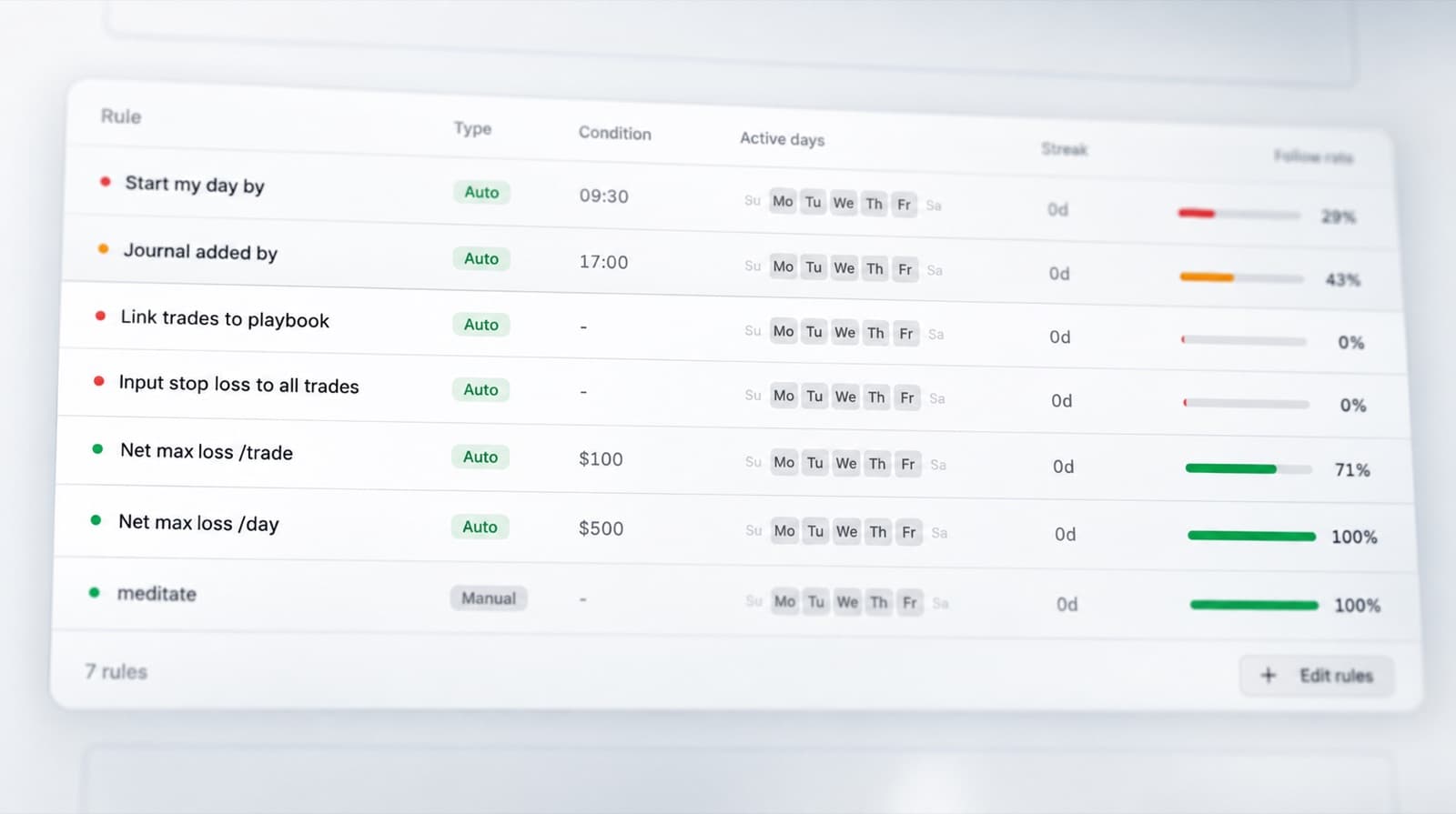
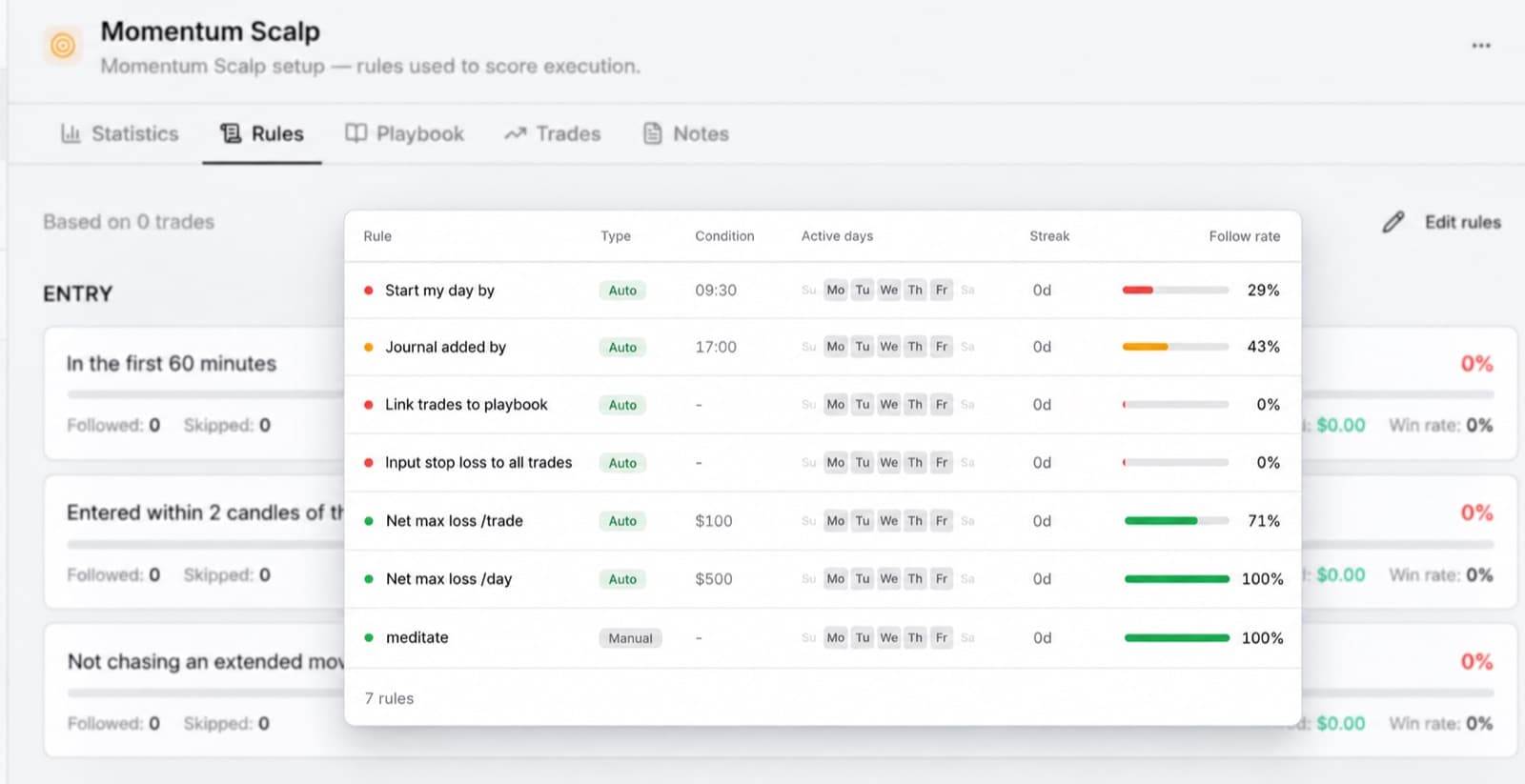
Make rule-following part of the dashboard
RizeTrade puts discipline at the centre of the product.
Set the rules that define how you should trade and track whether you actually followed them.
Monitor things such as:
- Maximum daily loss
- Maximum number of trades
- Stop trading time
- Risk limits
- Setup requirements
- Entry rules
- Stop-loss rules
- Pre-market preparation
- Post-trade review
Your Consistency Tracker then gives you a heat-map view of how reliably you followed your process.
Instead of relying on memory to decide whether you've been disciplined lately, you can see it.
Turn Your Strategy Into a Playbook
Measure whether you traded the setup correctly
Create a Trading Playbook for each strategy.
Define the conditions that should be present before you take the trade:
- Market conditions
- Setup criteria
- Confirmation
- Entry rules
- Risk
- Stop placement
- Trade management
- Exit criteria
Then score completed trades against those rules.
RizeTrade's rule-follow scoring lets you compare trades where you followed your process against trades where you deviated from it.
That helps answer one of the most important questions in a journal:
- Does my strategy not work, or am I not trading it properly?
See Your Discipline Across the Month
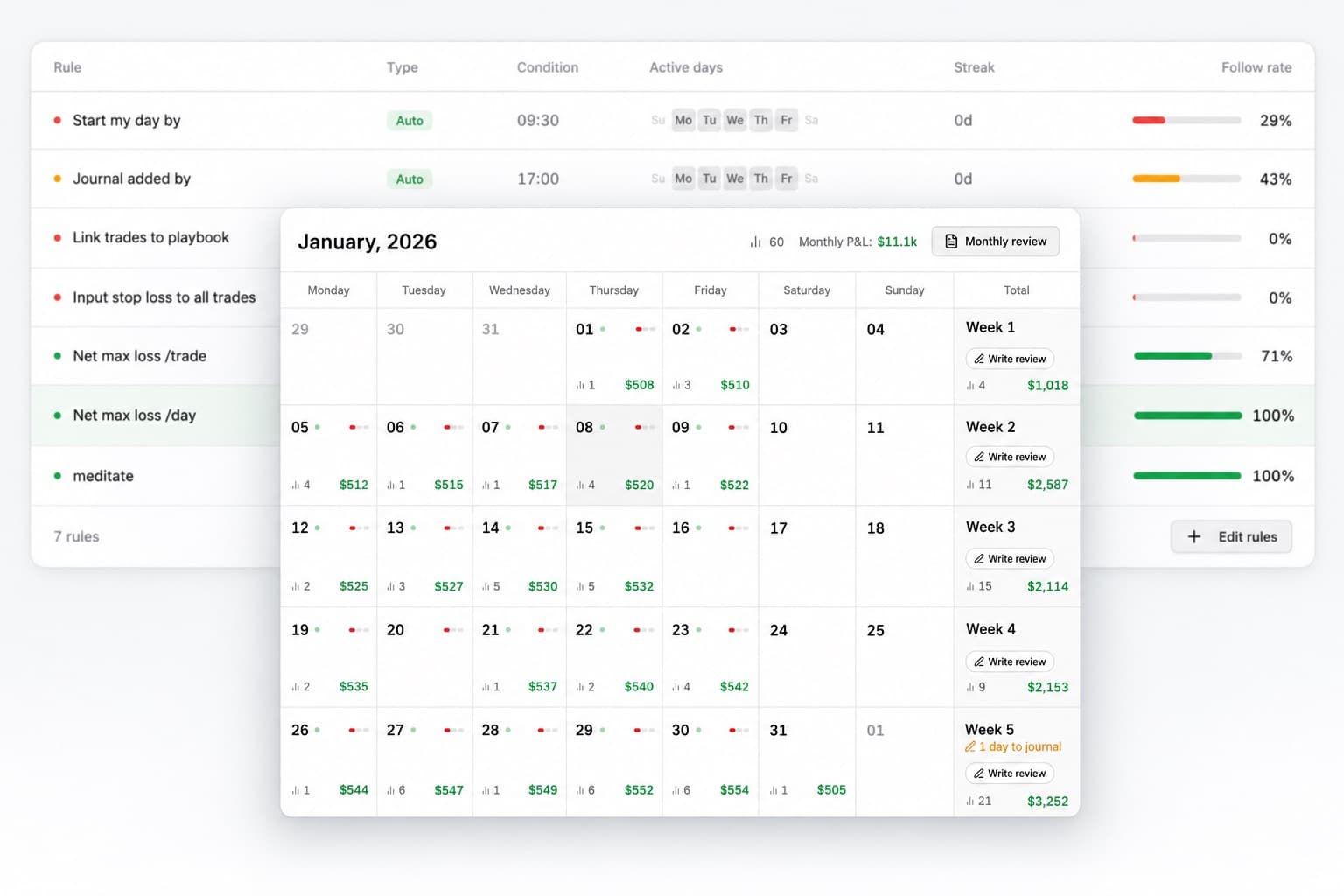
Consistency should be visible
Discipline is not one checkbox on one trade.
It is what you repeatedly do across dozens of sessions.
RizeTrade's Consistency Tracker gives you a visual heat map of your rule-following over time.
See:
- Strong periods of consistency
- Days where your process broke down
- Repeated rule violations
- Changes in behaviour
- Whether discipline improves alongside performance
P&L tells you the result.
The heat map shows whether the process producing that result is becoming more consistent.
Track Your Trading Emotions
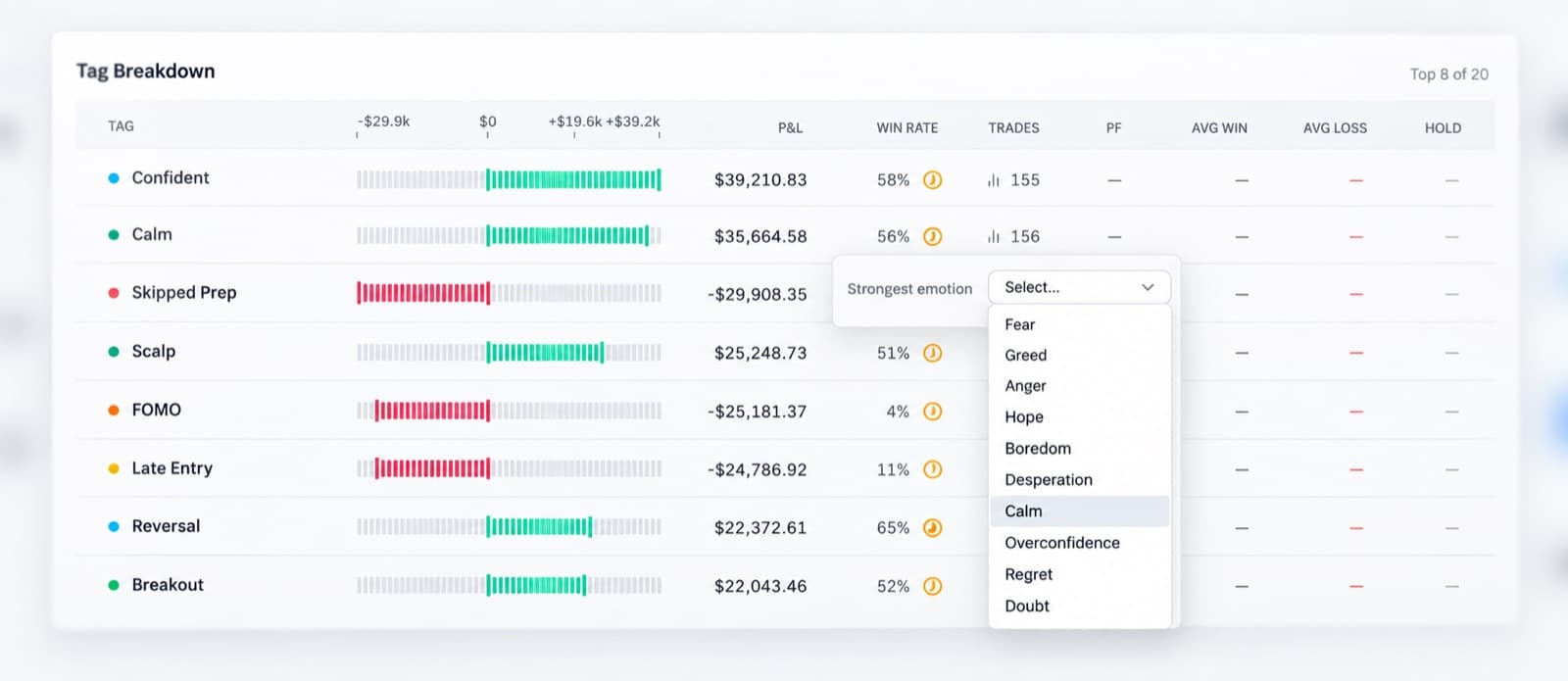
See how your mental state affects your results
Record emotions and behaviours alongside individual trades.
Track things such as:
- FOMO
- Fear
- Revenge trading
- Frustration
- Boredom
- Hesitation
- Overconfidence
Then analyse those trades separately.
Maybe your FOMO trades have lower expectancy.
Maybe frustration causes you to overtrade.
Maybe fear causes you to take profit before your target.
Instead of treating psychology as something separate from your trading statistics, RizeTrade connects it directly with the trades.
Review Every Trade on the Chart
See your decisions in market context
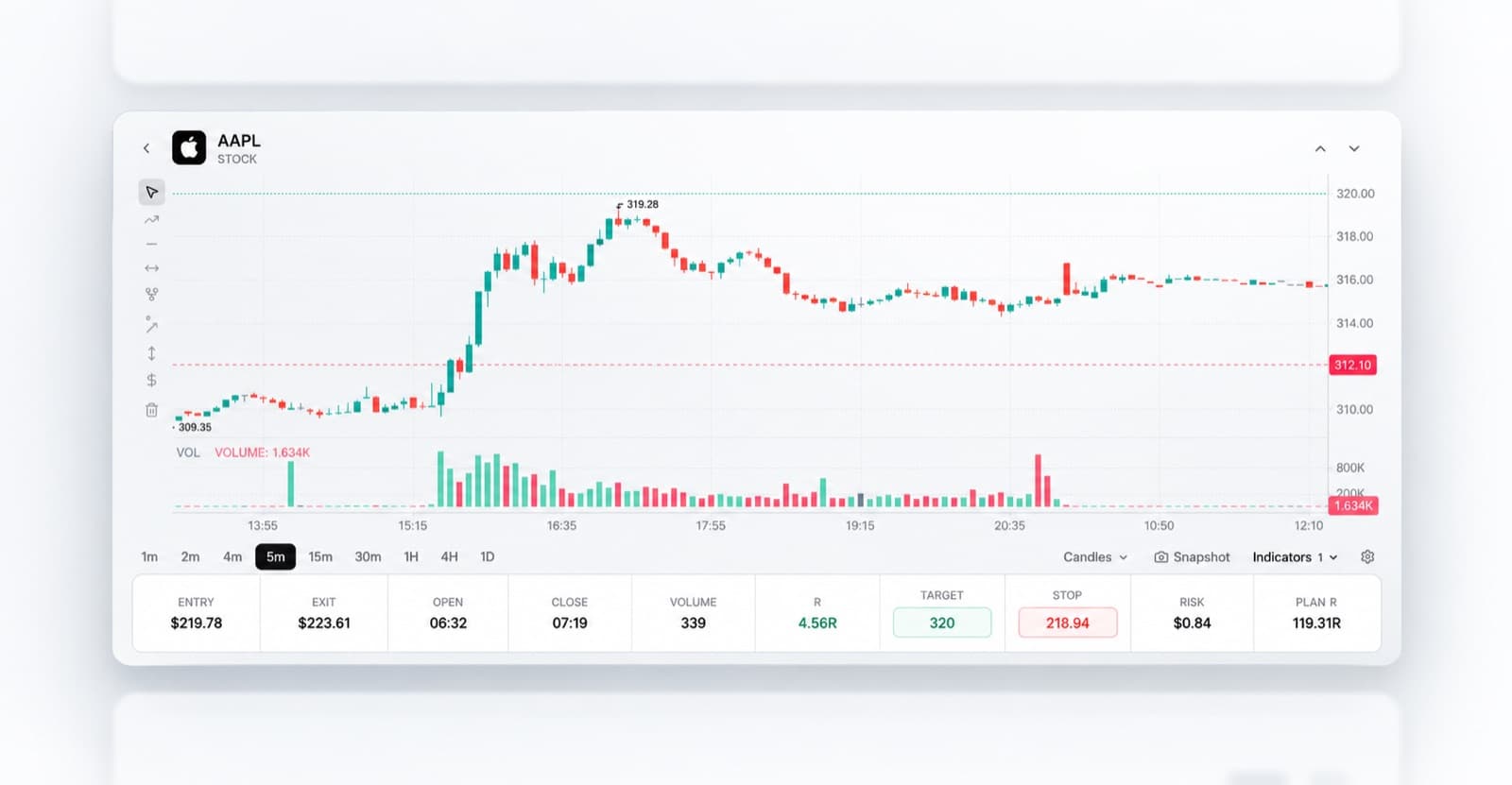
Open a completed trade and see your executions plotted directly on the historical chart.
Review where you:
- Entered
- Added
- Reduced
- Exited
- Placed your stop
- Set your profit target
Looking at an entry and exit price tells you the numbers.
Looking at the chart tells you what actually happened between them.
Combine the chart with your notes, strategy, rules and emotions when reviewing the trade.
Measure Your Exit Efficiency
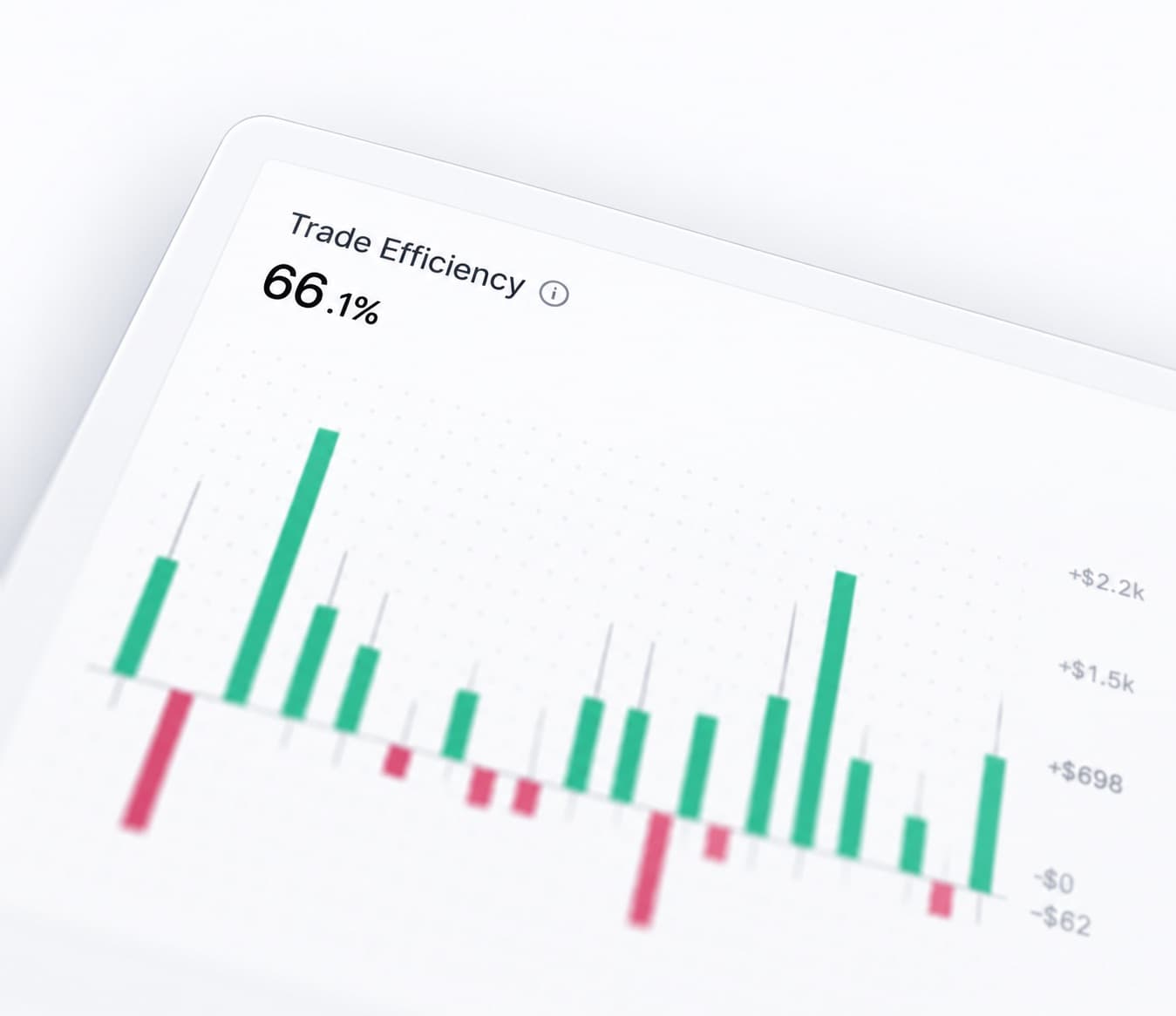
See how much of the trade you actually captured
A good setup can still be traded badly.
RizeTrade includes execution metrics designed to make that visible.
Review:
- R-Multiple
- MAE
- MFE
- Best Exit Analysis
- Exit Efficiency Score
- Running P&L
- Stop loss
- Take profit
- Drawdown
See whether you repeatedly:
- Close winning trades too early
- Give too much profit back
- Hold losing trades too long
- Use inefficient stops
- Manage otherwise good entries badly
That makes the problem easier to diagnose.
You may not need another strategy.
You may simply need to execute the strategy you already have better.
Grade the Quality of Your Trades
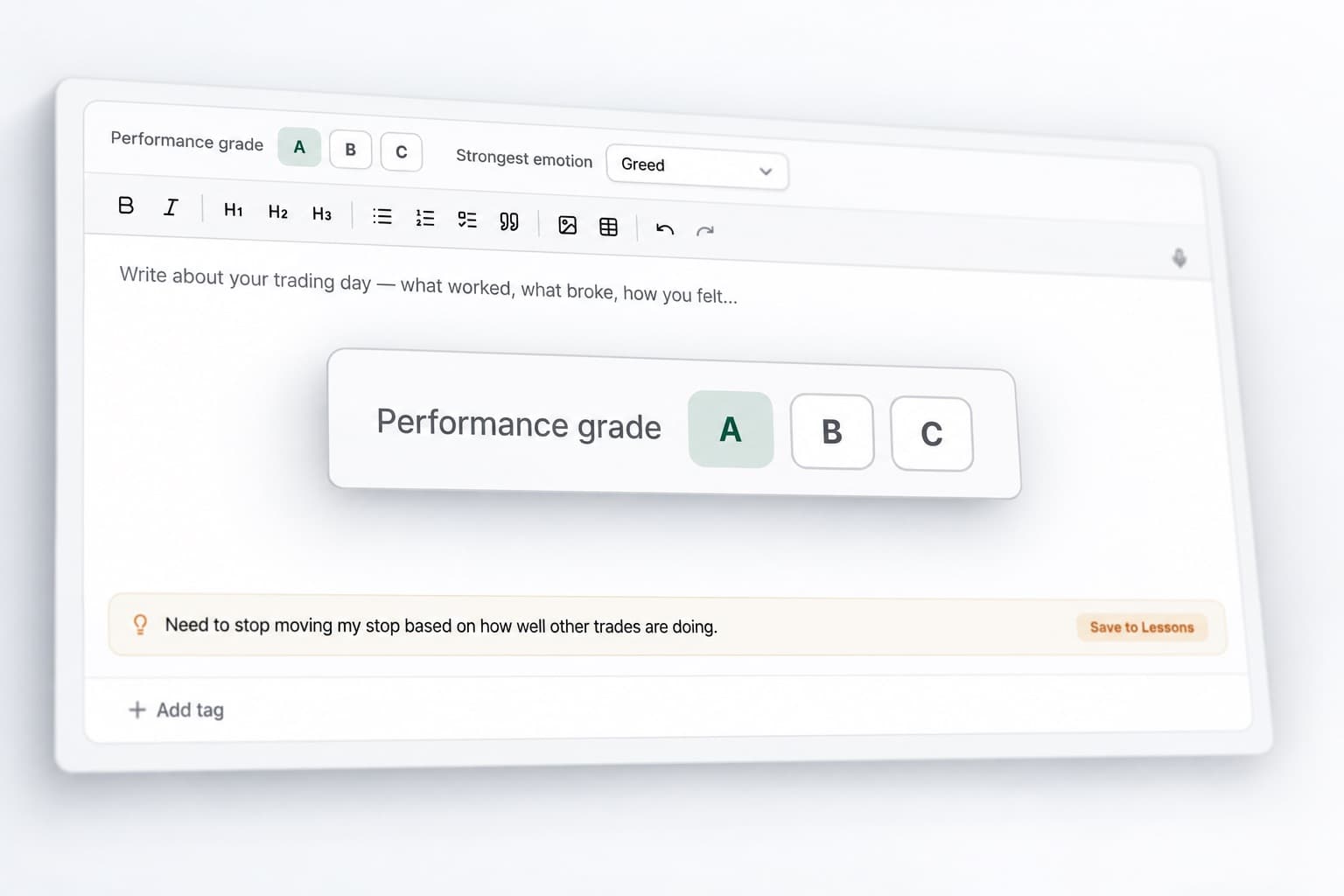
Separate a good decision from a profitable outcome
P&L can give you bad feedback.
Break every rule and make $2,000?
The trade is green.
Follow your plan perfectly and take a controlled stop?
The trade is red.
That does not mean the first trade should be repeated and the second should be avoided.
RizeTrade's Trade Grade gives you another way to evaluate how well you actually executed.
Review your process separately from the random outcome of one individual trade.
50+ Reports Without Losing the Daily Workflow
Analyse the variables that actually affect your performance
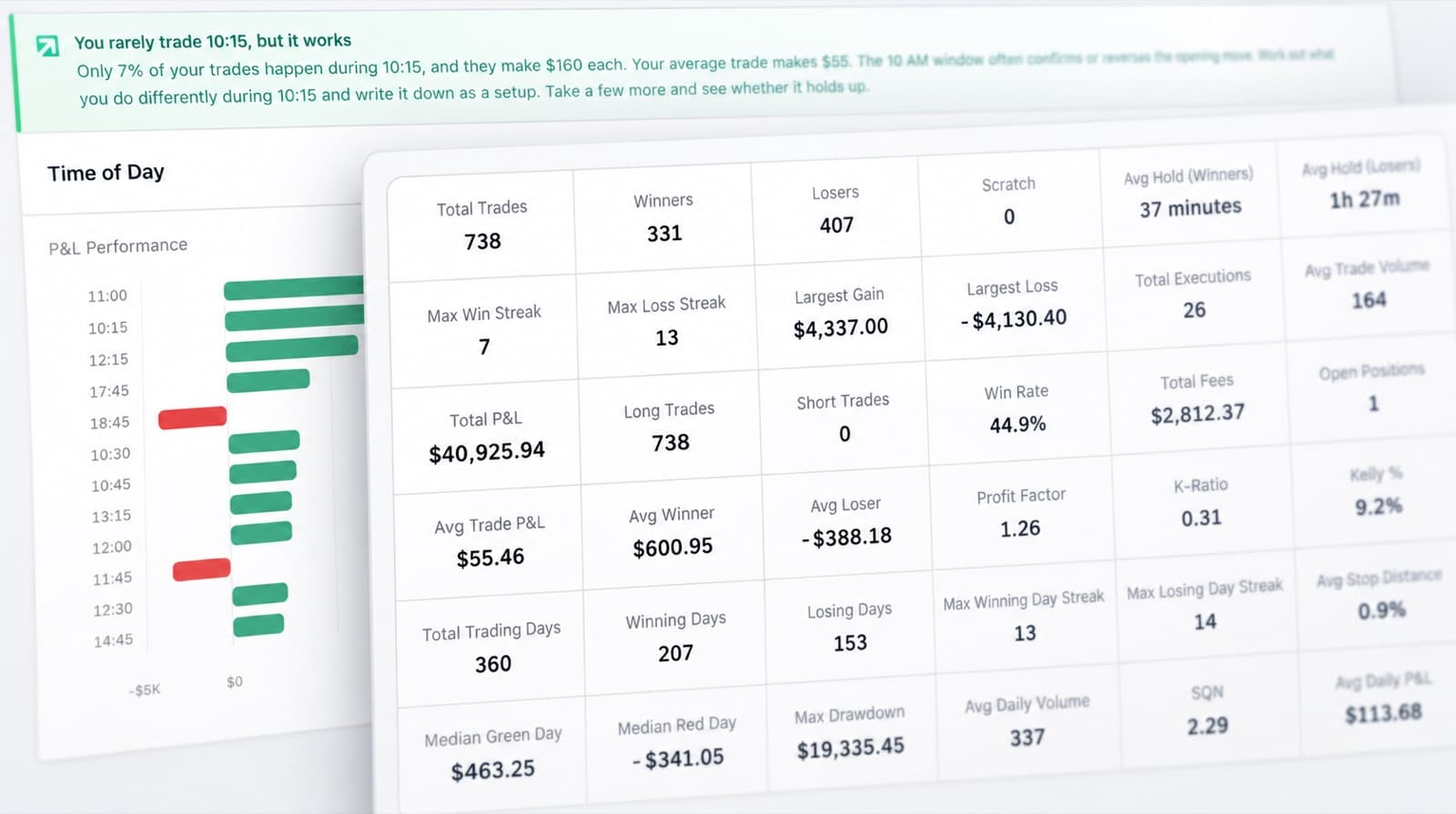
RizeTrade automatically generates more than 50 reports from your trading data.
Review performance by:
- Date
- Time
- Symbol
- Instrument
- Strategy
- Playbook
- Tags
- Risk
- Position size
- Trade duration
- Price
- Quantity
- Wins and losses
Combine filters when you want to investigate something specific.
For example:
- How does this strategy perform when I follow every rule?
- Which time of day produces my worst exit efficiency?
- What happens to my trading after my first loss of the day?
- Which emotions appear most often on my worst trades?
The aim isn't to stare at more statistics.
It's to find something you can actually change.
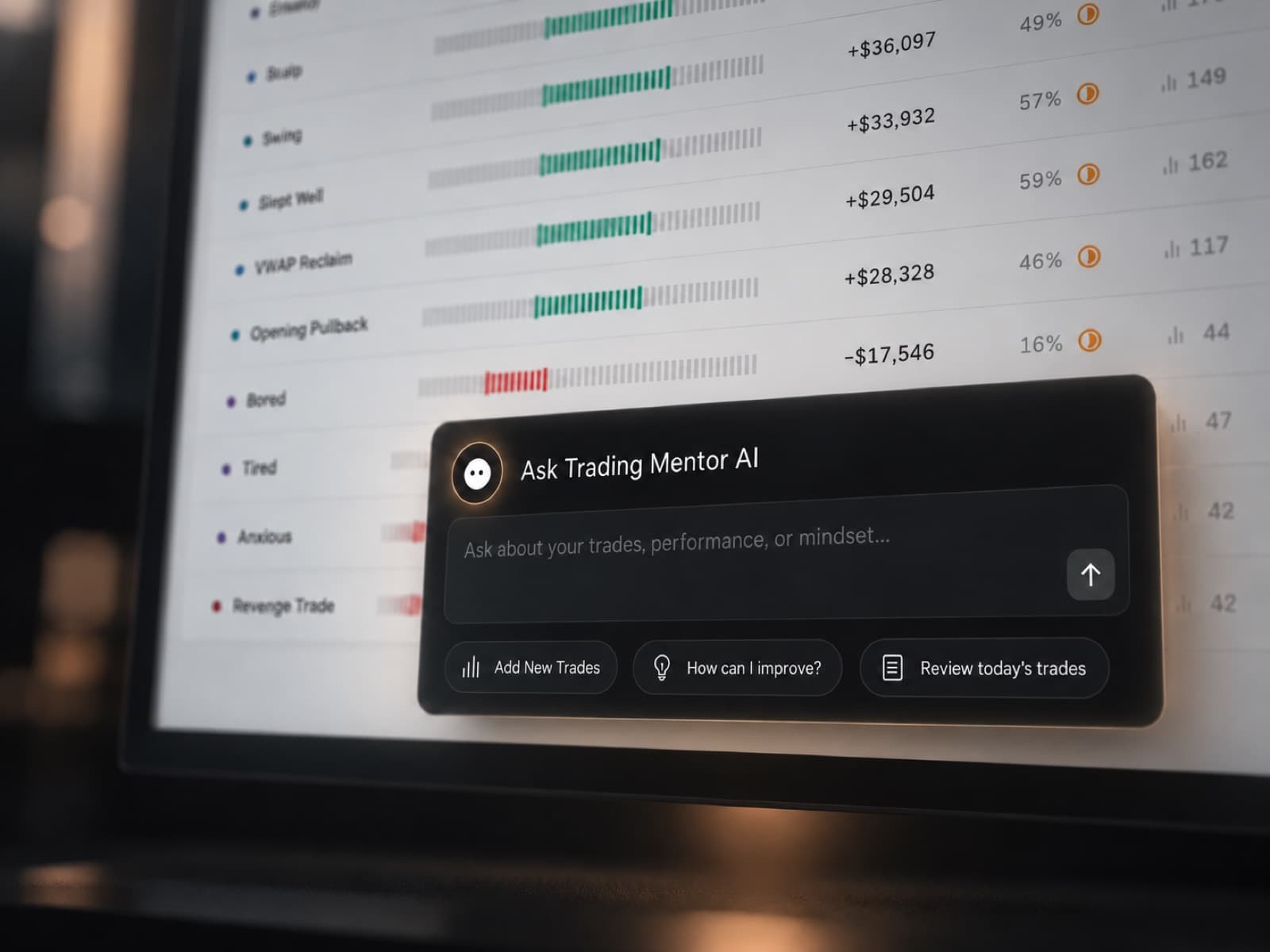
Ask Trading Mentor AI
Start with the question you're trying to answer
You do not always know which report you need.
Sometimes you just know the problem you are trying to investigate.
Ask Trading Mentor AI questions such as:
- “Which trading rules do I break most often?”
- “When do I exit winners too early?”
- “Which emotions are associated with my worst results?”
- “Which strategy performs best when I follow the full playbook?”
- “What changes in my trading after two consecutive losses?”
Use your own trading history as the dataset.
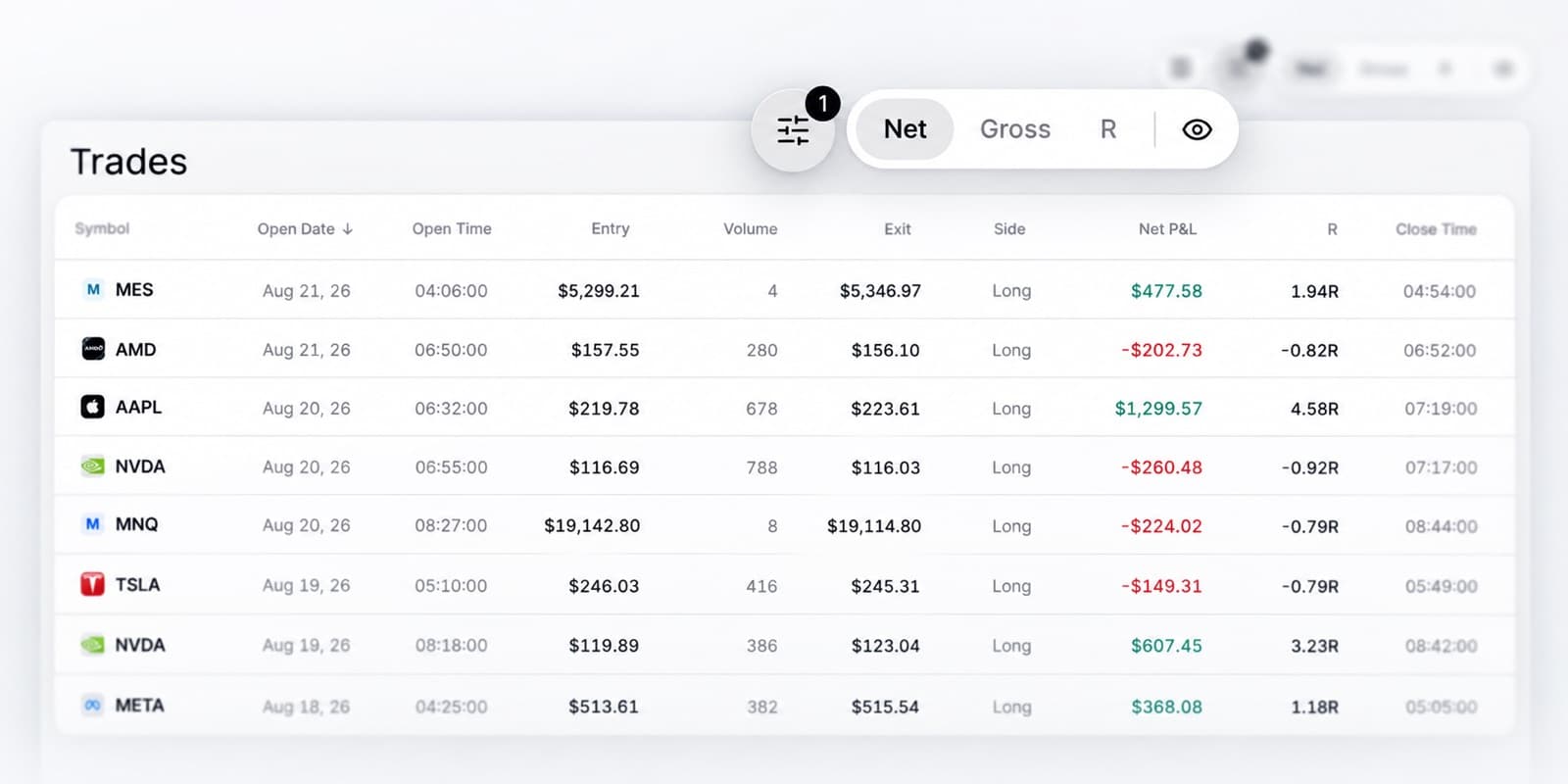
Automatically Import Your Trades
Spend your time reviewing trades instead of entering them
RizeTrade supports automatic broker syncing across supported brokers, prop firms and platforms.
You can also:
- Import CSV files
- Enter trades manually
- Upload historical trading data
- Track multiple trading accounts
- Track commissions and fees
- Use multiple currencies
Once your trades are imported, they feed directly into your charts, calendar, reports, playbooks and discipline tools.
Free Edgewonk Alternative
Start with RizeTrade without paying for a full year
Edgewonk uses an annual subscription model.
RizeTrade offers monthly plans.
RizeTrade
Free
Includes:
- Discipline Tracker
- Consistency Tracker with Heat Map
- P&L Calendar
- Emotion tracking
- Strategy Performance Tracker
- Trading Playbooks
- Rule Follow Scoring
- Historical trade charts
- Stops and take-profit tracking
- 50+ reports
- MAE & MFE
- Best Exit Analysis
- Exit Efficiency Score
- Automatic broker sync
- CSV imports
- Manual trade entry
Trading Mentor AI
$29/month
Adds an AI mentor that reads your trades. Everything else is free.
Start freeIf you don't want to pay for a year of journalling software upfront, RizeTrade gives you a more flexible way to start.
Where Edgewonk Is Stronger
Edgewonk is one of the more developed behaviour-focused trading journals available.
It includes tools such as:
- Trading Psychology Lab
- Setup checklists
- Tiltmeter
- Trade Management Optimizer
- Automated Edge Finder
- Missed trade tracking
- Performance Simulator
- Alternative strategy testing
- Session report cards
- Portfolio view
- Drawdown analysis
- Risk analysis
- MAE and MFE
- Best Exit Analysis
If you want to spend significant time testing alternative management approaches, running simulations and deeply customising your journal, Edgewonk may be the better choice.
RizeTrade does not need to pretend those features aren't useful.
It is built around a different workflow.
Where RizeTrade Makes More Sense
Choose RizeTrade if you want your daily review to be obvious
RizeTrade is built for traders asking:
- Did I follow my plan today?
- Which rules did I break?
- How consistent have I been this month?
- Which emotions are affecting my trades?
- Did I manage my winners efficiently?
- Which strategy works when I actually follow it?
- What should I improve tomorrow?
Those questions sit directly inside the RizeTrade workflow.
Instead of configuring a highly customised trading journal, you get a more opinionated system for reviewing your process.
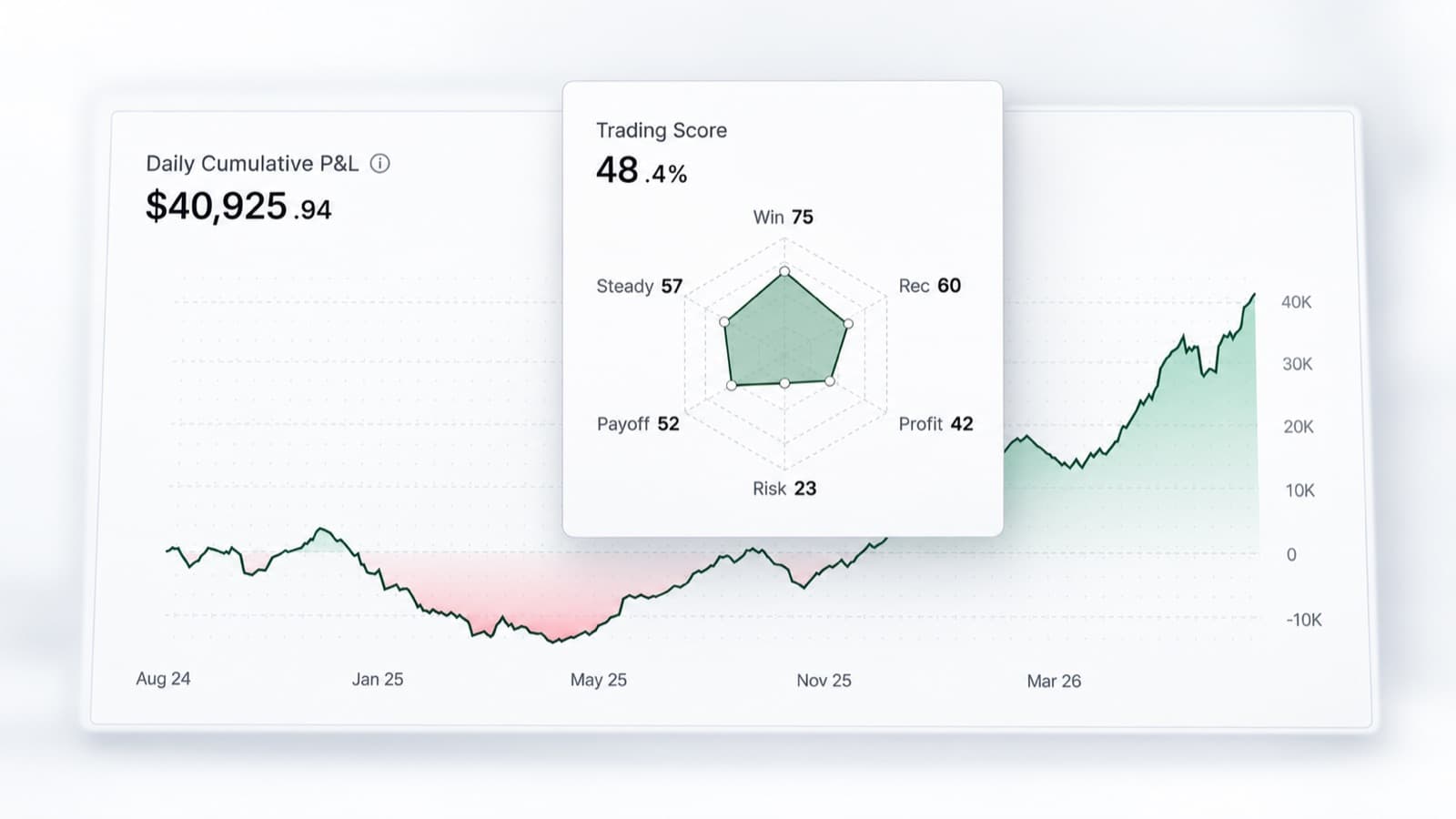
Edgewonk Is Powerful. RizeTrade Is More Direct.
Edgewonk gives traders a large toolkit for analysing performance, psychology and alternative trading decisions.
RizeTrade is designed to shorten the path from trade to action.
- 01
Import the trade.
- 02
Check the chart.
- 03
Review your rules.
- 04
Measure your discipline.
- 05
Analyse your execution.
- 06
Fix the pattern.
If what you want is a structured daily review rather than a highly customisable performance-analysis system, RizeTrade may be the better fit.
Edgewonk Alternative FAQs
- Is RizeTrade an Edgewonk alternative?
Yes.
Both RizeTrade and Edgewonk help traders import trades, analyse performance, track strategies, review psychology and examine trade execution.
RizeTrade puts particular emphasis on rule-follow scoring, discipline tracking, consistency and a straightforward daily review workflow.
- Does Edgewonk track trading psychology?
Yes.
Psychology analysis is one of Edgewonk's core features.
Edgewonk can track mistakes, trading psychology and discipline, while its Tiltmeter measures how frequently traders break their rules.
RizeTrade also tracks emotions and discipline, but approaches the workflow through Trading Playbooks, rule-follow scoring and a consistency heat map.
- Does Edgewonk automatically import trades?
Yes.
Edgewonk supports automated trade imports for supported brokers and platforms.
RizeTrade also supports automatic broker sync alongside CSV and manual trade entry.
- Does RizeTrade track MAE and MFE?
Yes.
RizeTrade includes MAE and MFE statistics alongside R-Multiple tracking, Best Exit Analysis and Exit Efficiency Score.
- Does RizeTrade track trading rules?
Yes.
Create Trading Playbooks, define the rules for your strategy and score completed trades based on whether those rules were followed.
- Is RizeTrade cheaper than Edgewonk?
The billing models are different.
RizeTrade is free.
Edgewonk sells its journal as an annual subscription rather than a standard monthly plan.
If you prefer paying month-to-month instead of committing to a full subscription period upfront, RizeTrade gives you that option.
- Does Edgewonk have AI?
Edgewonk's Automated Edge Finder automatically scans journal data for performance patterns and mistakes.
RizeTrade offers Trading Mentor AI, which lets you investigate your trading history by asking questions directly.
They solve a similar discovery problem in different ways.
- Does RizeTrade have a performance simulator?
RizeTrade is primarily focused on analysing your actual trading history.
Edgewonk includes dedicated Performance Simulator and alternative strategy-testing tools.
If simulation is a major part of your review process, Edgewonk may be the better fit.
Try RizeTrade as Your Edgewonk Alternative
Both platforms are built around the idea that your trading journal should help change your behaviour, not simply store trades.
RizeTrade gives you a more direct way to turn that idea into a daily process.
- Track the trade.
- Track the rules.
- Track your discipline.
- Improve the execution.