

Looking for an alternative?
Trademetria Alternative
Try a trading journal built around discipline, execution and following your trading process.
Trademetria combines trade journaling with portfolio tracking, performance analytics, simulations and research tools.
RizeTrade takes a more focused approach to improving your actual trading process.
Import your trades, review every execution, track emotions, measure whether you followed your strategy and identify where your trade management is costing you.
100% FreeNo CC Required
4.8/5 1,794 Reviews


RizeTrade vs Trademetria
RizeTrade and Trademetria are both trading journals designed to turn your trading history into useful performance data.
Both let you import trades, review entries and exits, journal your trading and analyse strategies.
The main difference is how each platform approaches the review process.
Trademetria combines a trading journal with portfolio tracking, account management, simulations, research and general trade analytics.
RizeTrade puts more emphasis on structured playbooks, rule compliance, discipline, emotions and execution efficiency.
| Feature | RizeTrade | Trademetria |
|---|---|---|
| Broker Auto-Sync | Yes | Yes |
| File Import | Yes | Yes |
| Manual Trade Entry | Yes | Yes |
| Trading Journal | Yes | Yes |
| Daily Journal | Yes | Yes |
| Historical Trade Charts | Yes | Yes |
| P&L Calendar | Yes | Yes |
| Strategy Tracking | Yes | Yes |
| Trade Tags | Yes | Yes |
| MAE & MFE | Yes | Performance analytics |
| Stops & Profit Targets | Yes | Yes |
| Dedicated Emotion Tracking | Yes | Journal / trade data |
| Strategy Playbooks | Yes | Strategy tracking |
| Playbook Compliance Score | Yes | No |
| Discipline Tracker | Yes | Challenges & rules |
| Consistency Heat Map | Yes | No |
| Trade Grade | Yes | No |
| Best Exit Analysis | Yes | No |
| Exit Efficiency Score | Yes | No |
| AI Trading Analysis | Trading Mentor AI | AI Assistant + Insights |
| Auto-Generated Reports | 50+ | Yes |
| Portfolio Tracking | No | Yes |
| Trading Simulator | No | Yes |
| Fundamental Research | No | Yes |
| REST API | No | Yes |
| Free Plan | Yes | Yes |
| Starting Paid Plan | Free | $19.95/month |
Choose RizeTrade if you primarily want to improve how you execute and follow your trading process.
Choose Trademetria if portfolio tracking, simulations or investment research are more important to you.
Why Choose RizeTrade Instead of Trademetria?
Make Your Trading Process Measurable
Performance statistics tell you what happened.
RizeTrade is designed to connect those results with what you actually did during the trade.
Track:
- Your strategy
- Your playbook
- Rules followed
- Rules broken
- Emotional state
- Trade grade
- Entry and exit execution
- Stop loss
- Profit target
- MAE and MFE
- Exit efficiency
- Notes and tags
That gives you more context when reviewing why a particular group of trades performed differently.
Instead of only asking
“Did this strategy make money?”
You can ask
“Did this strategy make money when I actually followed it?”
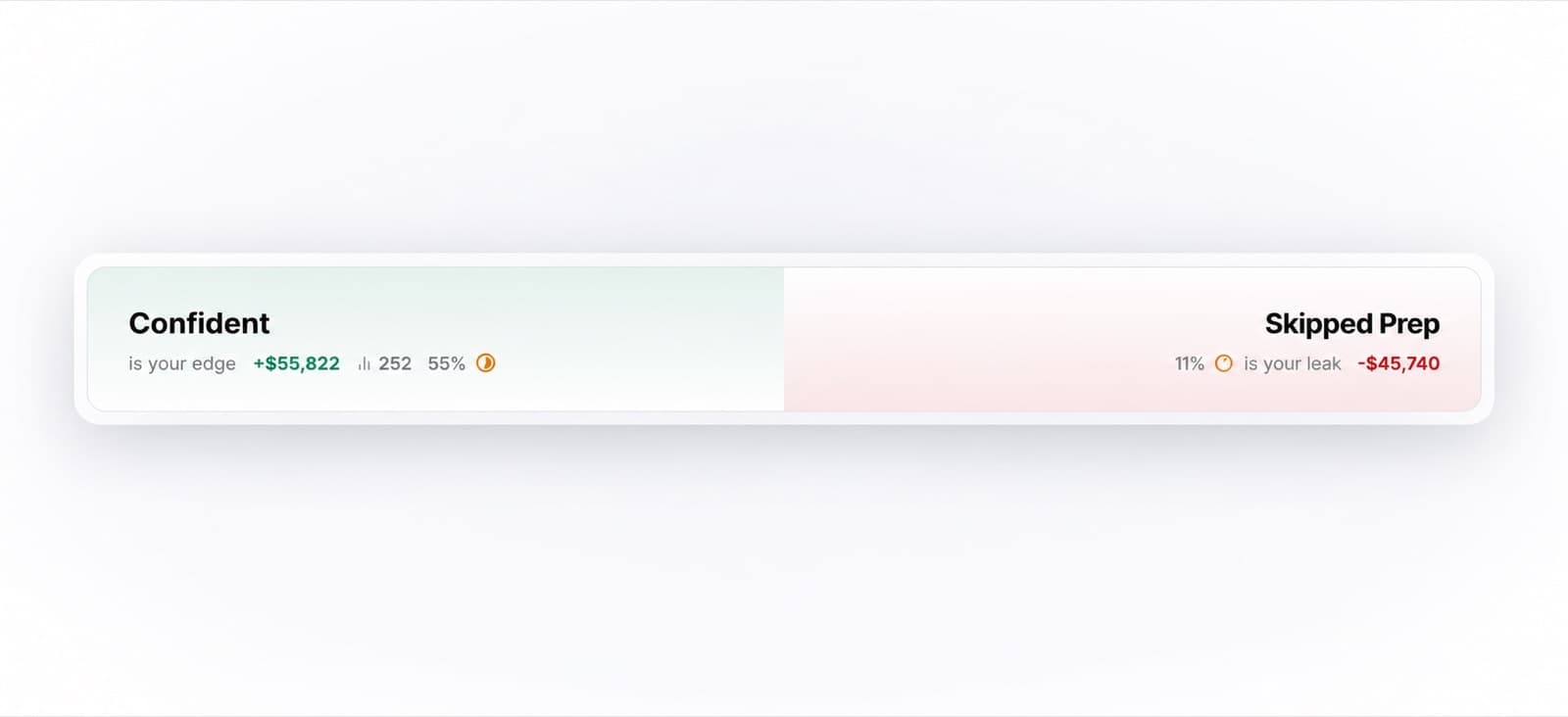
Trading Playbooks
Define how a setup should be traded
Create a playbook for each strategy you trade.
Add the conditions and rules that should be present before, during and after the trade.
Your playbook can include:
- Setup requirements
- Entry criteria
- Risk rules
- Stop placement
- Position management
- Profit targets
- Exit criteria
Then review individual trades against that playbook.
RizeTrade gives each trade a Playbook Compliance Score based on how closely your execution matched the process you defined.
This lets you separate two very different problems:
The strategy failed.
andYou failed to follow the strategy.
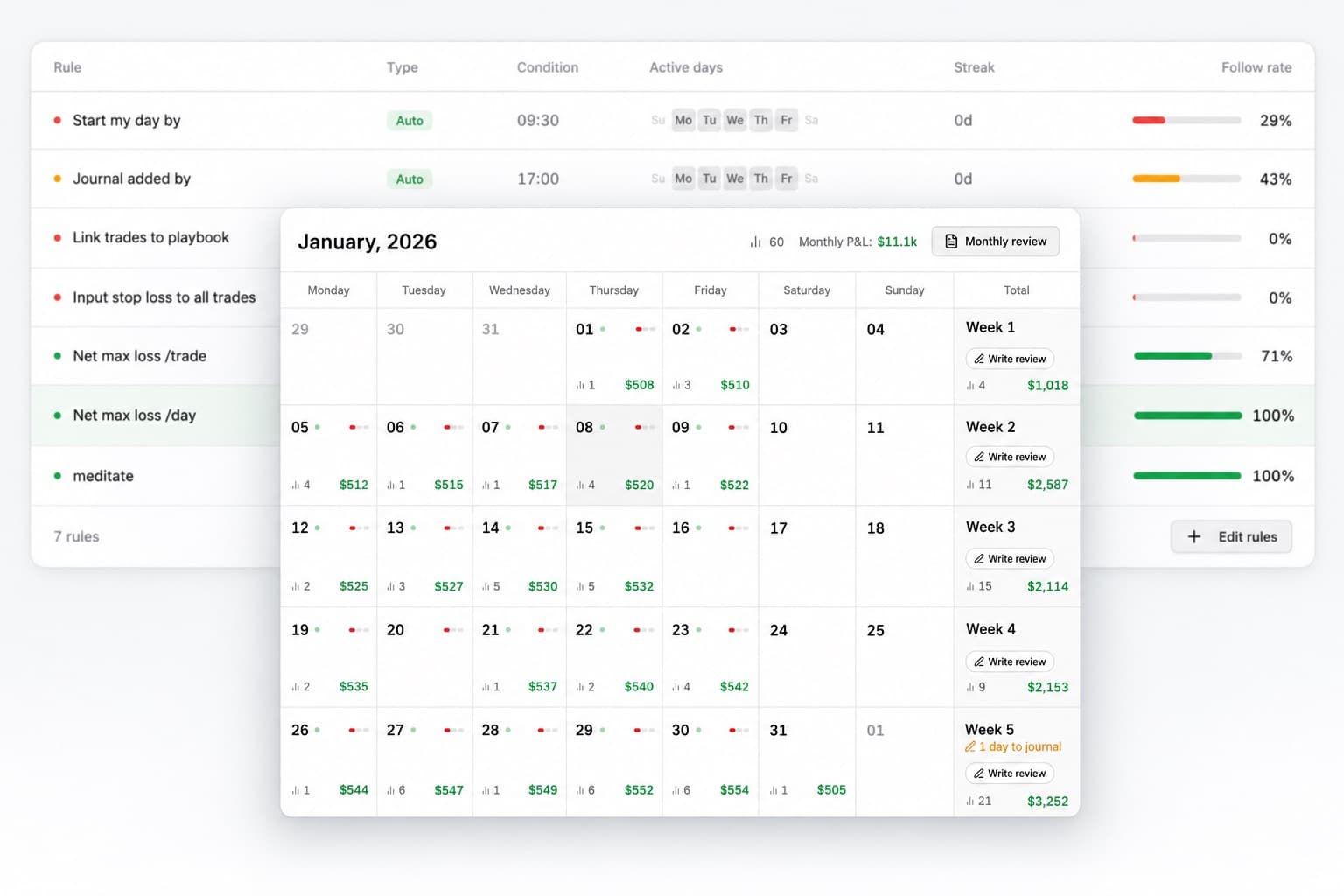
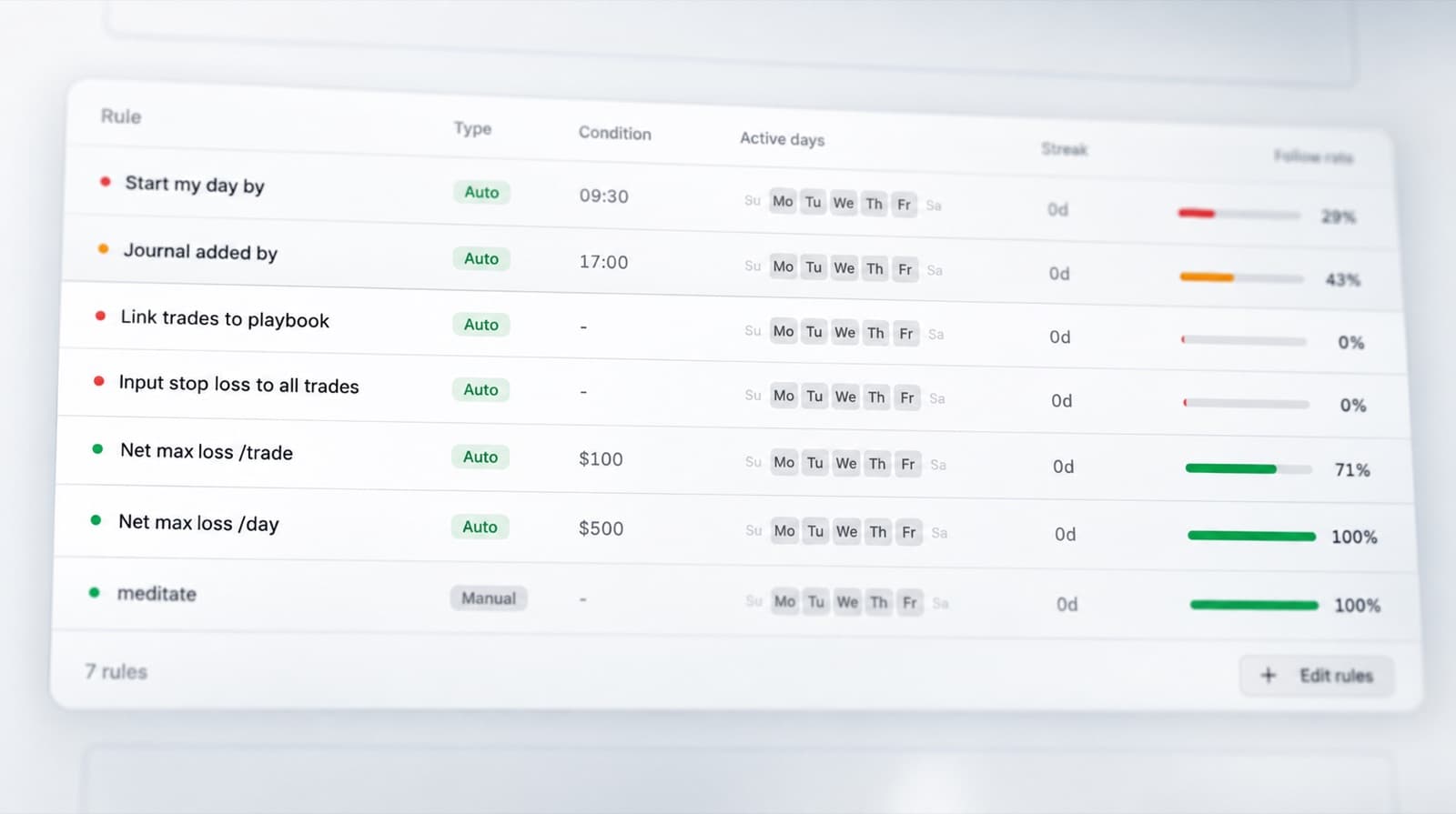
Discipline Tracker
See exactly where you stop following your own rules
Knowing your trading rules is not the same as following them.
RizeTrade's discipline tools let you track whether your actual trading behaviour stayed inside the process you intended to follow.
Monitor rules around:
- Daily loss limits
- Number of trades
- Risk limits
- Trading times
- Setup quality
- Stops
- Trade management
- Daily preparation
- Post-trade review
Instead of writing “be more disciplined” in your journal, turn discipline into something you can measure.
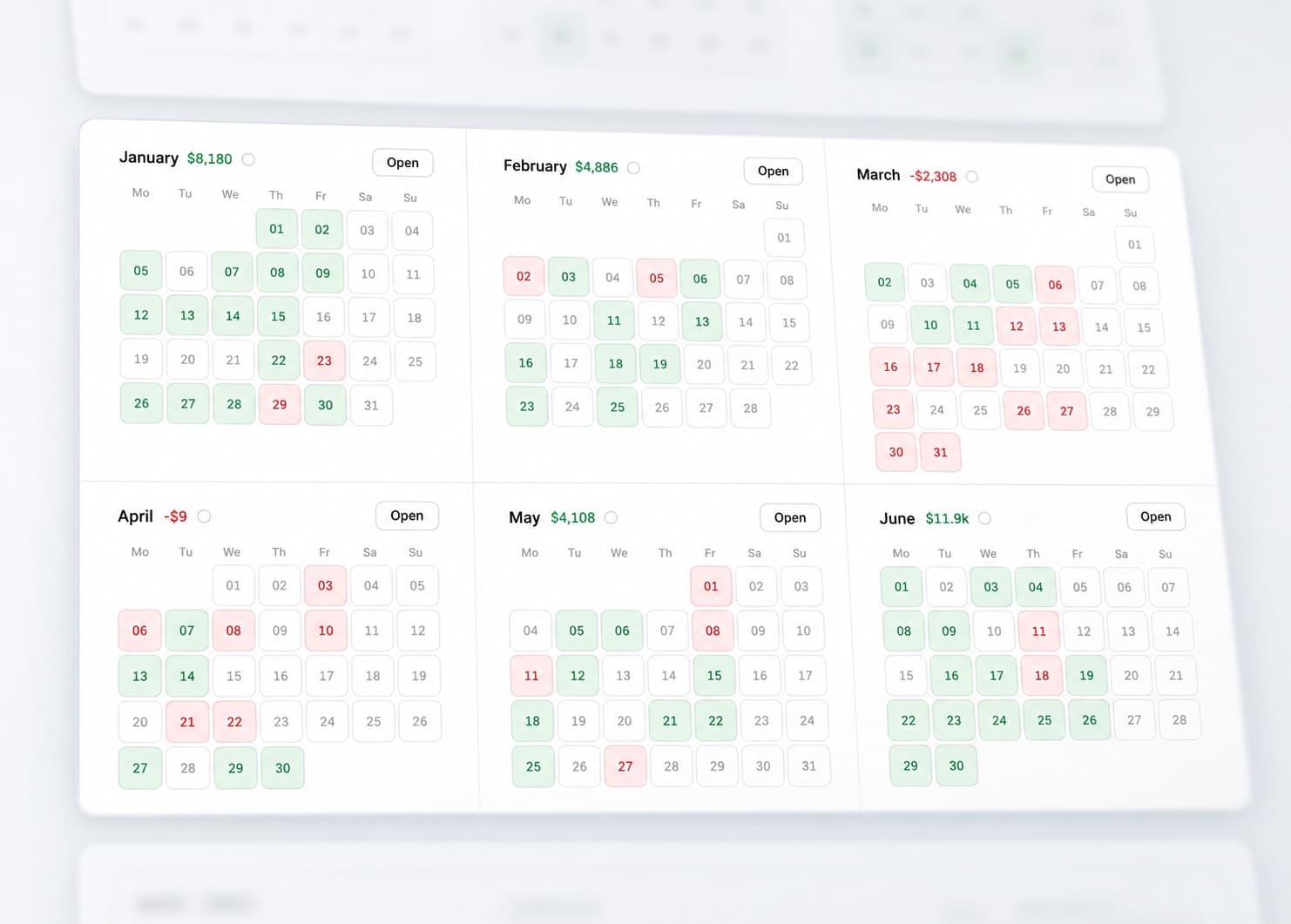
Consistency Tracker
Track your behaviour across trading days
One disciplined session does not mean your process is consistent.
Use RizeTrade's Progress Tracker and consistency heat map to see how regularly you followed your rules over time.
Review periods where your process remained consistent and identify where it started to break down.
That gives you another way to measure progress besides P&L.
You may have a losing week where your discipline improved.
Or a profitable week where several bad habits started creeping back in.
Both are worth knowing.
Track Your Trading Emotions
Connect psychology with actual trade data
Record the emotional state associated with individual trades.
Track emotions and behaviours such as:
- FOMO
- Fear
- Frustration
- Revenge trading
- Overconfidence
- Boredom
- Hesitation
Then review those trades alongside your performance.
You can identify whether certain emotional states are associated with:
- Lower win rates
- Poorer entries
- Rule violations
- Oversized trades
- Early exits
- Overtrading
Instead of keeping trading psychology buried inside journal notes, RizeTrade makes it part of the review process.
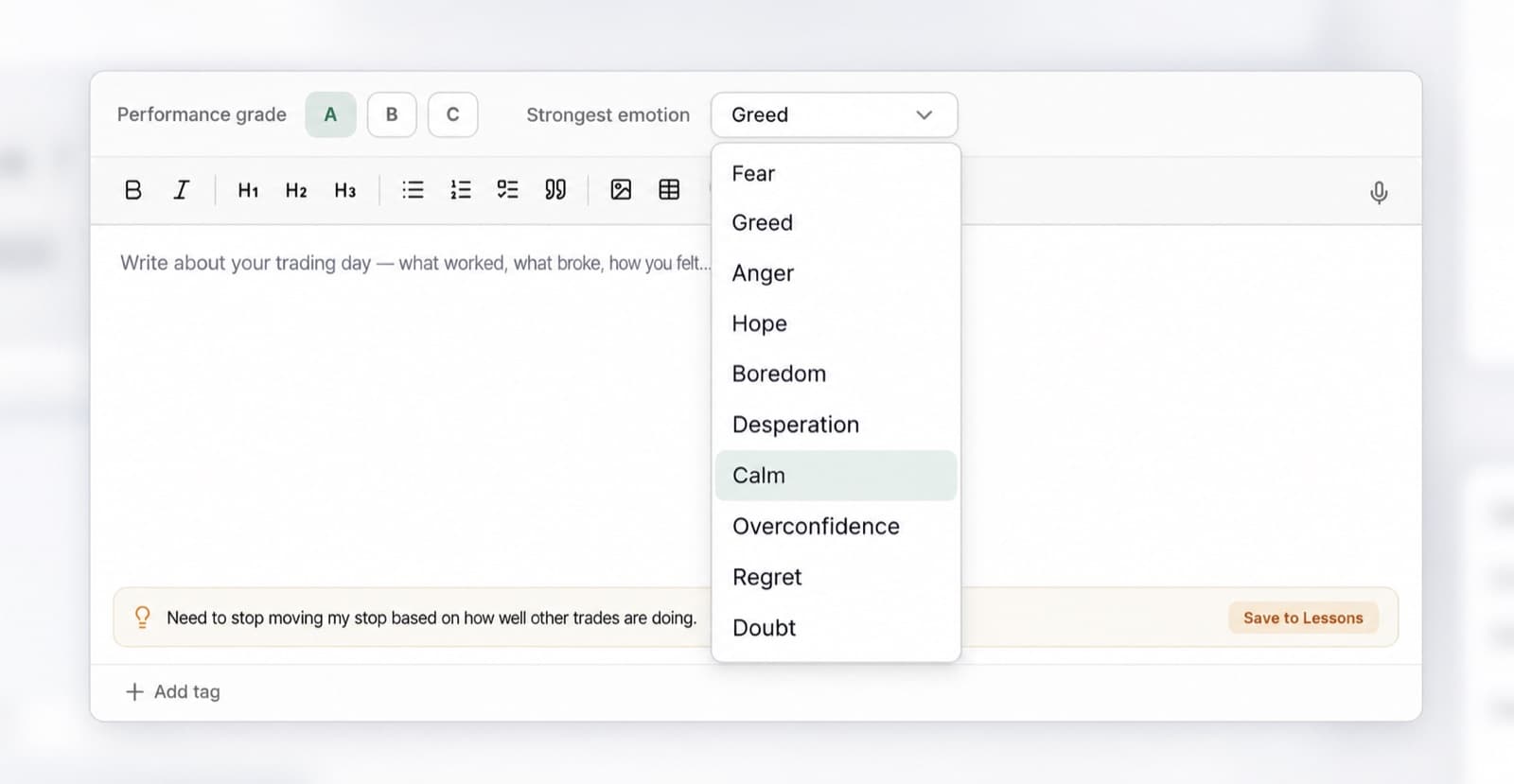
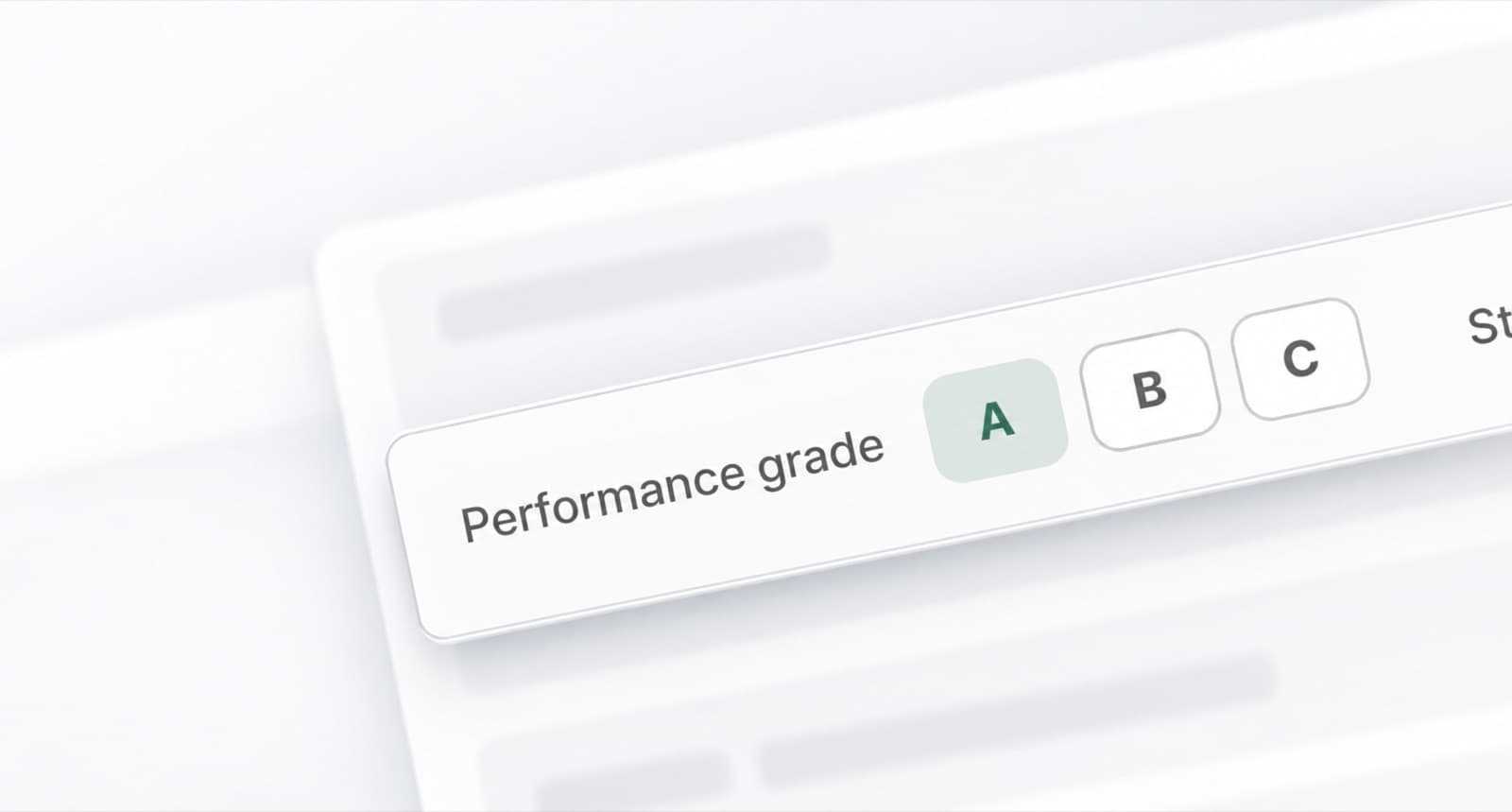
Grade Your Trades
Judge your execution separately from your P&L
A profitable trade can still be badly executed.
A losing trade can still follow your process perfectly.
Use Trade Grade to evaluate the quality of your execution separately from the financial result.
That matters because rewarding every profitable trade can reinforce behaviour you do not actually want to repeat.
RizeTrade lets you review whether your best financial results also came from your best trading.
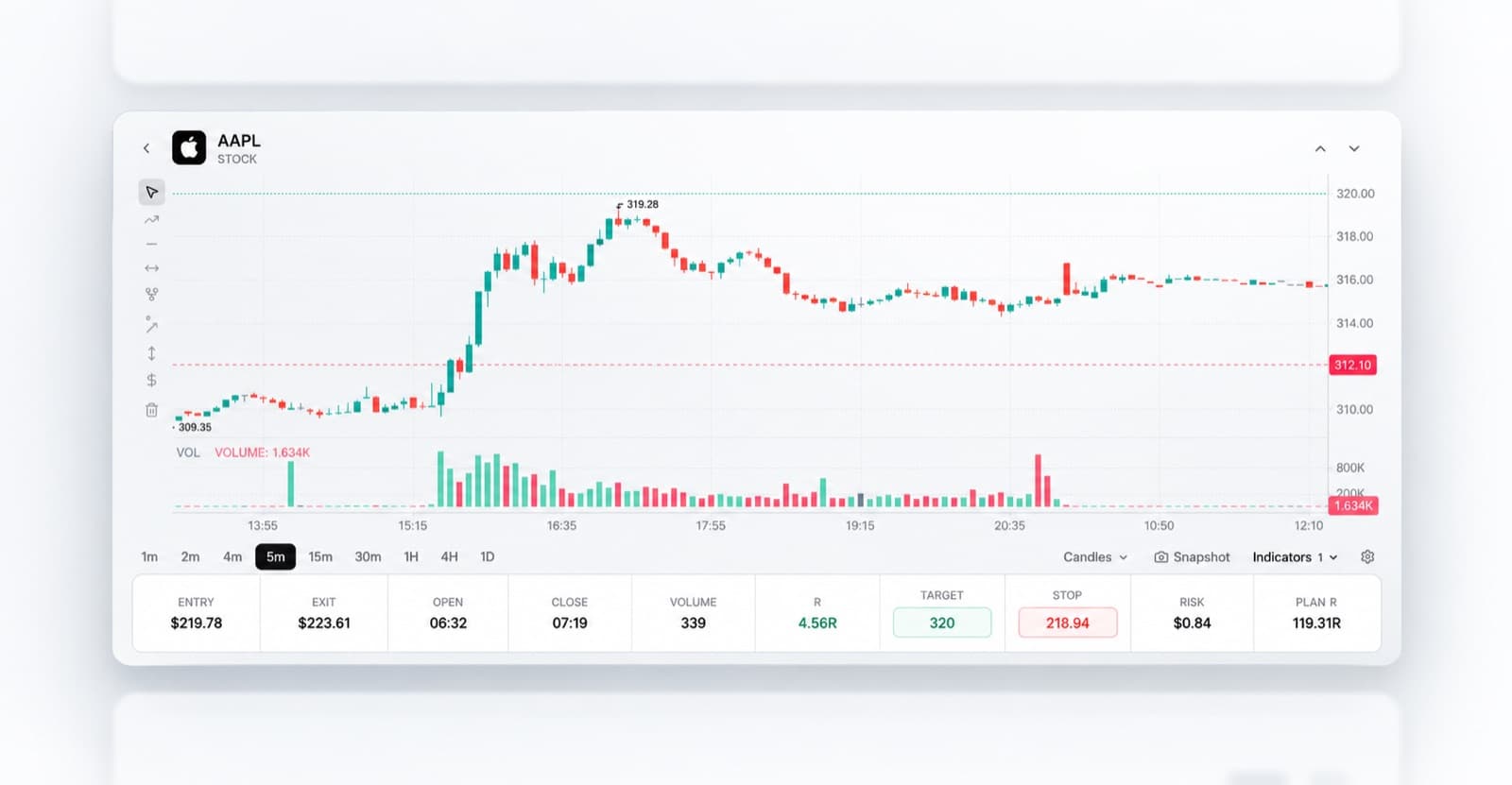
Review Every Trade on the Chart
See your executions in market context
Open a completed trade and see it plotted against the historical price chart.
Review where you:
- Entered
- Added
- Reduced
- Exited
- Placed your stop
- Set your target
Instead of looking at entry and exit prices in a table, see how those decisions related to the price action around them.
Use the chart alongside your notes, playbook, emotions and execution data when reviewing the trade.
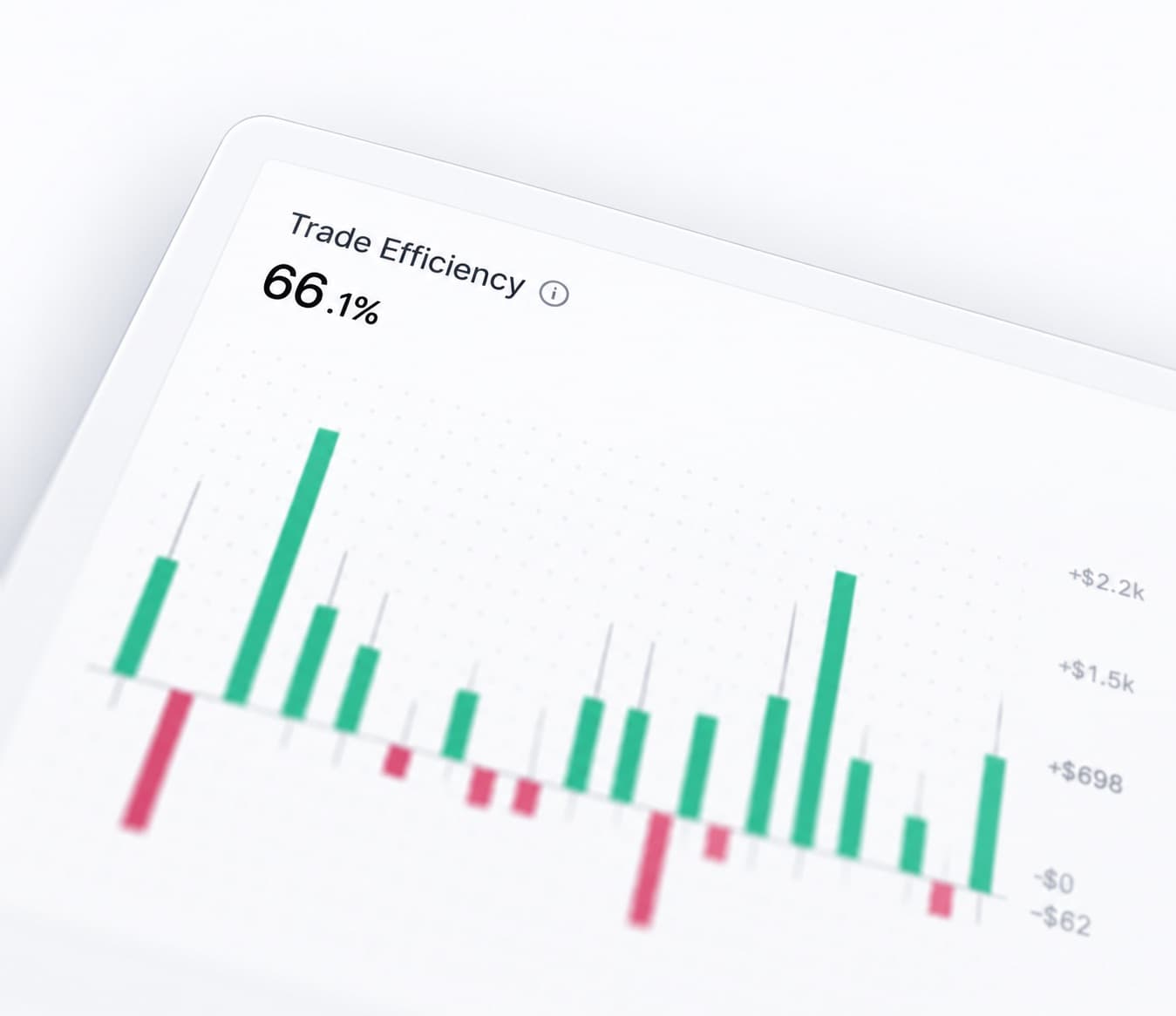
Analyse Your Exit Efficiency
Find out how well you managed the position after entry
Picking the right direction is only part of trading well.
RizeTrade includes dedicated execution metrics for reviewing what happened once you were already in the trade.
Analyse:
- MAE
- MFE
- R-Multiple
- Best Exit Analysis
- Exit Efficiency Score
- Running P&L
- Stop loss
- Take profit
- Drawdown
Use these metrics to identify recurring patterns such as:
- Closing winners too early
- Allowing winners to retrace too far
- Holding losers too long
- Using inefficient stops
- Taking poor partial exits
This makes it easier to separate a strategy problem from an execution problem.
50+ Trading Reports
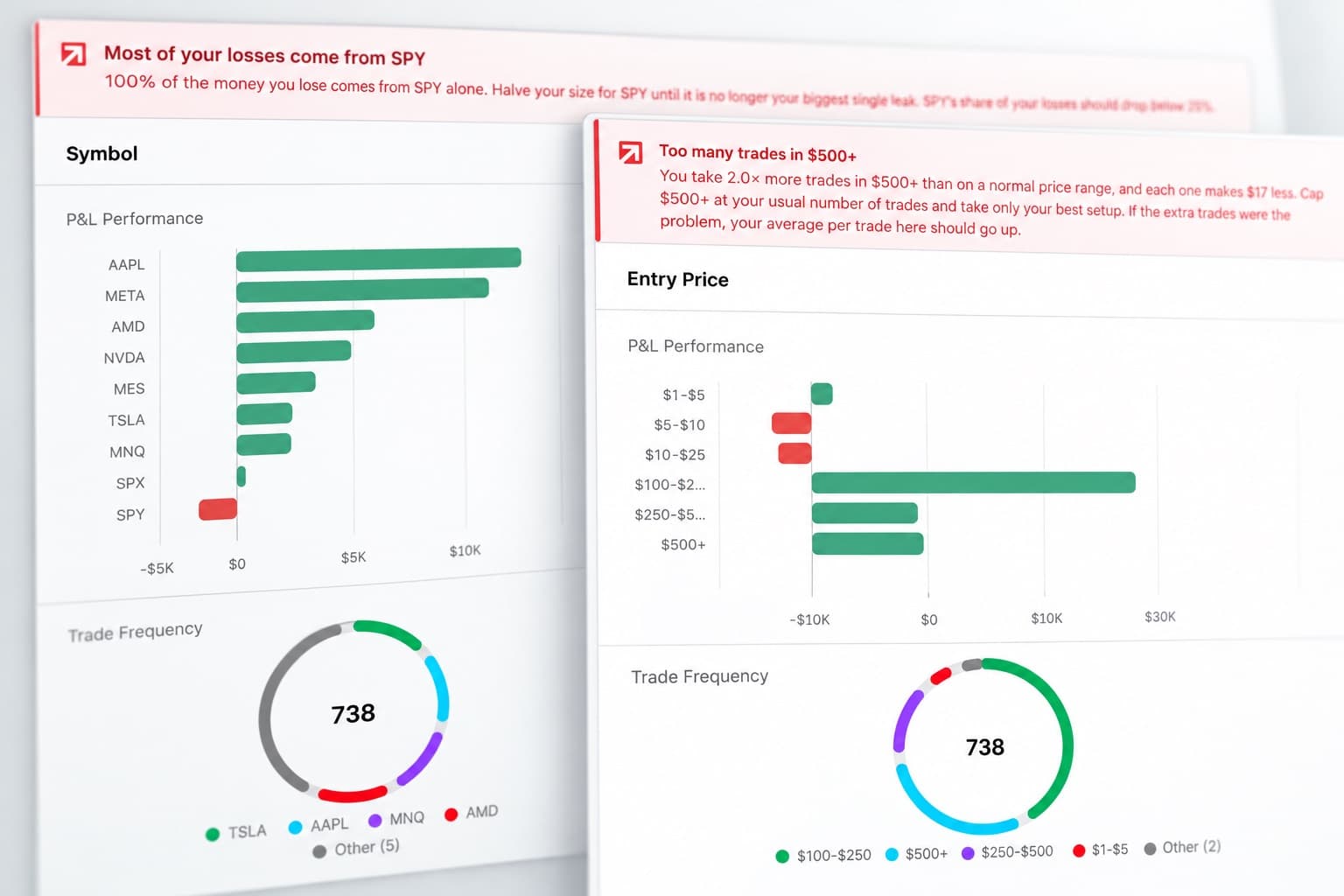
Break down your trading history automatically
RizeTrade generates more than 50 reports from your imported trading data.
Analyse your results by:
- Date
- Time
- Symbol
- Instrument
- Strategy
- Playbook
- Tags
- Risk
- Position size
- Price
- Quantity
- Trade duration
- Options expiration
- Wins and losses
Stack filters together when you want to investigate something more specific.
For example:
- How does my breakout strategy perform before 10:00 AM?
- What happens when my playbook compliance is high?
- Which tags appear most often on trades with poor exit efficiency?
- How does my performance change after two consecutive losses?
The goal is not simply to generate another dashboard.
It is to answer a specific question about how you trade.
Ask Trading Mentor AI
Ask questions about your own trading history
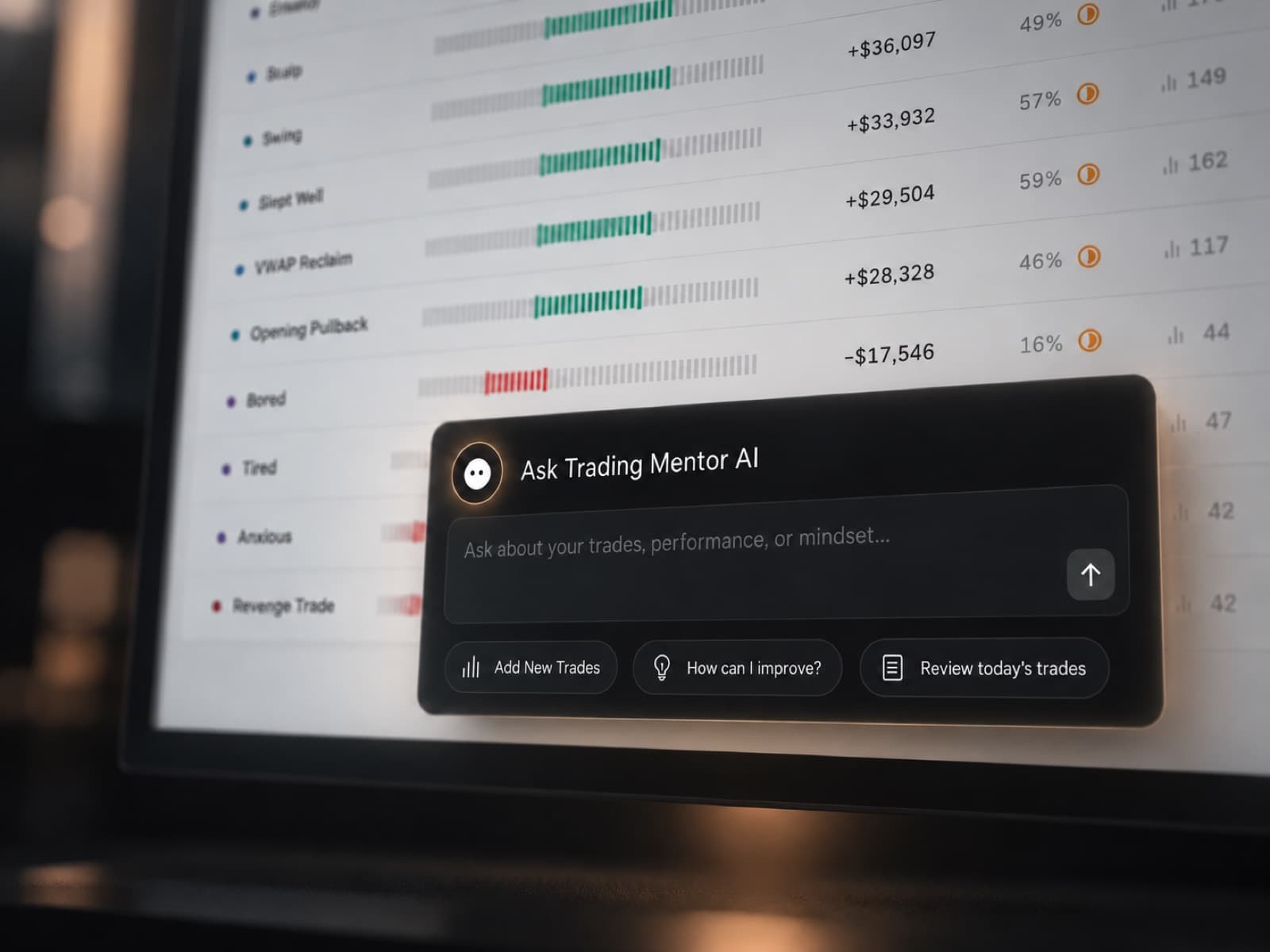
RizeTrade's Trading Mentor AI lets you investigate your journal using natural-language questions.
Ask:
- “Which rules do I break most often?”
- “When do I exit winning trades too early?”
- “Which emotions appear most often on my losing trades?”
- “Which strategy works best when I follow every rule?”
- “What changes after I reach my daily loss limit?”
Trading Mentor AI uses the information in your journal to help you investigate patterns without manually working through every report yourself.
Import Your Existing Trading History
Connect your broker or upload your trades
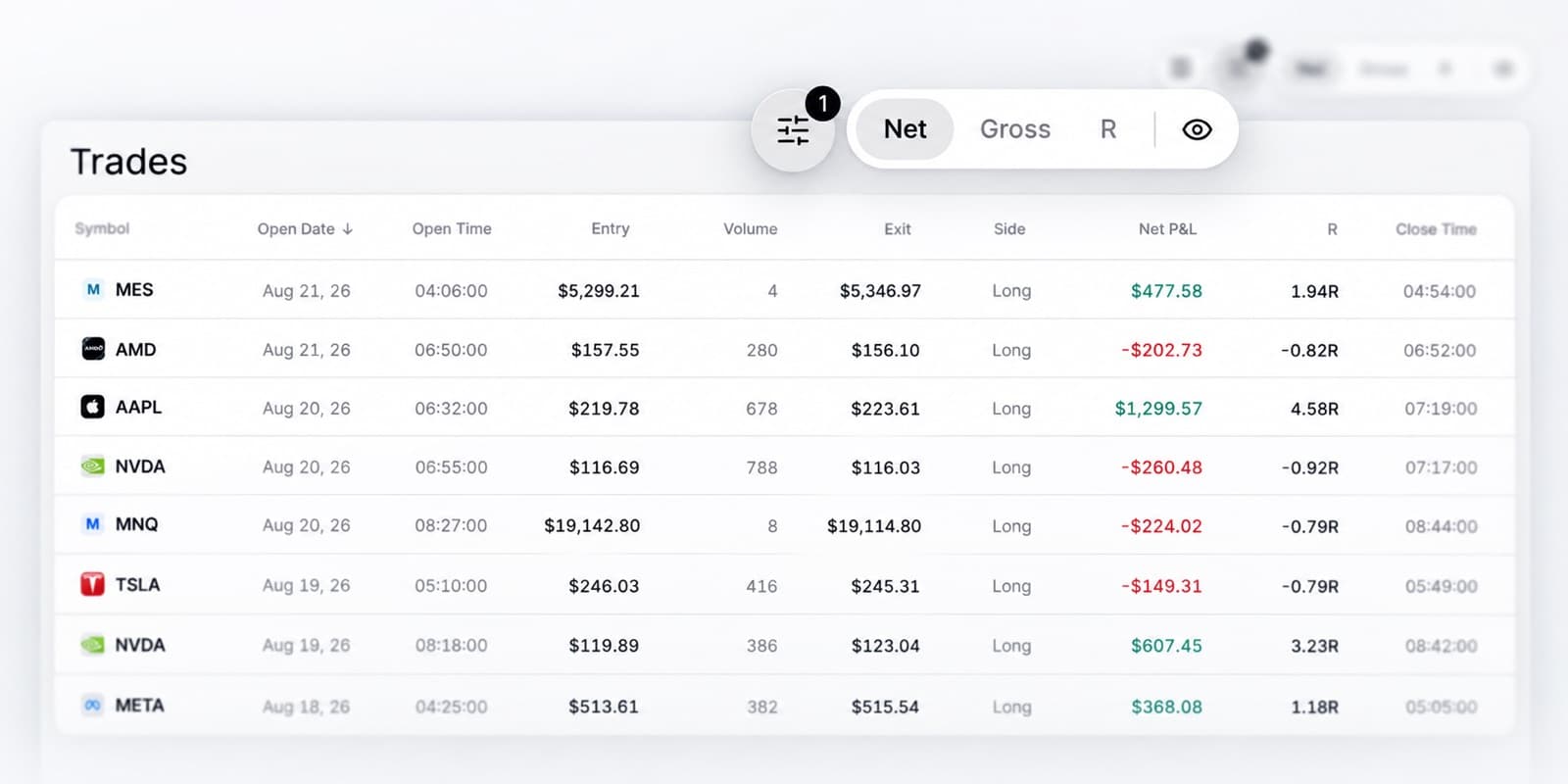
RizeTrade supports automatic trade imports from supported brokers and trading platforms.
You can also:
- Upload trades using CSV
- Enter trades manually
- Import historical trades
- Track multiple accounts
- Track commissions and fees
- Use multiple currencies
Once imported, your trades become available across your journal, charts, calendar, reports, playbooks and discipline tools.
P&L Calendar
Review your trading month at a glance
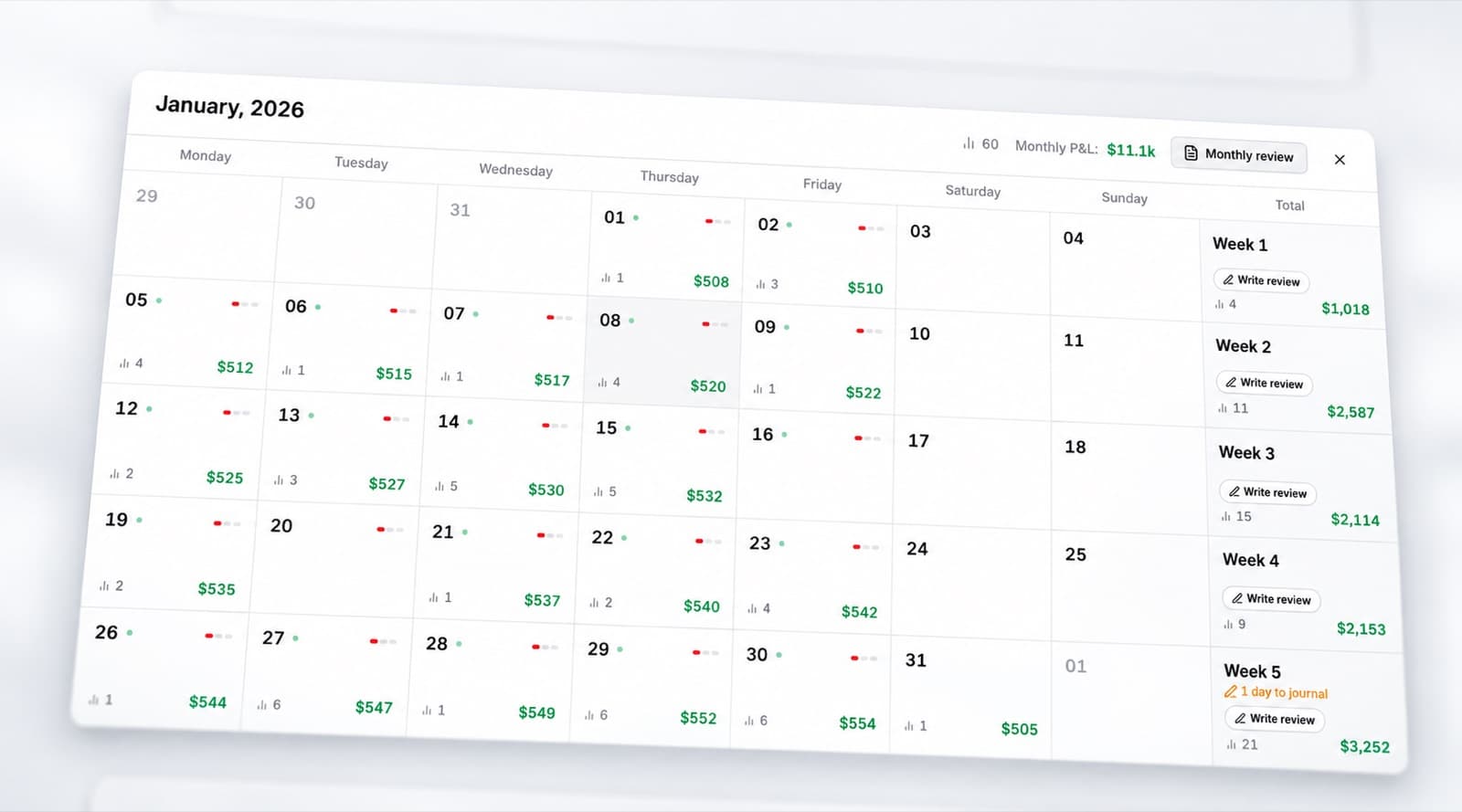
See your daily results organised on a calendar.
Quickly identify:
- Profitable days
- Losing days
- Winning streaks
- Losing streaks
- Higher-volume sessions
- Periods of inconsistent trading
Open individual days when you need to review the trades behind the result.
Where Trademetria Is Stronger
Trademetria has a broad feature set and will make more sense for some traders and investors.
Its current product includes:
- A free plan
- Portfolio tracking
- Deposits and withdrawal tracking
- Dividend tracking
- Trading account adjustments
- Trading challenges
- P&L simulations
- AI Assistant
- AI Insights
- Fundamental research
- Watchlists
- Trade sharing
- REST API
- Options spread tracking
- Custom dashboards
- Mass editing
- Multiple asset classes
Trademetria also supports traders who want to use the same platform for longer-term portfolio and investment tracking.
If those are central to your workflow, Trademetria may be the better option.
Where RizeTrade Makes More Sense
Choose RizeTrade if your main goal is improving your actual execution
RizeTrade is built around questions such as:
- Did I follow my trading plan?
- Which rules do I keep breaking?
- Which emotions affect my decisions?
- Does my strategy perform when I actually follow it?
- Am I managing winners efficiently?
- Where does my discipline start falling apart?
- Are my best trades also my best-executed trades?
RizeTrade connects your trading results with the process that produced them.
That makes it particularly useful for active traders whose biggest problem is not finding another setup.
It's executing the setups they already have consistently.
Free Trademetria Alternative
RizeTrade
RizeTrade
Free
- Unlimited trading accounts
- Strategy Playbooks
- Playbook Compliance Score
- Discipline Tracker
- Progress Tracker
- Consistency Heat Map
- P&L Calendar
- Emotion tracking
- Daily journal
- Pre-market preparation
- Historical trade charts
- 50+ reports
- MAE & MFE
- Best Exit Analysis
- Exit Efficiency Score
- Broker sync
- Unlimited CSV imports
- Manual trade entry
Trading Mentor AI
$29/month
Adds an AI mentor that reads your trades. Everything else is free.
Start freeTrademetria
Trademetria Free
$0/month
Includes up to 30 imported orders per month, one account and access to Trademetria's core journal and analytics features.
Trademetria Basic
$19.95/month
Includes up to 500 imported orders per month and one trading account.
Trademetria Pro
$29.95/month
Includes unlimited order imports and up to 50 trading accounts.
Choose based on the workflow you need rather than price alone.
Trademetria Alternative FAQs
- Is RizeTrade a Trademetria alternative?
Yes.
Both RizeTrade and Trademetria let traders import trades, keep a trading journal, review charts and analyse trading performance.
RizeTrade puts additional emphasis on structured playbooks, rule compliance, discipline tracking and trade execution analysis.
- Is RizeTrade cheaper than Trademetria?
Trademetria currently offers a free plan and paid plans starting at $19.95/month.
RizeTrade is free.
The main reason to choose RizeTrade is its workflow around discipline, playbook compliance and execution rather than simply finding the cheapest trading journal.
- Does RizeTrade track trading rules?
Yes.
Create strategy playbooks, define your trading rules and record whether individual trades followed them.
RizeTrade then calculates a Playbook Compliance Score for the trade.
- Does Trademetria track discipline?
Yes.
Trademetria includes trading challenges that can be used to define rules and track whether those rules are being passed or broken.
RizeTrade approaches the problem through dedicated playbooks, compliance scoring, progress tracking and consistency tools.
- Does RizeTrade track trading emotions?
Yes.
Record emotions against individual trades and analyse those trades alongside your other performance data.
- Does Trademetria have AI?
Yes.
Trademetria offers AI Insights and an AI Assistant.
RizeTrade offers Trading Mentor AI for asking questions about your trading history and behaviour.
- Does RizeTrade support MAE and MFE?
Yes.
RizeTrade includes MAE and MFE alongside R-Multiple tracking, Best Exit Analysis and an Exit Efficiency Score.
- Does RizeTrade have portfolio tracking?
RizeTrade is primarily designed as a trading journal and performance-review platform.
Trademetria has a more developed portfolio-tracking feature set for traders and investors who want to monitor holdings, deposits, withdrawals and broader account performance.
- Can I import existing trades into RizeTrade?
Yes.
Connect a supported broker, upload a CSV file or enter trades manually.
Try RizeTrade as Your Trademetria Alternative
Your trading journal should help you understand more than what made or lost money.
RizeTrade connects your strategies, rules, discipline, emotions and execution with your trading results so you can see whether you're actually trading the process you intended to trade.
Import your history and start reviewing the behaviour behind your P&L.