
TradeLocker Trading Journal
100% FreeNo CC Required
4.8/5 1,794 Reviews
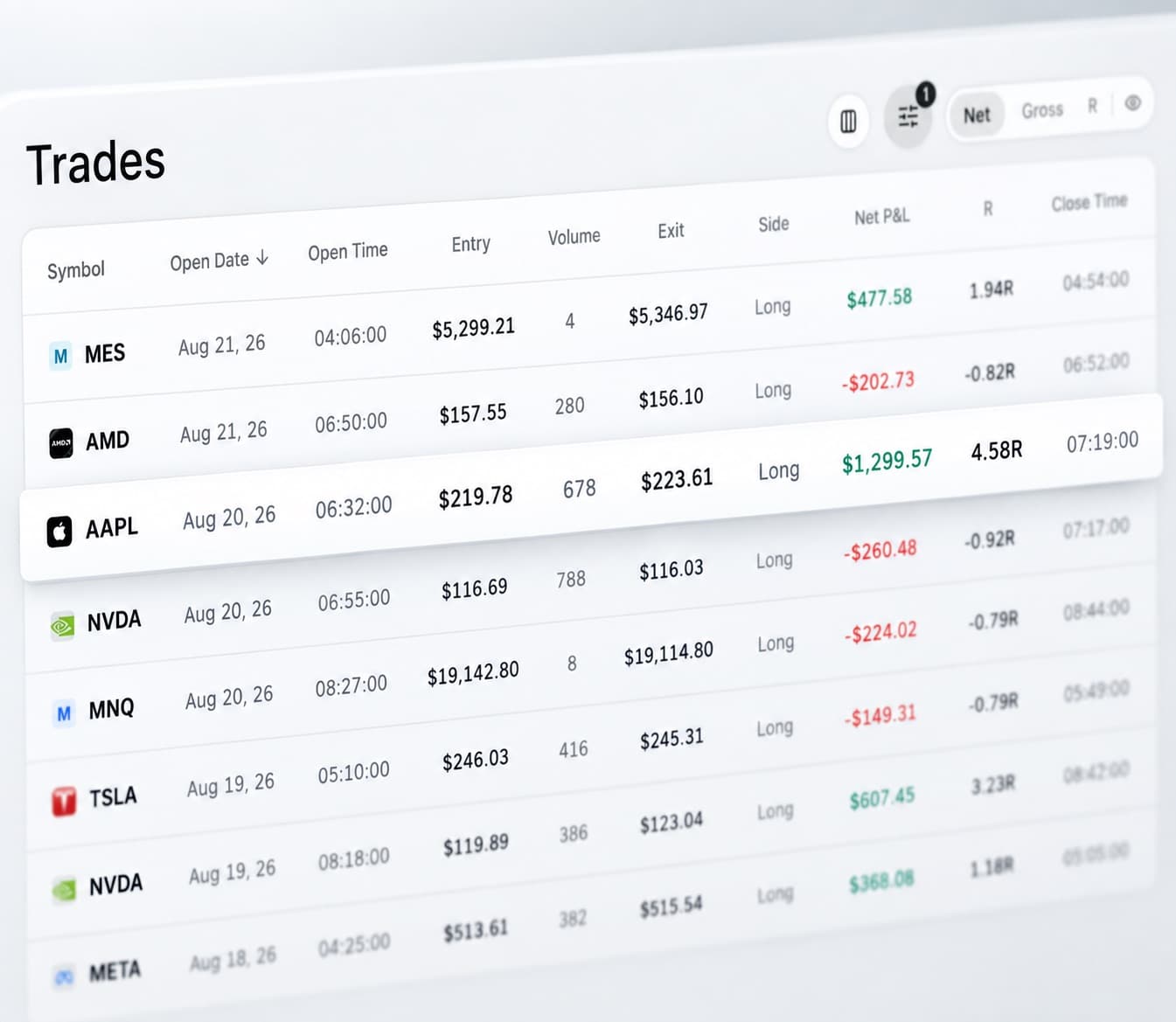
Import TradeLocker trades
Review TradeLocker trades with charts, AI analysis, trade grading, discipline tracking and performance reports.
Load supported TradeLocker trading data into RizeTrade through broker sync or file import.
Manual trade entry is also available when you want to record a trade yourself or add extra detail.
Review trades on the chart
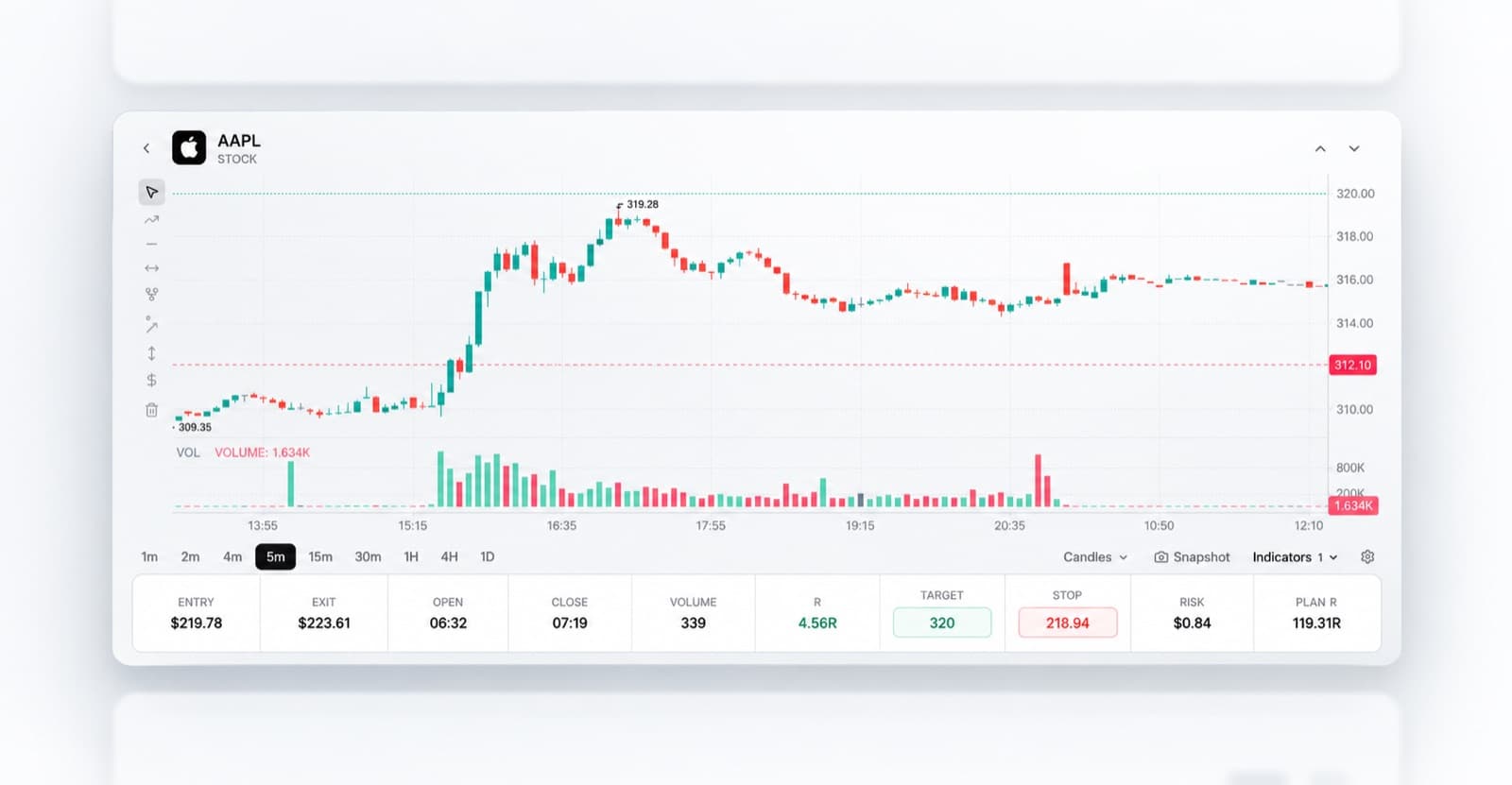
Open completed trades and view entries and exits directly on the chart.
Check timing, price movement and trade management without relying on an order history alone.
Add notes where you want to keep the original setup or reasoning attached to the trade.
Measure trade quality
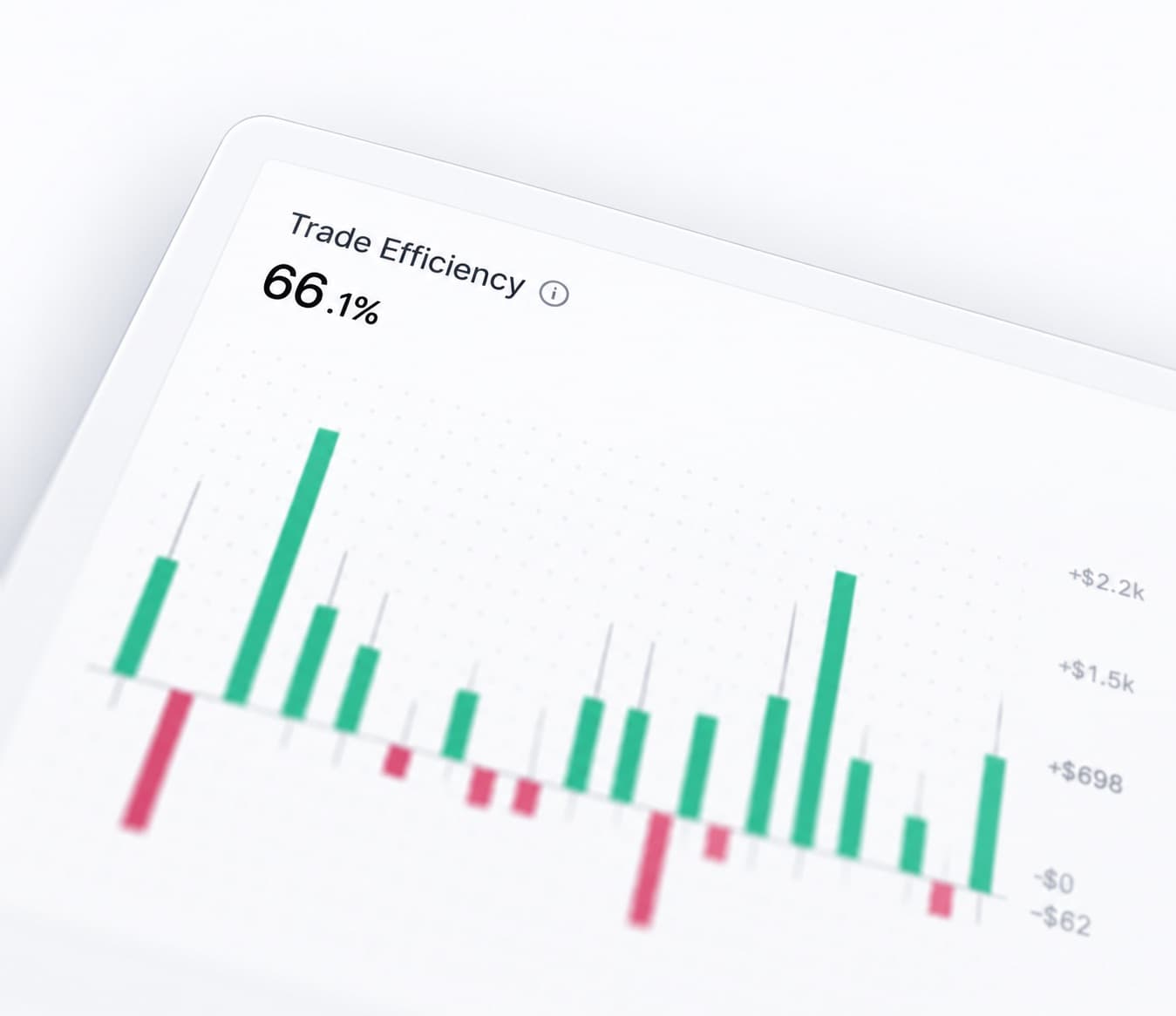
Use Trade Grade to score the overall quality of each trade.
Use Trading Efficiency to measure how effectively the position was handled.
This gives you two additional ways to evaluate execution alongside the final P&L.
Analyse your journal with AI
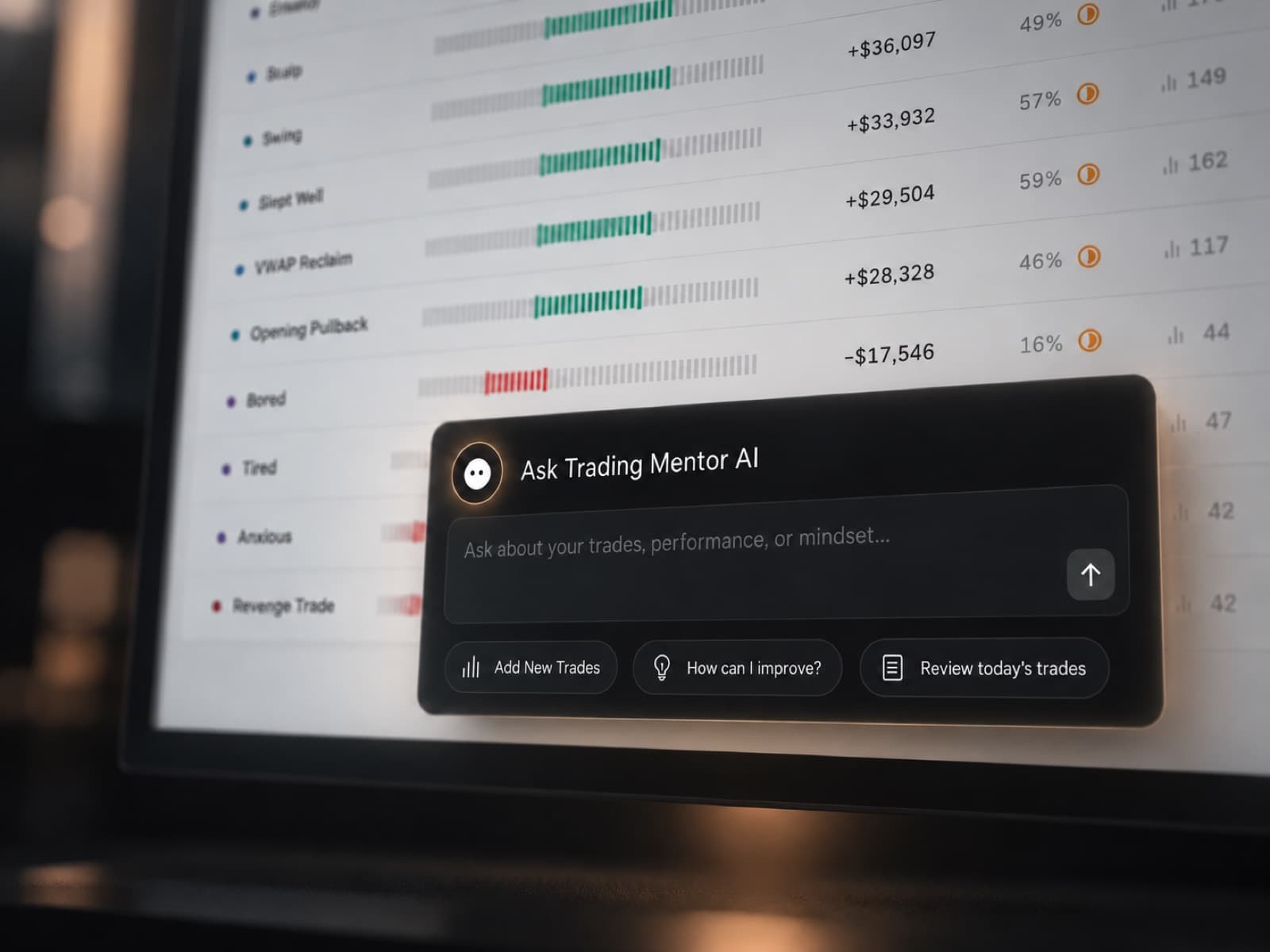
Trading Mentor AI can review the data inside your trade journal and help identify patterns across multiple trades.
Ask questions such as:
- Which trades have my strongest execution?
- Where are my exits reducing performance?
- Which mistakes occur most often?
- What do my lowest-graded trades have in common?
- Does my performance change after consecutive losses?
Track trading discipline
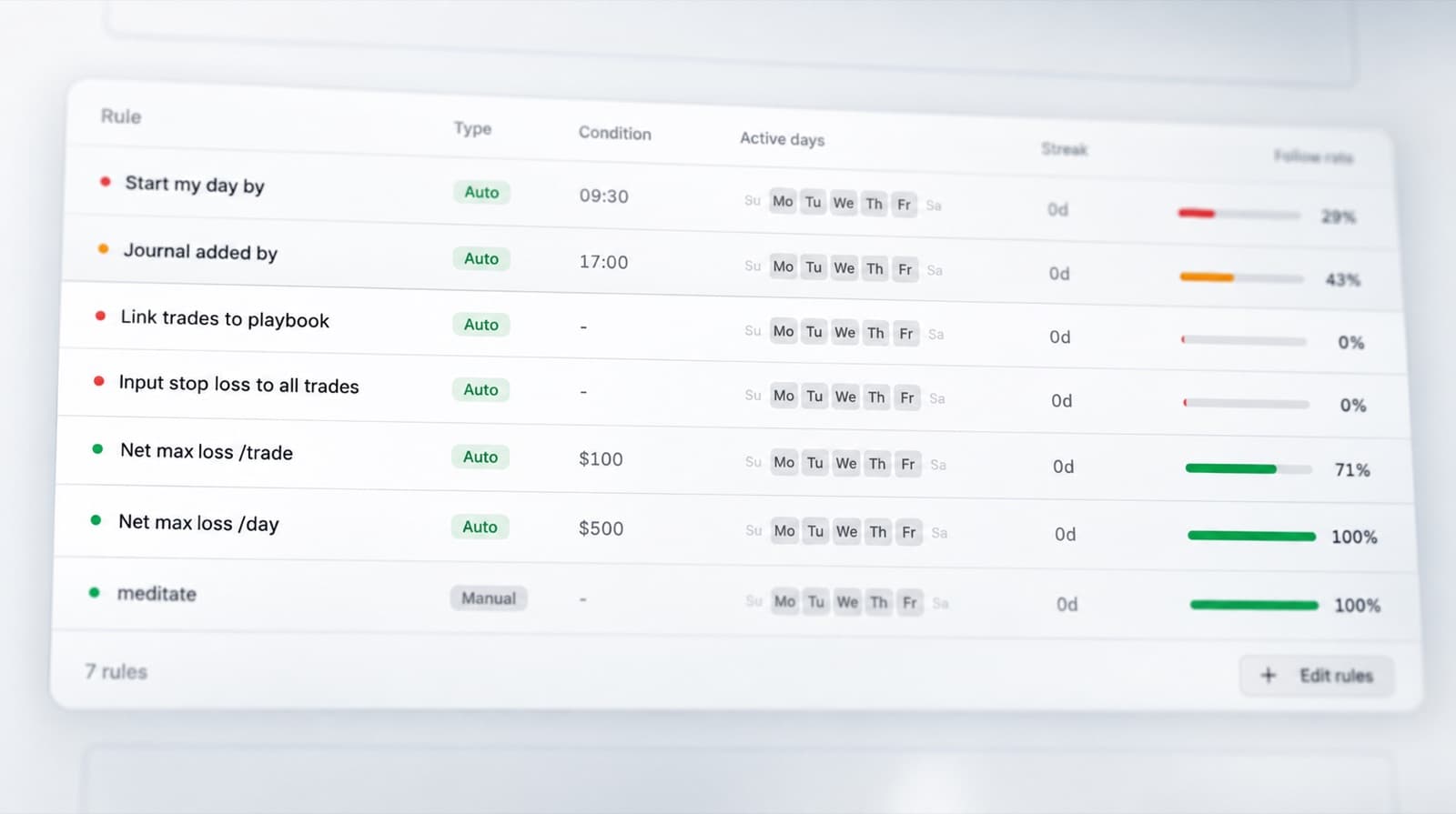
Use the Discipline Tracker to record whether each trade followed your rules.
Monitor specific parts of your process and compare them against your actual results.
This makes it easier to see whether poor performance came from the trade idea or from inconsistent execution.
Record emotions
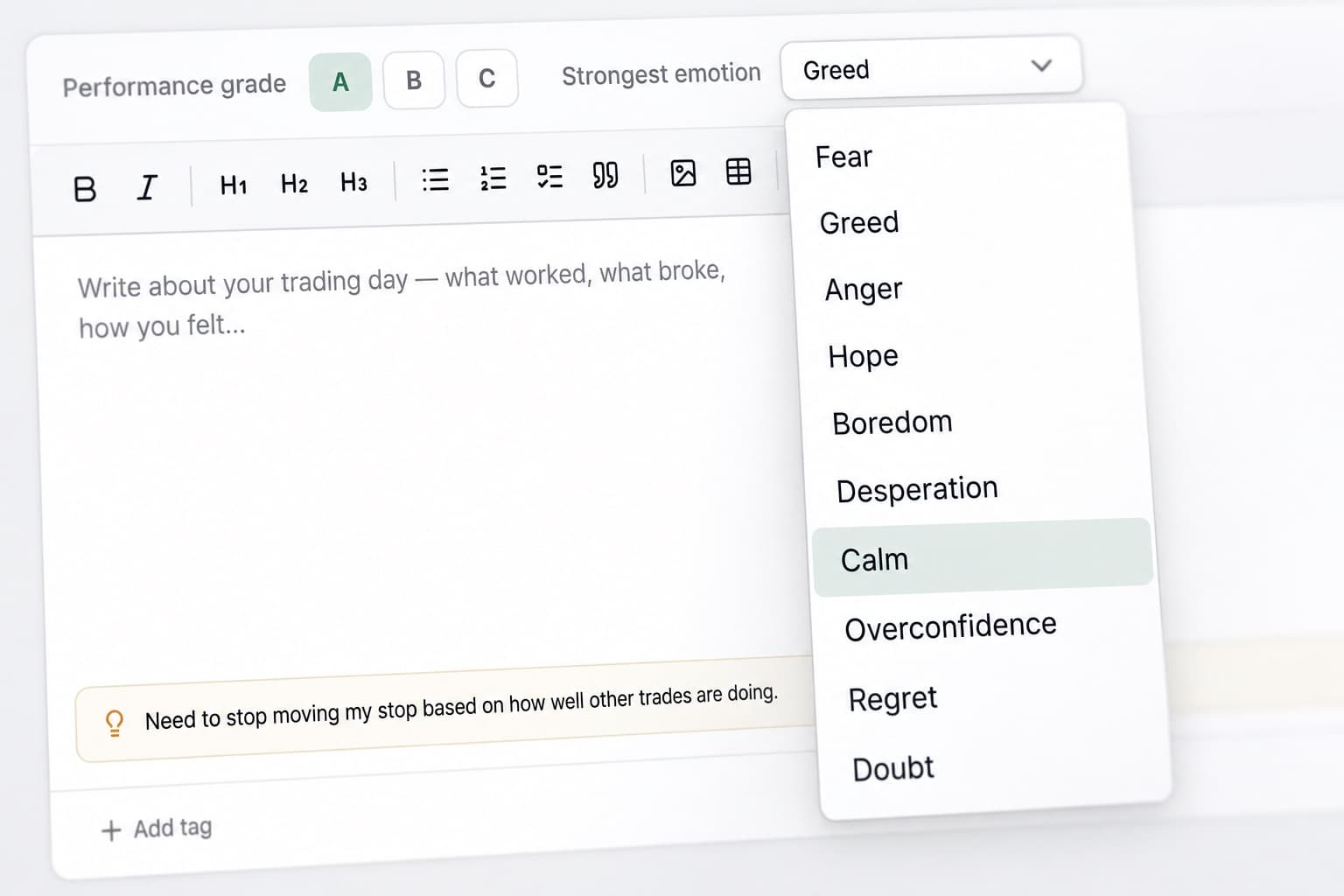
Add emotional data to individual trades.
Track confidence, frustration, hesitation, impatience or other states that may influence how you execute.
Compare these records against trade grades, efficiency and P&L.
Review daily P&L
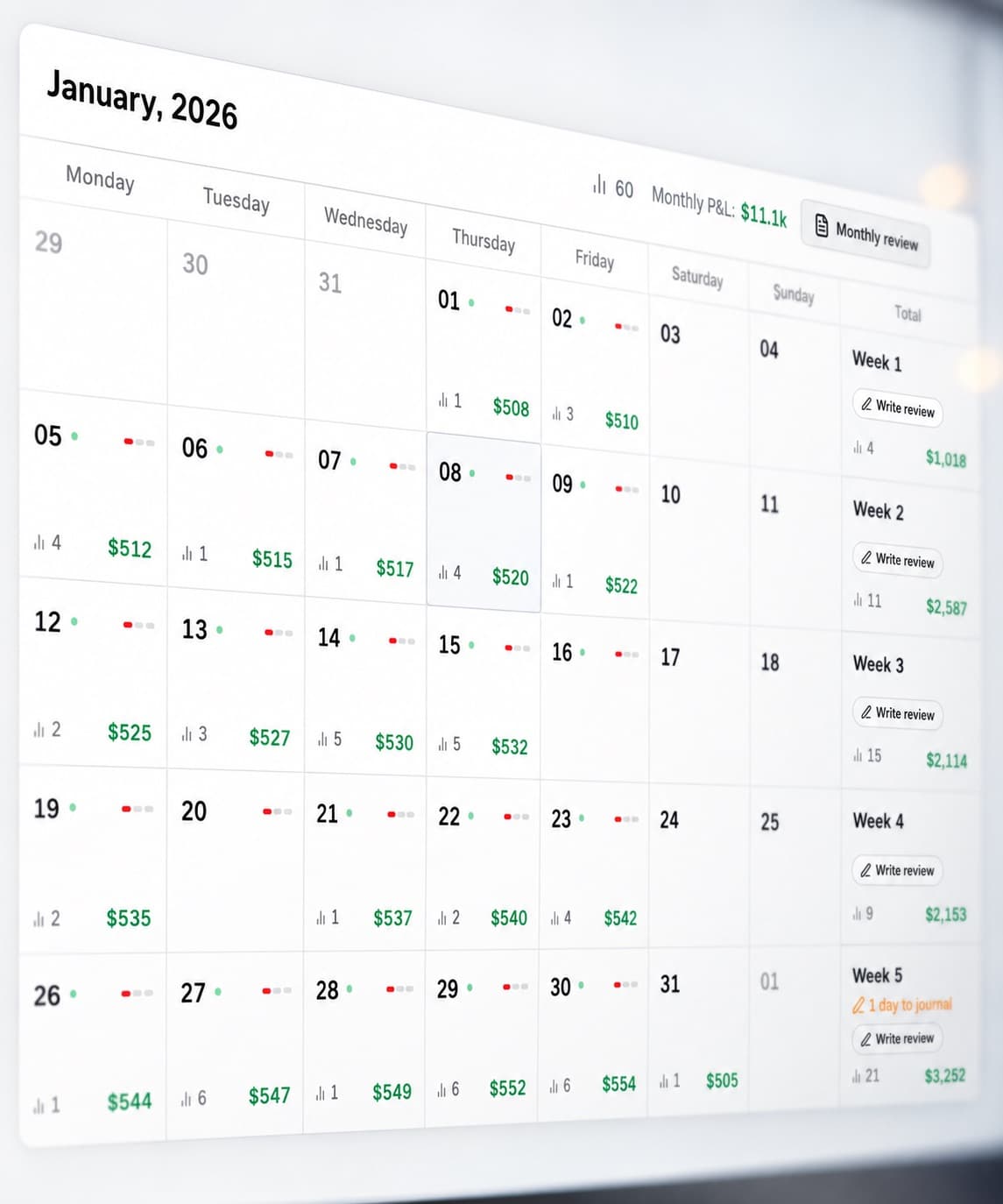
Use the P&L Calendar to see trading results across the month.
Identify profitable days, losing periods and changes in trading activity without opening every trade individually.
Select a day to review the positions behind the result.
Analyse performance over time
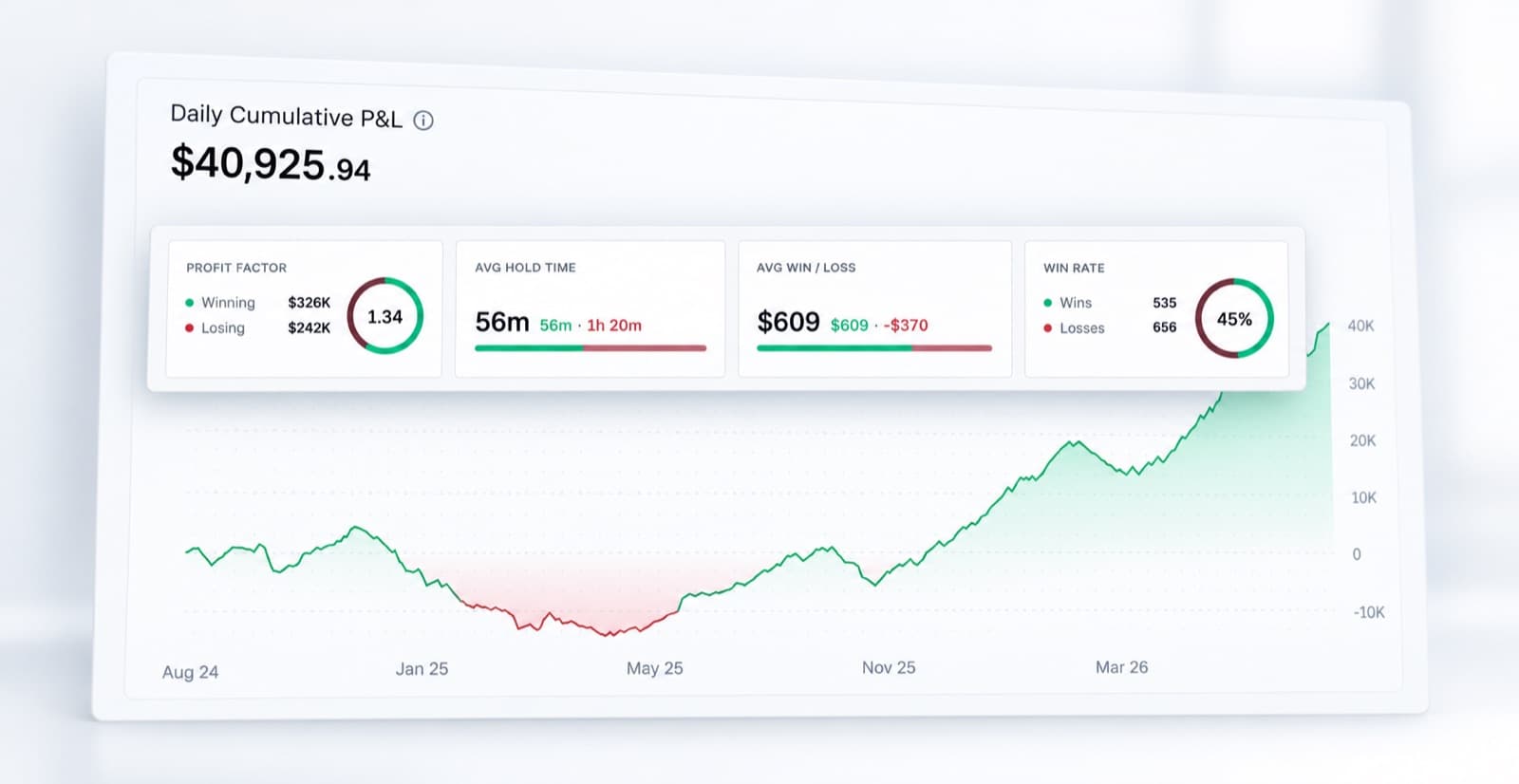
Statistics give you a wider view of your trading history.
Compare execution quality, results and recurring behaviours across a larger sample of trades.
Use Journal Reports for a structured review of performance, discipline and trade quality over a chosen period.
TradeLocker journal features
Trading Mentor AI
Analyse your journal with AI.
Past trade charts
Review entries and exits visually.
Trade grade
Score individual trades.
Trading efficiency
Measure execution quality.
Discipline tracker
Track whether you followed your rules.
Emotion tracking
Record mindset alongside trades.
P&L calendar
Review daily trading results.
Statistics
Analyse patterns across your history.
Journal reports
Create structured trading reviews.
Broker sync & file import
Load supported TradeLocker data.
Manual trade entry
Record trades manually when required.
Review your TradeLocker performance
Use RizeTrade to measure execution, compare trades and identify patterns across your TradeLocker history.