
TradingView Trading Journal
100% FreeNo CC Required
4.8/5 1,794 Reviews
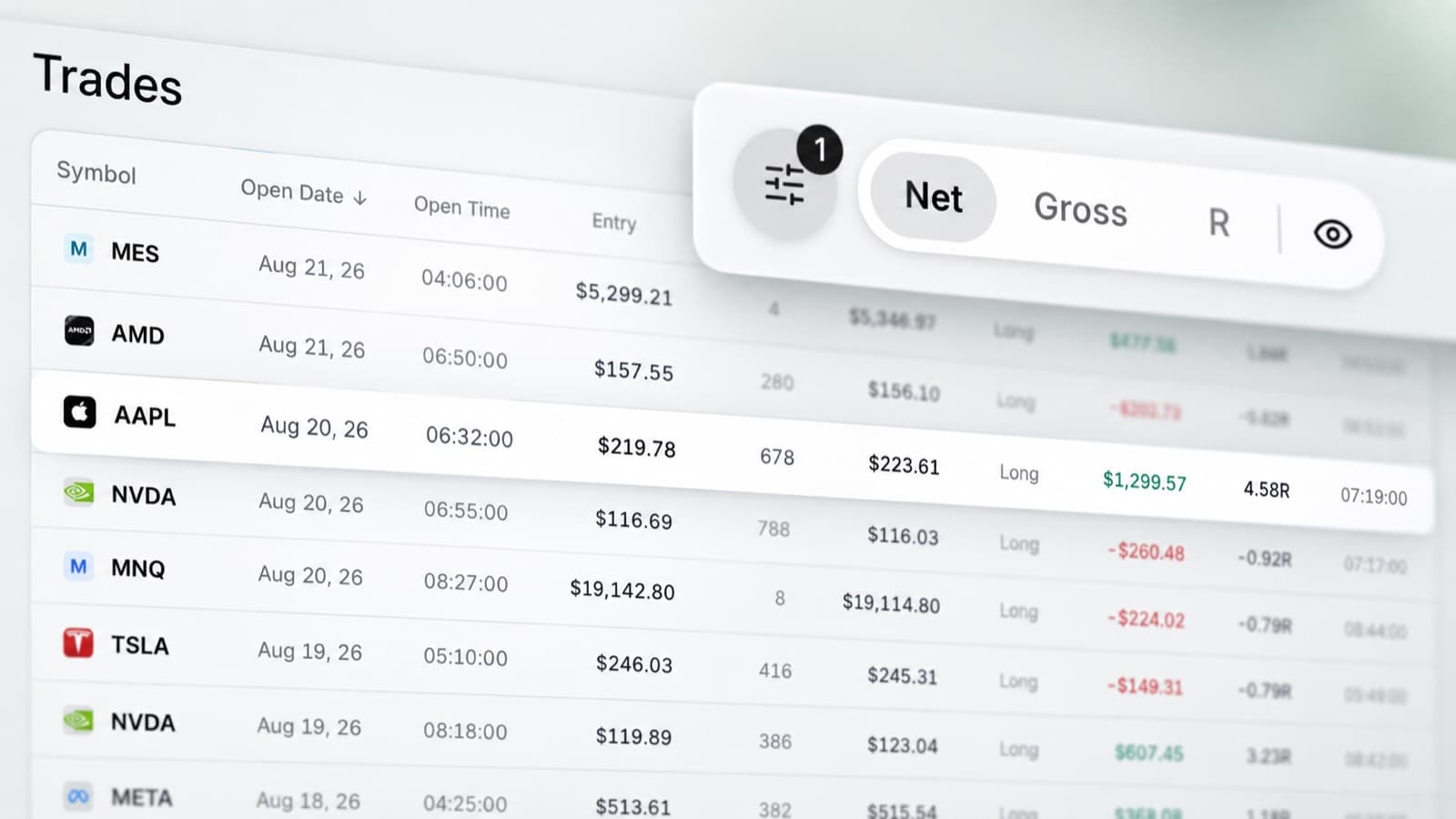
Import TradingView trades
Import your TradingView trades into RizeTrade and review your performance in one place.
Bring your trading history into RizeTrade using supported broker sync or file import. You can also add trades manually when needed.
Once imported, your trades are ready for chart review, grading, statistics and journal reports.
Review trades on the chart
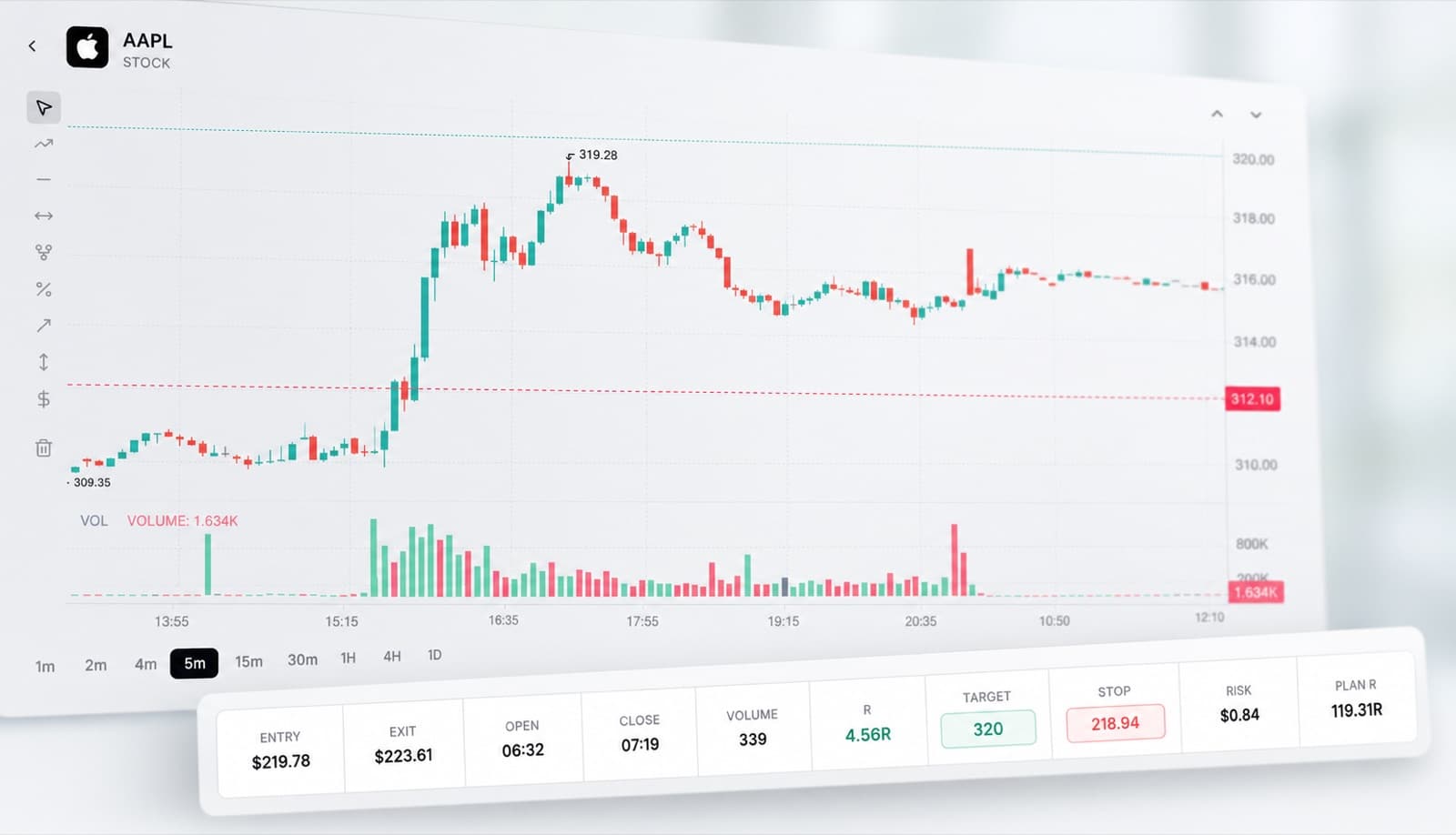
Open past trades and see your entries and exits on the chart.
Review timing, trade management and how price moved around each position.
This gives you more useful context than looking at trade history alone.
Analyse your trades with AI
Trading Mentor AI helps you analyse the trading history inside your trading journal and ask questions about patterns in your own data.
Ask questions about your own data, including:
- Which setups are performing best?
- What mistakes keep repeating?
- Where is my execution weakest?
- Which trades have my highest grades?
- Am I becoming less disciplined over time?

Measure trading efficiency
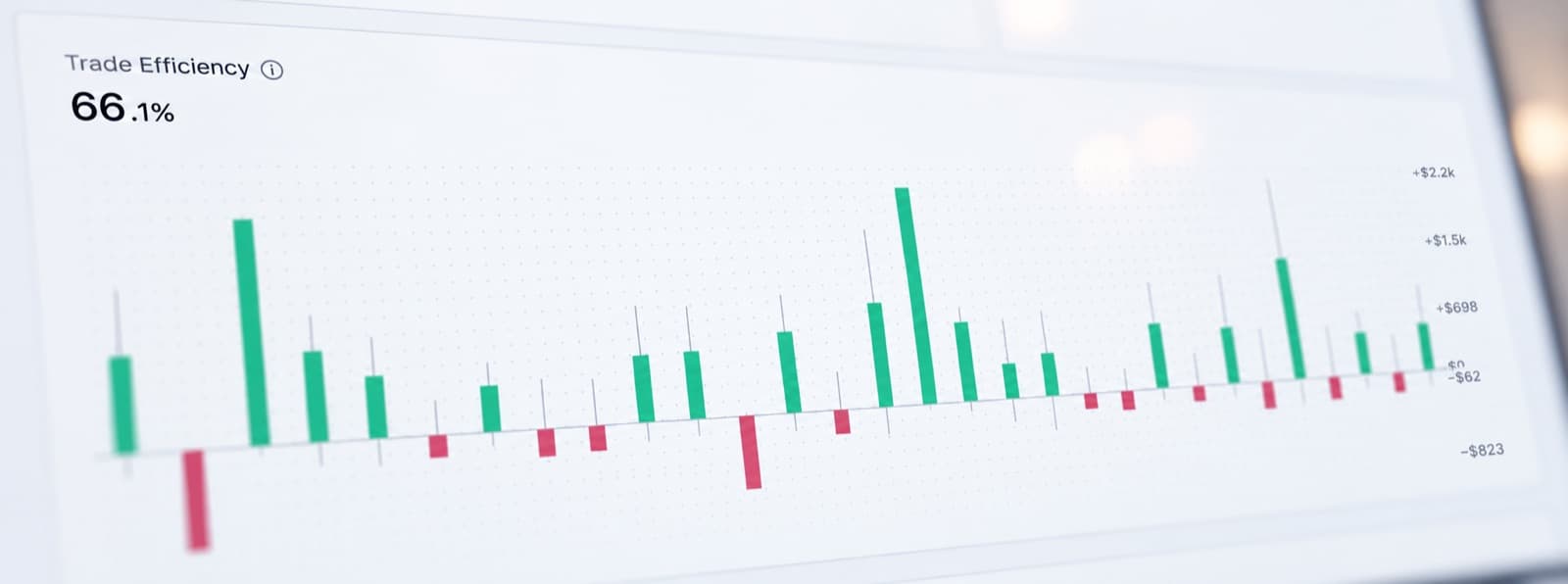
Trading Efficiency helps you assess how well each trade was executed.
Compare your execution across multiple trades and identify where entries, management or exits could have been better.
Use it alongside P&L to get a clearer view of trade quality.
Grade every trade
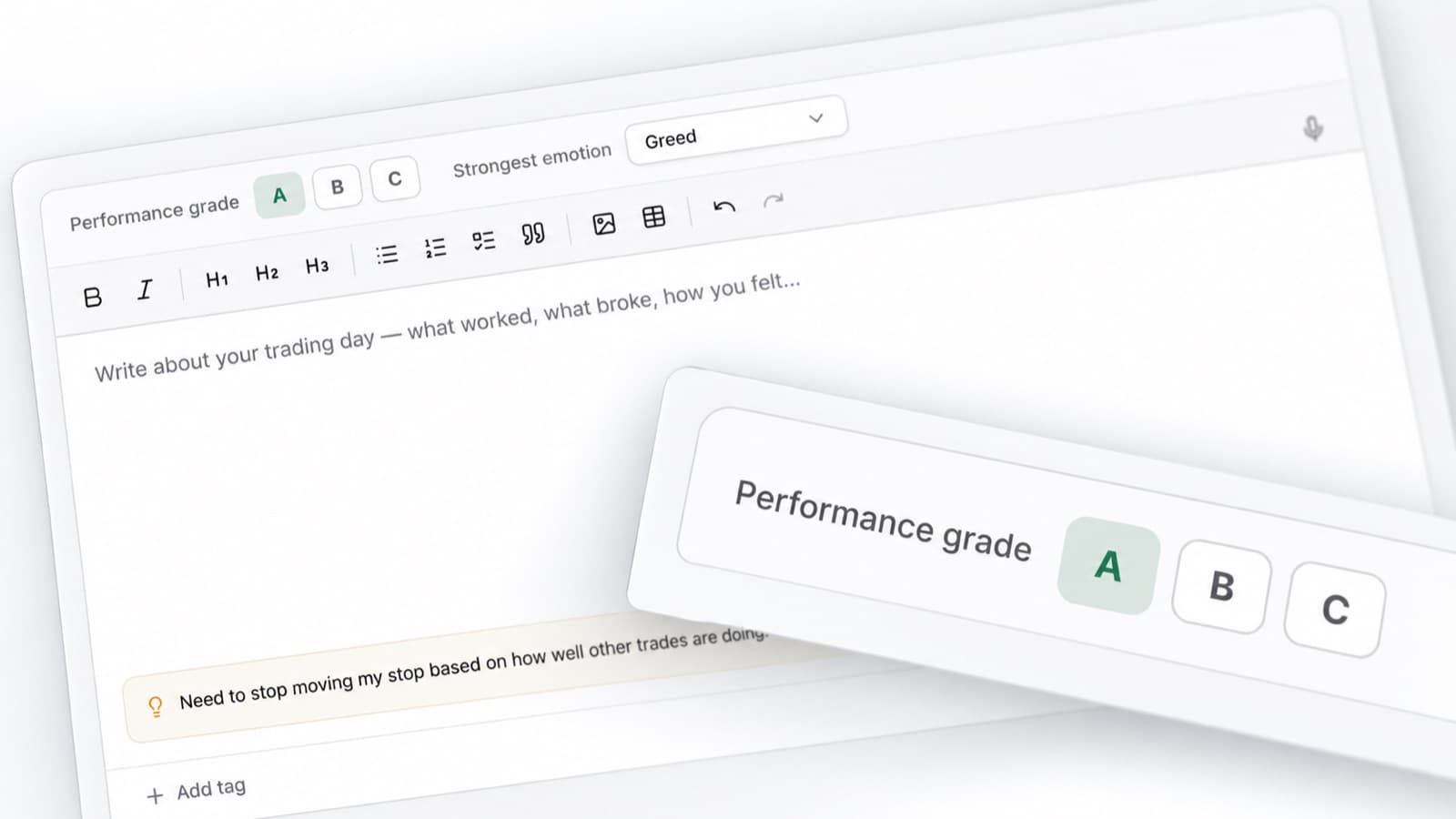
Use Trade Grade to score the quality of each trade.
This helps you separate good execution from good outcomes.
Compare your grades over time and see whether your trading process is becoming more consistent.
Track your discipline and emotions
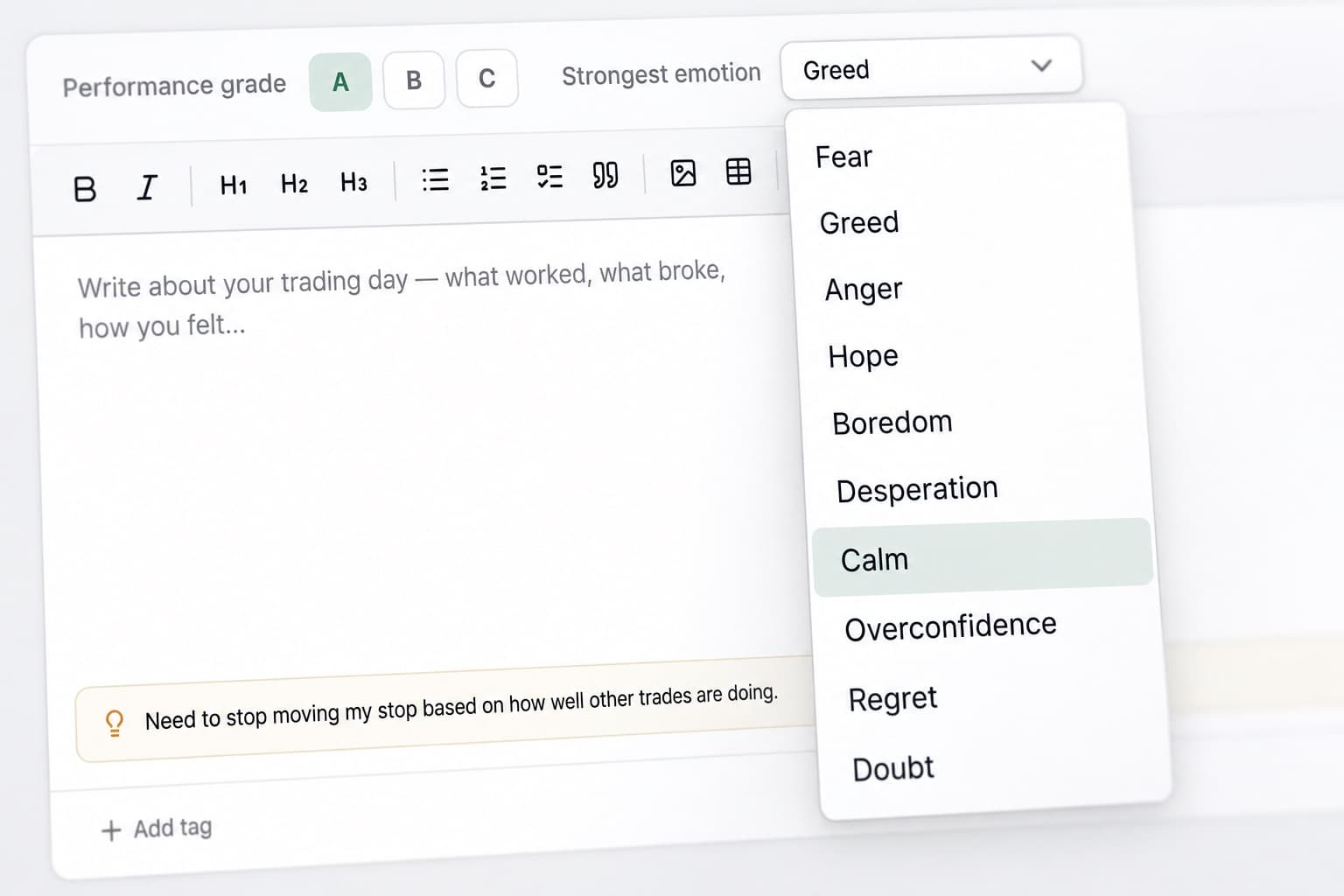
Record whether you followed your trading rules and how you felt when taking each trade.
Use the Discipline Tracker to measure rule adherence.
Track emotions such as confidence, hesitation, frustration or impatience and compare them against your results.
Review your P&L calendar
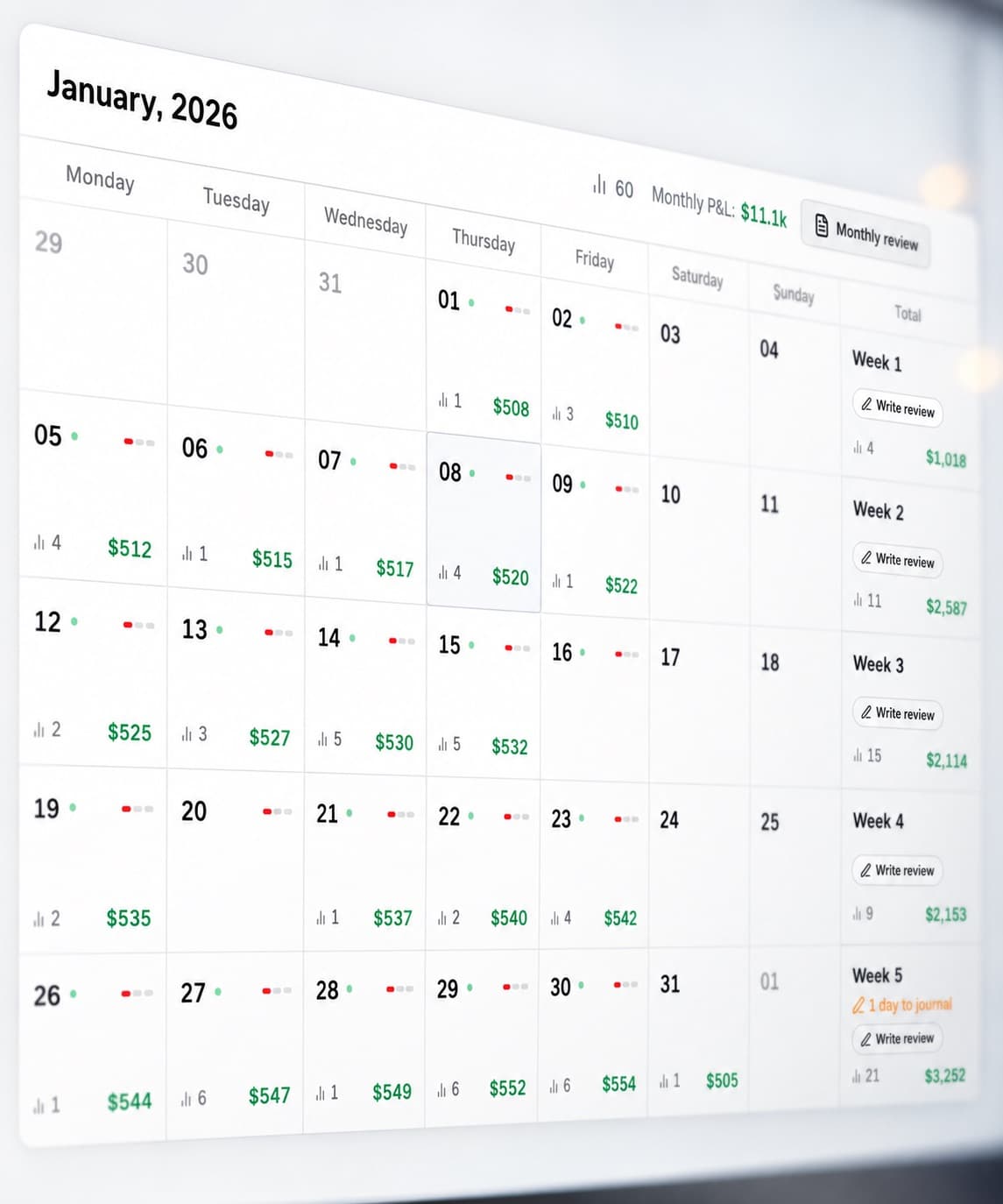
See your trading results across the month.
The P&L Calendar makes it easy to identify strong days, losing periods and changes in trading activity.
Open any day to review the trades behind the result.
Analyse your trading statistics
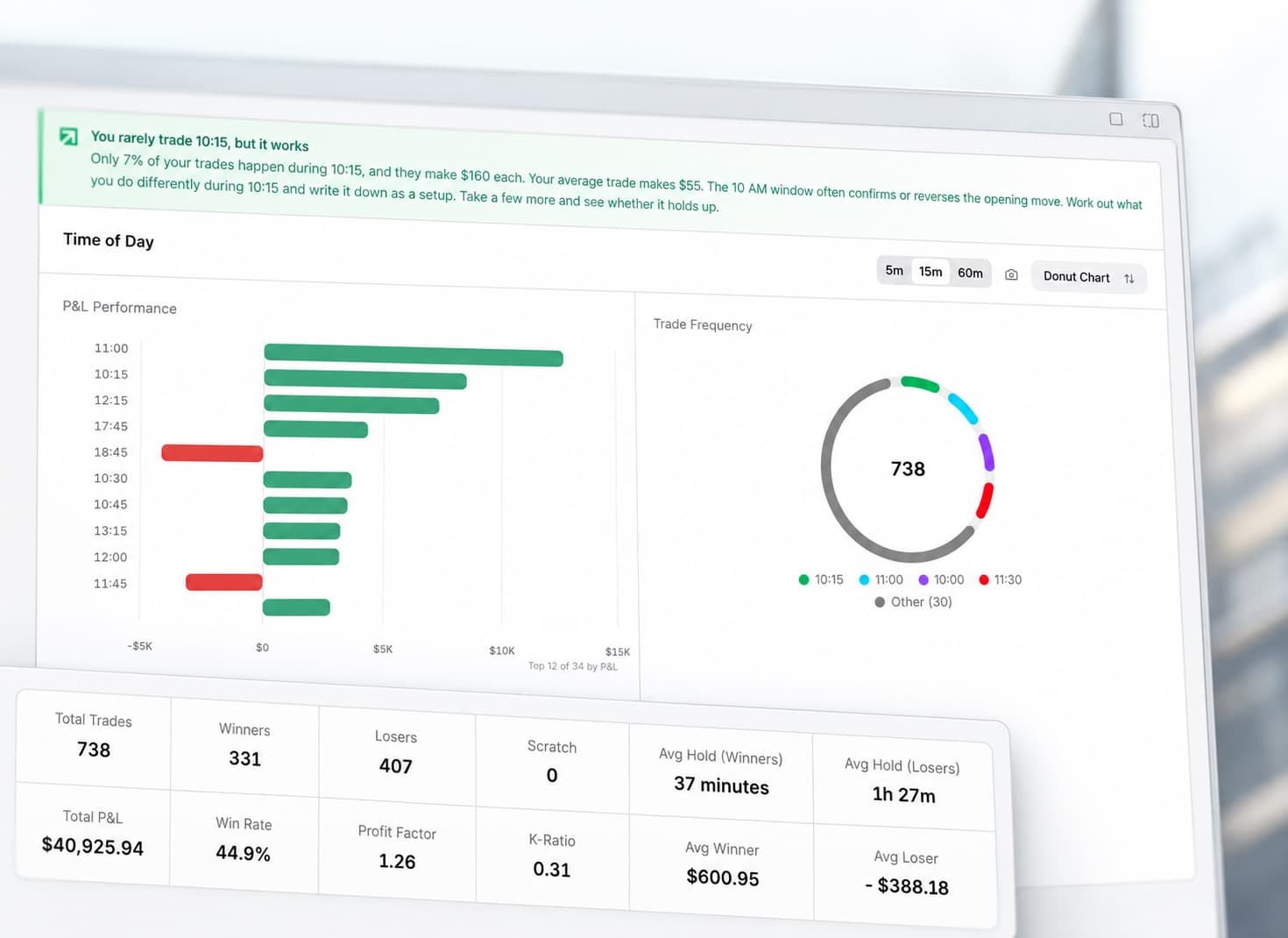
RizeTrade Statistics help you review performance across your wider trading history.
Compare trades, identify recurring patterns and see how your results change over time.
Use Journal Reports when you want a more structured performance review.
TradingView journal features
Trading Mentor AI
Analyse your trading history with AI.
Past trade charts
Review entries and exits on the chart.
Trading efficiency
Measure execution quality.
Trade grade
Score the quality of each trade.
P&L calendar
Review daily trading results.
Broker sync & file import
Bring supported trading data into RizeTrade.
Manual trade entry
Add trades yourself.
Emotion tracking
Track mindset alongside performance.
Discipline tracker
Measure whether you followed your rules.
Statistics
Analyse patterns across your trade history.
Journal reports
Create structured trading reviews.
Review your TradingView trades
Bring your trades into RizeTrade, review your execution and use your trading history to identify what is working.